



Key Highlights
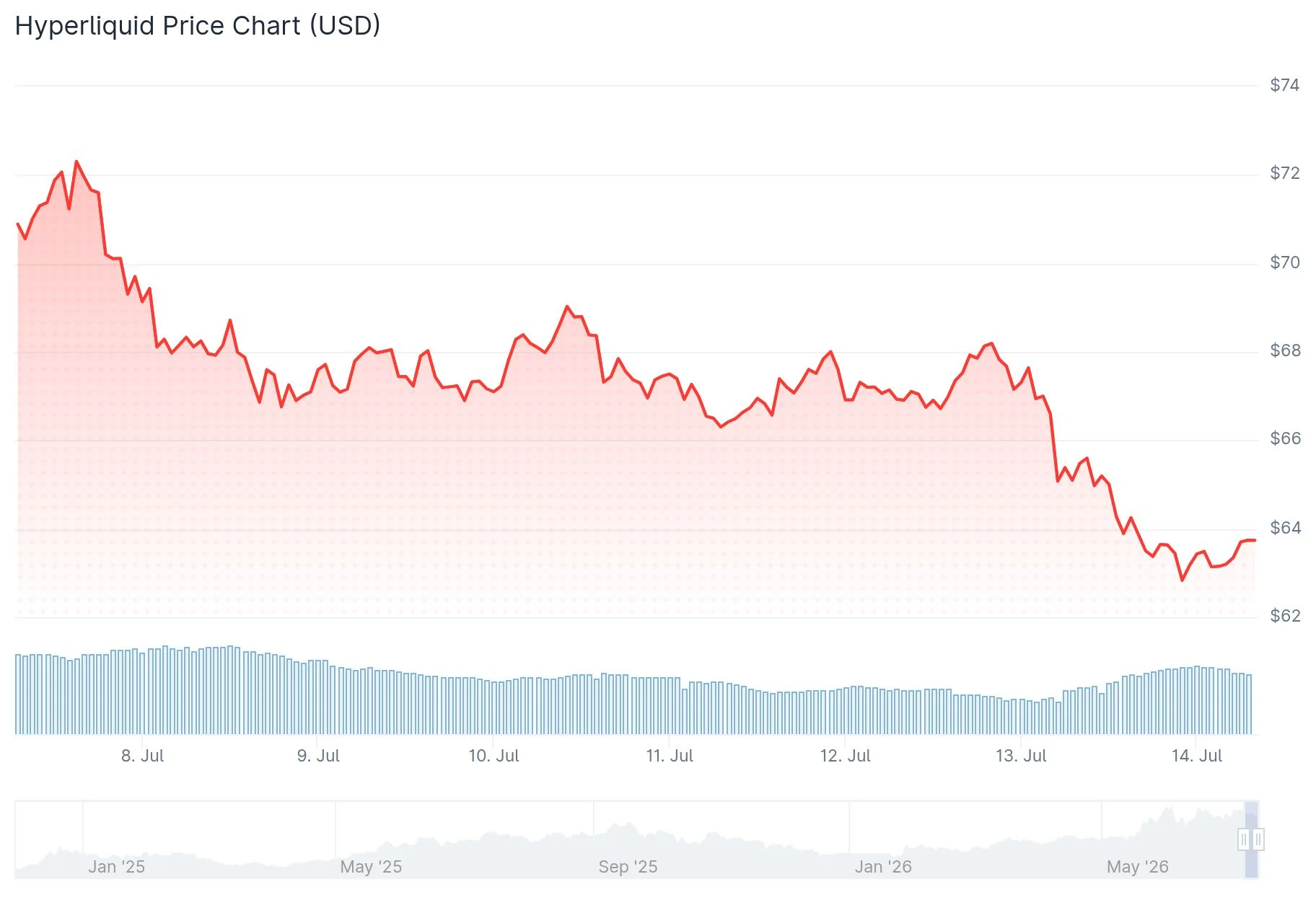
- HYPE has declined more than 2% on Monday, approaching crucial support around the $68.50 trendline
- Open Interest decreased by over 2% within 24 hours, dropping to $2.72 billion alongside $2.48 million in liquidated long positions
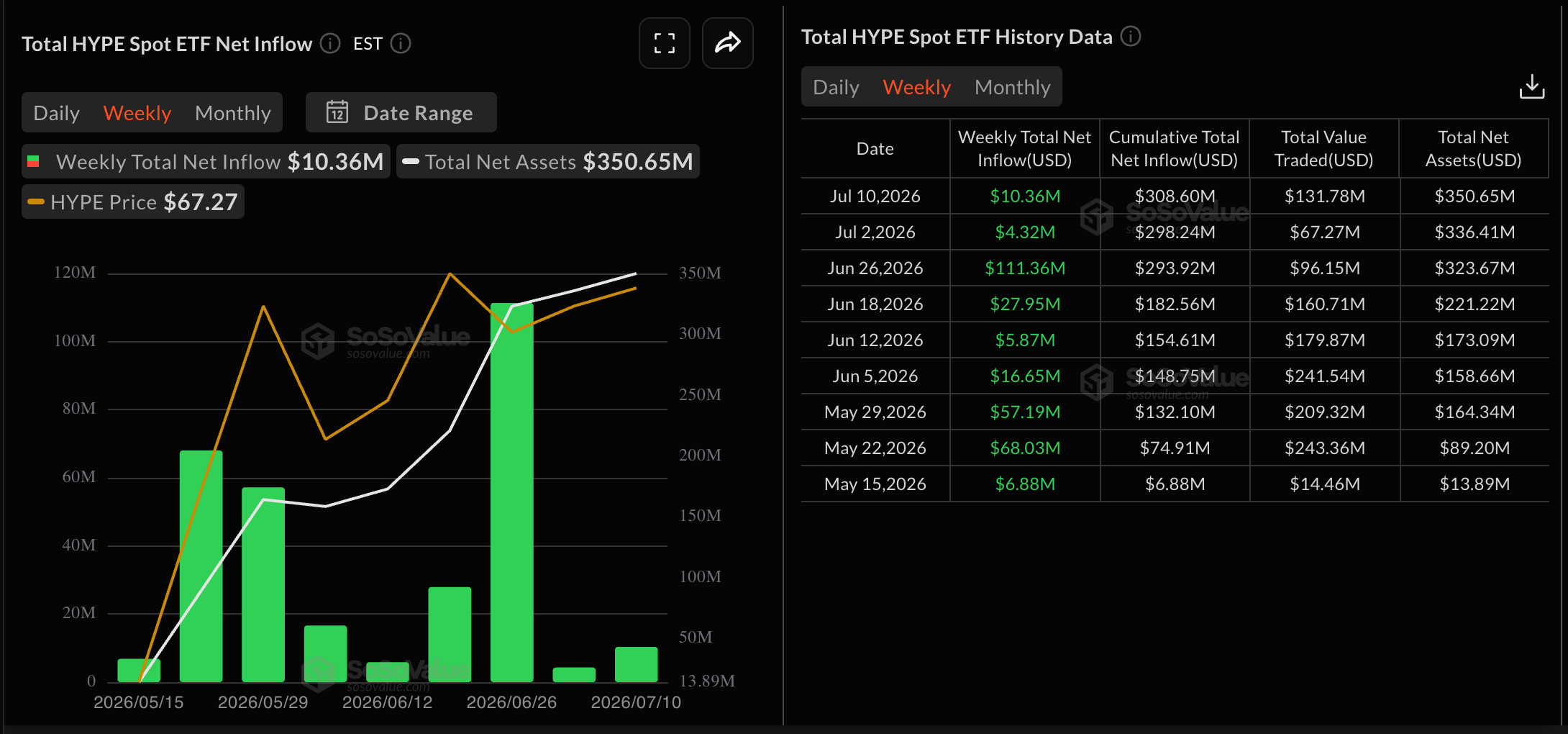
- Institutional investors injected $10.36 million into HYPE ETFs last week, marking the ninth consecutive week of capital inflows
- HIP-3 perpetual markets have expanded from just 2% to approximately 50% of Hyperliquid’s aggregate perp trading volume in 2026
- Critical support lies at the 50-day EMA of $63.13; penetration below this threshold may drive prices toward $53.71
Hyperliquid (HYPE) is currently changing hands near $65 on Monday, registering a decline exceeding 2% as widespread risk-averse market conditions weigh on cryptocurrency valuations. This downturn continues the bearish momentum from the previous week.
Escalating geopolitical tensions between the United States and Iran concerning oil tanker navigation through the Strait of Hormuz have prompted investors to retreat from risk-oriented assets, with cryptocurrencies bearing the brunt. Alternative coins such as HYPE have experienced notable downward pressure.
Derivatives metrics from CoinGlass indicate that Open Interest contracted by more than 2% over the last 24-hour period, settling at $2.72 billion. Aggregate liquidations reached $2.93 million, with long position liquidations accounting for $2.48 million of this figure.
The funding rate has experienced a significant decline to 0.0275%, signaling that an increasing number of market participants are adopting short positions. This represents a notable departure from the optimistic market sentiment observed in prior weeks.
Institutional Capital Flow Remains Resilient
Despite near-term selling pressure, HYPE exchange-traded funds attracted $10.36 million in fresh capital last week. This achievement represents the ninth uninterrupted week of institutional capital flowing into HYPE investment vehicles.

Crypto analyst Michaël van de Poppe shared an optimistic perspective on July 12, asserting the HYPE chart “is ready to break out upwards” with a price objective of $100. He cited consistent revenue expansion, formation of higher highs and higher lows, and price stability above both 21-day and 50-day moving averages as fundamental drivers supporting his forecast.
From a technical perspective, HYPE is currently challenging a breakout from a critical ascending trendline positioned near $68.50. The 50-day exponential moving average at $63.13 now serves as the primary support zone warranting close observation.
The Relative Strength Index has declined beneath 50 to register 48, while the MACD indicator is tracking below its signal line. Both technical metrics suggest diminishing bullish momentum.
A daily candle close beneath $63.13 may trigger further downside movement toward the 50% Fibonacci retracement level at $53.71. Conversely, a bullish reversal would likely target the previous swing peak at $75.58.
HIP-3 Framework Experiences Explosive Growth
Beyond immediate price movements, Hyperliquid’s HIP-3 infrastructure has demonstrated remarkable expansion. HIP-3 enables developers to launch permissionless perpetual trading markets directly onchain.
Its proportion of total Hyperliquid perpetual contract volume has surged from roughly 2% at the beginning of 2026 to approaching 50% currently. This growth trajectory correlates with heightened retail trader interest in accessing equity markets through blockchain technology.
TradeXYZ emerges as the dominant platform within this segment, operating markets such as XYZ100 (which mirrors the Nasdaq-100 index) along with individual stock perpetuals on prominent companies including Nvidia and Tesla, all settled in stablecoins.
The around-the-clock market access represents a fundamental attraction — participants can respond to breaking news instantly without restrictions imposed by traditional market hours.
HYPE exchange-traded funds documented their ninth consecutive week of institutional capital inflows, totaling $10.36 million as of the most recent reporting period.
Get 3 Free Stock Ebooks
Discover top-performing stocks in AI, Crypto, and Technology with expert analysis.
- Top 10 AI Stocks - Leading AI companies
- Top 10 Crypto Stocks - Blockchain leaders
- Top 10 Tech Stocks - Tech giants


