


Key Takeaways
- Jensen Huang, Nvidia’s CEO, was notably absent from President Trump’s business delegation traveling to China.
- Tech industry leaders including Tim Cook of Apple and Elon Musk of Tesla received invitations to join the trip.
- The chipmaker has been aggressively pursuing sales of H200 processors in China, which Huang estimates as a $50 billion yearly opportunity.
- Shares of Nvidia declined approximately 0.7% during premarket hours Tuesday following Monday’s record-high close.
- The company’s first-quarter earnings announcement scheduled for May 20 has analysts projecting revenues exceeding $78.6 billion.
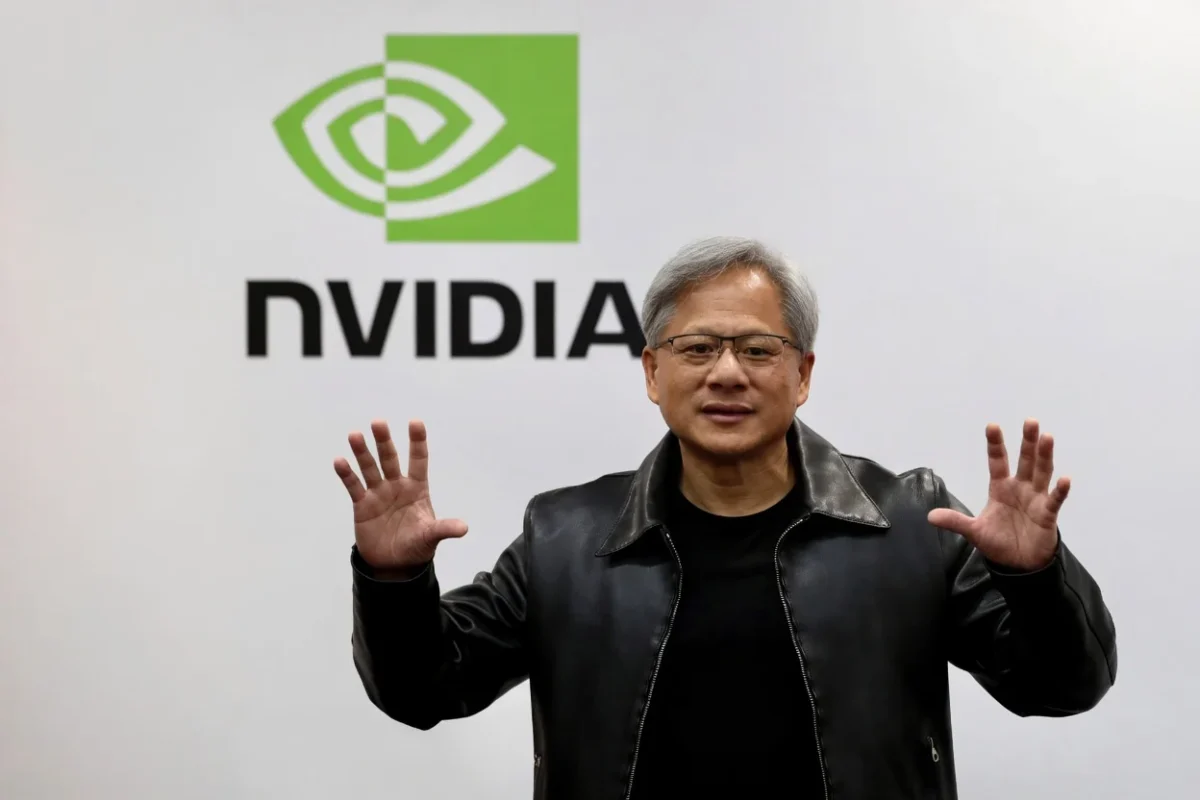
Jensen Huang, the chief executive of Nvidia, was conspicuously missing from the roster of American business executives accompanying President Donald Trump on his diplomatic journey to China this week. This notable absence arrives at a critical juncture as the semiconductor giant intensifies efforts to penetrate the Chinese chip marketplace.
Based on information from a White House official reported by multiple sources, the presidential entourage features prominent figures such as Apple’s Tim Cook and Tesla’s Elon Musk. Representatives indicated that Nvidia’s participation was never anticipated for this diplomatic mission.
This exclusion has sparked speculation regarding the chipmaker’s prospects for furthering its commercial objectives in China during this significant diplomatic engagement.
Huang has consistently characterized China as representing a $50 billion per year opportunity for AI infrastructure, with annual growth rates reaching 50%. The executive has advocated for permission to distribute chips to Chinese enterprises within existing regulatory frameworks.
Current U.S. export controls prohibit Nvidia from marketing its highest-performance computing chips to Chinese purchasers. In response, the corporation developed its H200 chip series specifically engineered to meet these regulatory requirements.
During March statements, Huang revealed that Nvidia had resumed H200 production targeting the Chinese marketplace and secured purchase commitments from several clients. However, specific revenue projections were not disclosed.

Market Performance and Investor Sentiment
Nvidia equity declined roughly 0.7% before market opening on Tuesday, trading at $217.96. This followed Monday’s session close at an all-time peak of $219.44, representing a 2% daily increase.
Notwithstanding the premarket retreat, the stock had accumulated a 12% advance across the preceding five trading days. Market participants remain optimistic due to robust artificial intelligence chip demand.
Investor attention now shifts to the corporation’s fiscal first-quarter financial disclosure scheduled for May 20. Financial analysts anticipate revenues surpassing $78.6 billion, marking a 78% year-over-year increase.
The presidential visit unfolds against the backdrop of persistent trade friction between Washington and Beijing concerning technology exports, tariff policies, and supply chain dependencies.
Trump’s previous meeting with Chinese President Xi Jinping occurred in October during negotiations in South Korea. That summit produced commitments to reduce trade conflicts that had featured substantial tariffs and disputes over China’s rare earth mineral supply networks.
China Market Implications for Nvidia
Nvidia has encountered both regulatory obstacles and political resistance from authorities in both nations as it pursues the Chinese AI market.
The company’s omission from Trump’s business delegation eliminates its direct representation during potentially consequential trade negotiations.
Whether Huang received formal consideration for delegation membership or was simply overlooked remains uncertain. Nvidia has not issued an immediate statement regarding the matter.
Nevertheless, with quarterly results approaching and share prices hovering near record territory, market participants appear more concentrated on Nvidia’s imminent financial performance than the diplomatic setback.
The May 20 earnings release will serve as the subsequent critical benchmark for stock performance.
Get 3 Free Stock Ebooks
Discover top-performing stocks in AI, Crypto, and Technology with expert analysis.
- Top 10 AI Stocks - Leading AI companies
- Top 10 Crypto Stocks - Blockchain leaders
- Top 10 Tech Stocks - Tech giants


