


Key Highlights
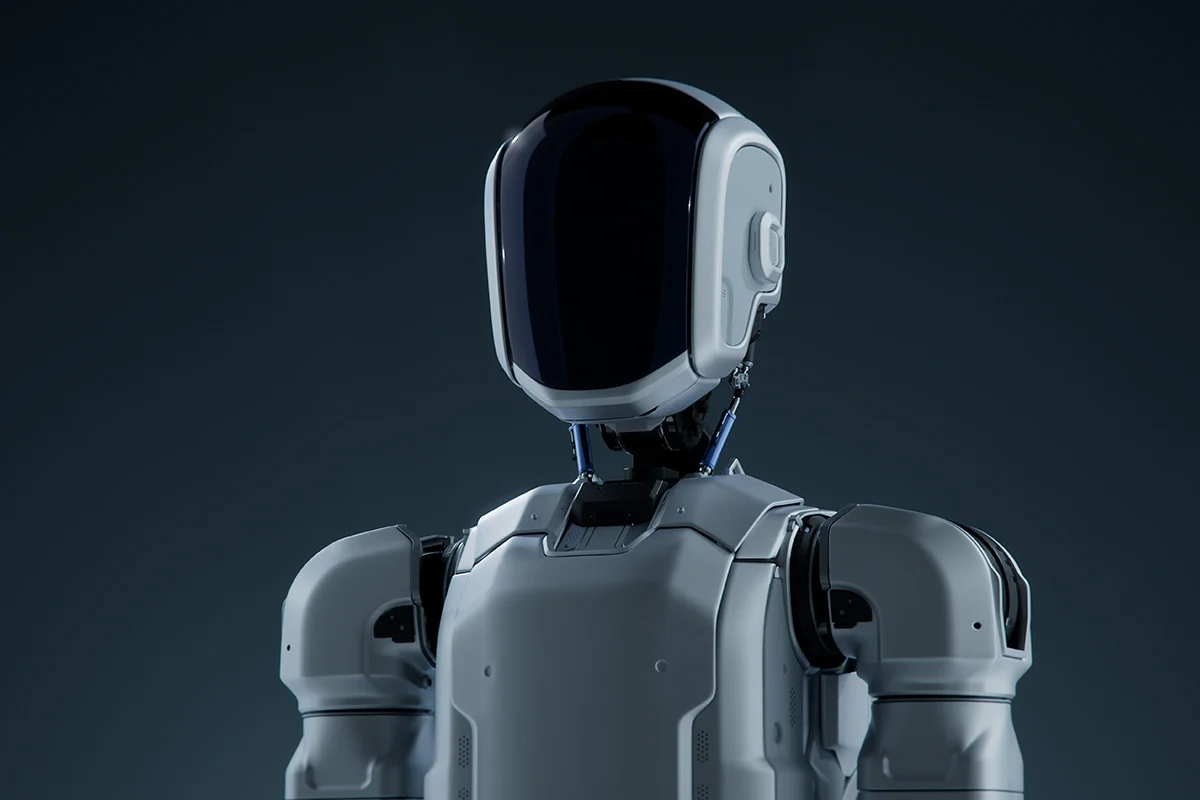
- Kawasaki Heavy Industries has established the Kawasaki Physical AI Center in San Jose, California
- Technology partners include Nvidia, Microsoft, Analog Devices, and Fujitsu
- Initial development efforts will concentrate on healthcare and elderly care applications
- Kawasaki’s quadruped robot Corleo will leverage Nvidia’s simulation capabilities
- The facility represents part of a comprehensive strategy to implement physical AI across various sectors
Kawasaki Heavy Industries, the Japanese industrial conglomerate, has inaugurated a collaborative research facility in San Jose, California, known as the Kawasaki Physical AI Center.
The facility’s official opening ceremony took place Thursday, marking the beginning of a joint venture between Kawasaki and four prominent technology firms: Nvidia, Microsoft, Analog Devices, and Fujitsu.
The Nikkei newspaper initially disclosed the news on May 21, with Kawasaki issuing an official press statement confirming the collaboration the following Friday.
Initial Focus Targets Healthcare Sector
The facility’s primary objective centers on addressing healthcare and elder care challenges. According to Kawasaki, demographic shifts toward aging populations combined with workforce shortages represent critical global issues requiring immediate attention.
The industrial manufacturer envisions developing what it describes as a comprehensive “hospital one-stop solution.” This integrated system would encompass the entire patient experience — spanning from initial arrival and diagnostic procedures through surgical interventions and post-operative care — utilizing robotics and artificial intelligence technologies.
Kawasaki’s collaboration with Fujitsu will specifically target the healthcare domain. The partnership aims to integrate enterprise systems, robotic platforms, and artificial intelligence to generate innovative solutions within the medical field.

Analog Devices will collaborate with Kawasaki on developing versatile robotic systems. This partnership will merge artificial intelligence, voice recognition capabilities, and advanced sensing technologies.
Microsoft’s contribution will involve its cloud infrastructure and AI platform. The objective is to guarantee that physical AI applications demonstrate reliability and scalability when implemented in practical, real-world settings.
Nvidia Contributes Advanced Simulation Capabilities
The strategic alliance between Kawasaki and Nvidia focuses on merging AI technologies with robotics applications across diverse industries. Though healthcare serves as the initial application area, the partnership’s scope extends considerably beyond this sector.
Nvidia’s simulation technologies will be implemented in Corleo, Kawasaki’s quadruped personal mobility robot currently in the development phase. Corleo is being engineered for various personal transportation applications.
Future Diversification Into Additional Industries
Although healthcare represents the initial focus area, Kawasaki indicates that the center will eventually branch into semiconductor manufacturing, automotive production, and emerging mobility technologies.
The San Jose facility will operate in conjunction with Kawasaki’s existing research facilities throughout Japan. Additionally, it will coordinate with the Kawasaki Innovation Centre Europe, which commenced operations in Strasbourg, France, during March 2026.
According to Kawasaki, the European facility will facilitate customization of physical AI solutions to meet specific regional requirements. The San Jose location serves an equivalent function for the United States-Japan business corridor.
The corporation characterizes this broader initiative as expediting the “social implementation” of physical AI — transitioning AI and robotics technologies from research and development phases into widespread practical deployment throughout society.
Nvidia had not provided a response to Reuters’ comment request when the initial report was published.
Get 3 Free Stock Ebooks
Discover top-performing stocks in AI, Crypto, and Technology with expert analysis.
- Top 10 AI Stocks - Leading AI companies
- Top 10 Crypto Stocks - Blockchain leaders
- Top 10 Tech Stocks - Tech giants


