


Key Takeaways
- DRAM contract pricing expected to increase over 50% this quarter, while NAND flash could rise 60%, according to Susquehanna projections.
- Global semiconductor revenue projected to approach $1.6 trillion in 2026, nearly doubling from current levels, per Gartner estimates.
- Memory chip sector revenue anticipated to skyrocket from $220.1 billion in 2025 to $837.3 billion in 2026.
- Long-term supply contracts with key clients limit Micron’s ability to fully benefit from spot price increases.
- Wall Street anticipates Micron will post $31.26 earnings per share in September, a dramatic jump from $3.03 the previous year.
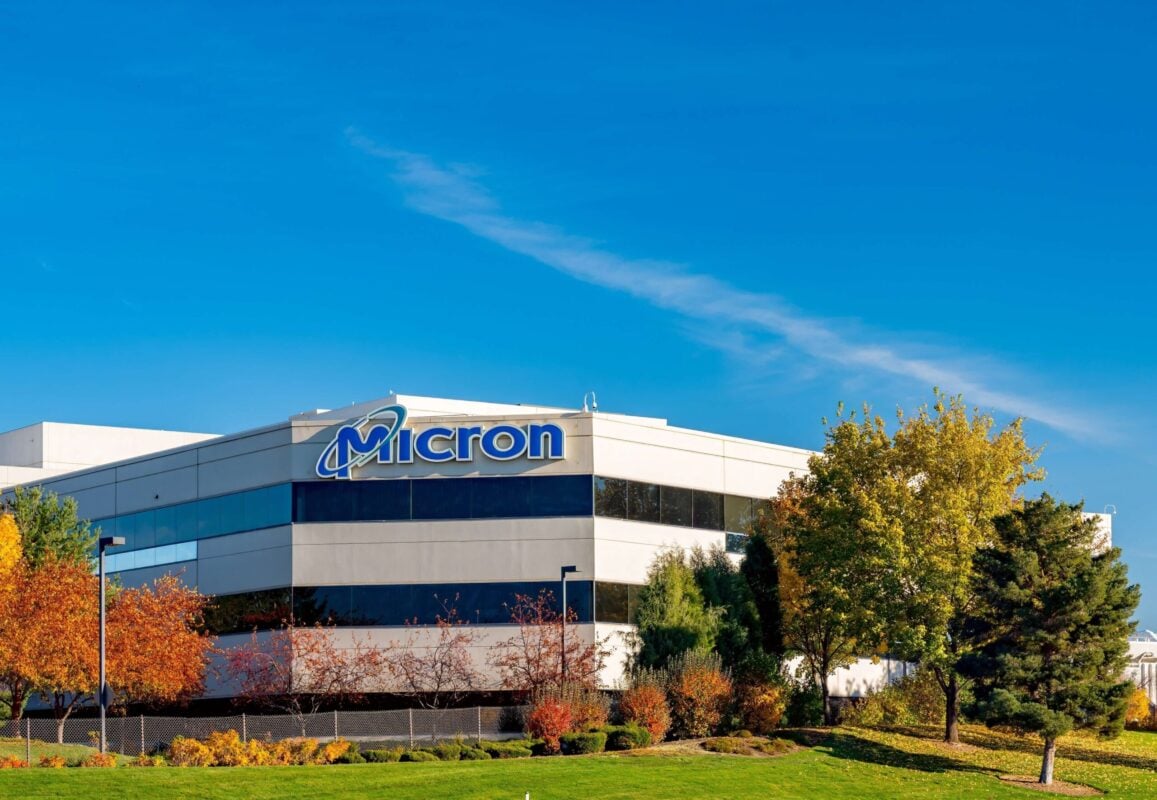
Shares of Micron Technology (MU) climbed 2.03% to $928.80 during Tuesday’s premarket session, fueled by surging expectations for memory chip prices and robust semiconductor sector expansion.
Research from Susquehanna released Monday indicates DRAM contract pricing could surge beyond 50% during the current quarter. NAND flash memory is expected to post even steeper gains at 60%. These product categories represent Micron’s primary revenue streams.
The industry-wide picture appears equally bullish. Gartner forecasts global semiconductor revenue will increase 92% to approximately $1.6 trillion in 2026, compared to $809 billion in 2025. The research firm projects continued growth to roughly $1.9 trillion by 2027.
Memory chips are driving this expansion. Retail memory chip pricing has surged more than six times higher over the past twelve months, based on industry tracking data. Memory sector revenue is expected to nearly quadruple, jumping from $220.1 billion in 2025 to $837.3 billion in 2026. Gartner anticipates memory will comprise 54% of total semiconductor revenue this year, a significant increase from 27% in 2025.

DRAM revenue specifically is forecast to surge 246.6% in 2026. NAND flash revenue could skyrocket 371.9%. These projections position Micron, along with Samsung and SK hynix, at the center of industry attention.
Supply Contracts Cap Pricing Benefits
Micron cannot fully capitalize on these price increases. The chipmaker has established long-term supply contracts with key customers that impose pricing limits in return for guaranteed profit margins over extended periods.
Sebastien Naji, an analyst at William Blair who maintains an Outperform rating, observed that constrained supply and take-or-pay contract structures suggest “at least a gentler reduction in earnings power this cycle.” Essentially, Micron has downside protection but sacrifices some potential upside gains.
Nevertheless, a meaningful portion of Micron’s revenue remains tied to spot market and short-term contracts, allowing the company to benefit substantially from the current price rally.
Artificial intelligence infrastructure is a major catalyst. Gartner projects AI data centers will account for 36.5% of semiconductor revenue in 2026, climbing above 53% by 2030.
Technical Indicators and Earnings Expectations
From a technical perspective, Micron is trading above its 20-day moving averages while remaining approximately 3.4% below its 50-day simple moving average of $962.88. The relative strength index stands at 48.54, indicating neutral momentum. A critical resistance level exists at $1,012.
The upcoming catalyst is Micron’s anticipated September 22 earnings announcement. Wall Street analysts are forecasting earnings of $31.26 per share, a substantial increase from $3.03 during the same period last year. Revenue projections stand at $50.78 billion, compared to $11.31 billion in the prior year.
The stock currently holds a consensus Buy rating with an average price target among analysts of $1,525.
New Street Research elevated MU to Buy on August 14 with a price target of $1,250. KeyBanc maintains an Overweight rating with a $1,750 price objective established in July. Citigroup reaffirmed its Buy rating in August with a $1,150 target.
Get 3 Free Stock Ebooks
Discover top-performing stocks in AI, Crypto, and Technology with expert analysis.
- Top 10 AI Stocks - Leading AI companies
- Top 10 Crypto Stocks - Blockchain leaders
- Top 10 Tech Stocks - Tech giants


