



Key Takeaways
- President Trump dismissed Iran’s peace proposal as unacceptable and warned the ceasefire is barely surviving
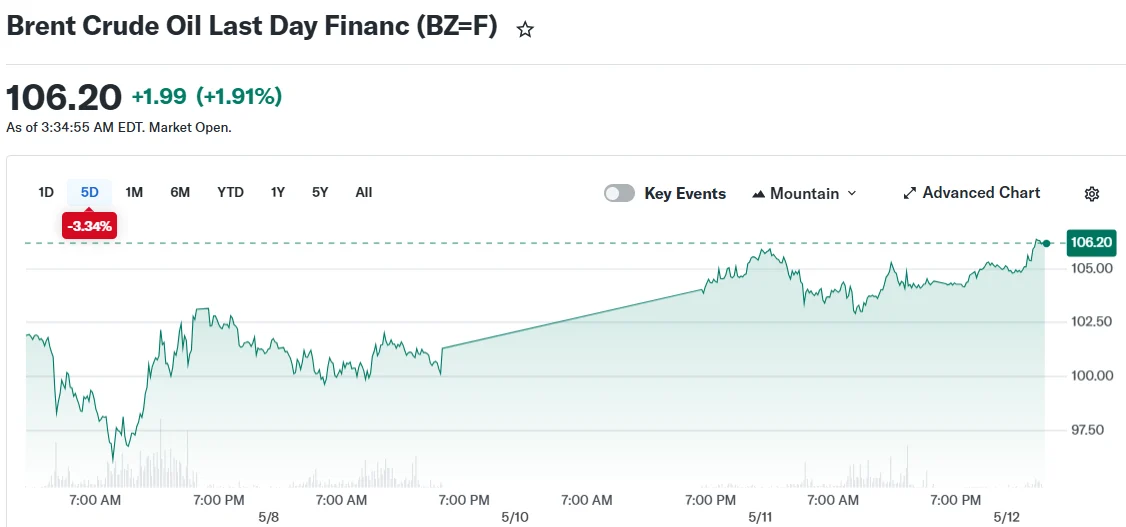
- Oil prices surged with Brent crude reaching approximately $105 per barrel and WTI approaching $99
- Tehran’s demands include ending the US naval blockade, sanctions relief, and maintaining partial authority over Strait of Hormuz shipping
- Saudi Aramco’s leadership estimates the world loses 100 million barrels weekly while the strait remains blocked
- Market participants are monitoring inflation reports and the scheduled Trump-Xi summit for potential developments
President Trump dismissed Iran’s most recent peace proposal Monday, describing it as unacceptable and comparing it to waste. Speaking to the press, he characterized the ceasefire as being on “massive life support,” intensifying concerns that the conflict, now in its tenth week, may soon reignite.
Oil markets responded sharply Tuesday, with Brent crude reaching approximately $105 per barrel, extending gains of nearly 3% from Monday’s trading. West Texas Intermediate simultaneously climbed toward the $99 mark.
The current conflict entered its tenth week following hostilities that began in early February. While a tentative ceasefire was established in April, ongoing maritime incidents have maintained elevated tensions throughout the region.
Tehran’s counter-proposal outlined several non-negotiable conditions: termination of the American naval presence, comprehensive sanctions removal, restoration of Iranian petroleum exports, financial compensation for war damages, and continued Iranian oversight of Strait of Hormuz vessel traffic.
The strait represents a critical chokepoint for global energy markets, facilitating approximately 20% of worldwide petroleum and refined product shipments.

Global Supply Impact from Strait Disruption
Amin Nasser, leading Saudi Aramco, warned that global markets are hemorrhaging 100 million barrels of oil supply each week the waterway remains inaccessible. While Aramco has redirected certain shipments through its Red Sea facilities, prices continue climbing and major importers like China are reducing purchase volumes.
American fuel prices have soared, creating significant political challenges for Trump and congressional Republicans as midterm elections approach. The administration has authorized Strategic Petroleum Reserve releases attempting to moderate pricing pressure.
Bloomberg Economics researchers concluded that comprehensive peace remains improbable. They project any renewed hostilities would likely stabilize into sustained low-intensity confrontations, representing what they termed “the new normal.”
Axios sources indicate Trump convened his national security advisors to evaluate potential military action resumption. In a Fox News interview, Trump confirmed consideration of reviving naval escort operations through the disputed waterway.
Critical Market Indicators Ahead
Investors are focused on Tuesday’s Consumer Price Index release. Forecasters anticipated headline inflation accelerating to 3.7% from the previous 3.3% annual rate, partially attributed to elevated energy expenses stemming from regional instability.
Wednesday’s Producer Price Index data is similarly expected to reflect mounting cost pressures from increased fuel and logistics expenses.
Persistent inflation could constrain Federal Reserve policy flexibility and sustain higher borrowing costs for an extended period.
Market attention has also shifted toward Trump’s scheduled Beijing summit with President Xi Jinping. The leaders plan to address Iran, commercial relations, and energy stability. China remains Iran’s primary petroleum customer and maintains considerable diplomatic leverage with Tehran.
The Treasury Department imposed fresh sanctions Monday targeting entities facilitating Iranian crude sales to China. Market observers suggest the Trump-Xi discussions could significantly influence the conflict’s trajectory.
Technical market indicators have weakened recently as certain refineries have reduced purchasing activity.
Get 3 Free Stock Ebooks
Discover top-performing stocks in AI, Crypto, and Technology with expert analysis.
- Top 10 AI Stocks - Leading AI companies
- Top 10 Crypto Stocks - Blockchain leaders
- Top 10 Tech Stocks - Tech giants


