


Quick Overview
- President Trump conducted the first US presidential state visit to China in nearly a decade, meeting with President Xi in Beijing.
- A delegation of prominent US business leaders—including Elon Musk, Tim Cook, Jensen Huang, and Kelly Ortberg—accompanied Trump to the summit.
- President Xi pledged to further open China’s economy to international investment and commerce during meetings with the executives.
- Reports emerged that Washington approved the sale of Nvidia H200 AI processors to leading Chinese technology companies such as Alibaba, Tencent, and ByteDance.
- Equity markets in both China and the US registered gains post-summit, although market watchers stressed that sustained growth requires stronger corporate earnings data.
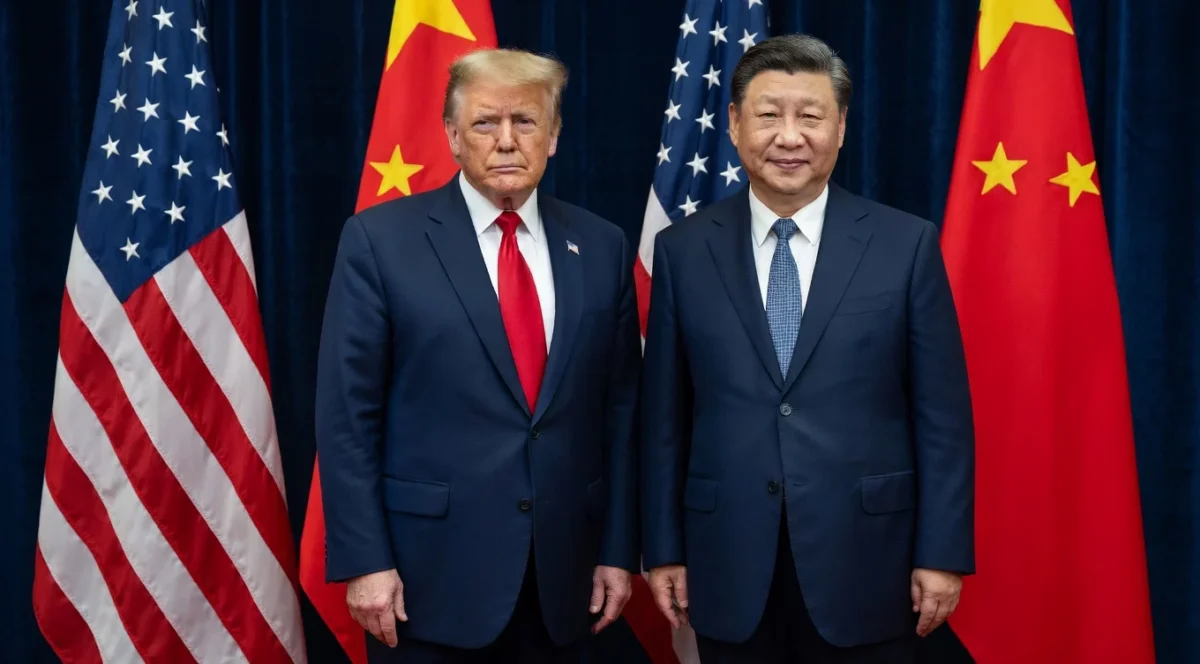
President Donald Trump made a historic journey to Beijing this week for high-level discussions with Chinese President Xi Jinping. The visit marked the first official state trip by an American president to China in nearly a decade.
The bilateral summit united the heads of the planet’s two largest economic powers to address critical issues spanning trade policy, export regulations, and market accessibility. Trump arrived with an impressive contingent of America’s most influential corporate executives.
The business delegation featured prominent figures such as Tesla’s Elon Musk, Apple’s Tim Cook, Nvidia’s Jensen Huang, and Boeing’s Kelly Ortberg. Micron Technology also joined the group, notably despite facing restrictions on certain products in Chinese infrastructure following a government cybersecurity assessment.
During a gathering at Beijing’s Great Hall of the People, Xi addressed the assembled business leaders, declaring that “China’s door to the outside world will only open wider,” as reported by state media outlet CCTV.
Among his initial requests, Trump urged Xi to expand opportunities for American enterprises operating in China. In response, the corporate executives expressed that they “highly value” their business operations in the Chinese marketplace and are committed to expanding their footprint in the region.
Semiconductor Access Takes Center Stage
Nvidia CEO Jensen Huang’s late addition to the delegation captured significant investor attention, particularly among those monitoring the AI sector developments.
Following the Trump-Xi discussions, Reuters broke news that the US government had greenlit Nvidia’s sale of H200 AI chips to approximately ten major Chinese tech corporations. The approved recipients allegedly include industry giants Alibaba, Tencent, ByteDance, and JD.com.

For Chinese technology firms, obtaining Nvidia chips represents a crucial strategic priority, as they’ve faced restrictions from accessing cutting-edge American semiconductor technology through export controls. Barclays analysts emphasized that chip access is “very, very critical for the Chinese players to compete on a global stage.”
Goldman Sachs anticipated the summit agenda would address tariff policies, semiconductor export limitations, and rare earth mineral trade. The investment bank projected that China would commit to purchasing increased volumes of American agricultural goods, energy products, and aircraft to prevent additional tariff increases.
Investor Response Remains Measured
Chinese stock markets posted gains following the diplomatic meeting, though the advances were relatively conservative. The Hang Seng Index increased approximately 0.3% while the Hang Seng Tech Index advanced roughly 0.5% during Thursday’s trading session.
Alibaba shares surged more than 8% during the session. Market participants have intensified their focus on Chinese internet corporations following recent quarterly results from Alibaba and Tencent that revealed expanding cloud computing and AI service demand.
However, certain market analysts cautioned that any sustained upward momentum in Chinese equities requires fundamental earnings improvement. “The problem with the Chinese equity market… the problem is still earnings,” stated Dong Chen, chief investment officer at Bank J Safra Sarasin.
Goldman Sachs characterized the summit as potentially serving as a “tactical catalyst” for Chinese stocks and the yuan currency, while tempering expectations for a comprehensive bilateral agreement.
As part of the commercial negotiations accompanying the diplomatic visit, Trump is pursuing what could be a landmark aircraft purchase order from China for Boeing.
Get 3 Free Stock Ebooks
Discover top-performing stocks in AI, Crypto, and Technology with expert analysis.
- Top 10 AI Stocks - Leading AI companies
- Top 10 Crypto Stocks - Blockchain leaders
- Top 10 Tech Stocks - Tech giants


