


Key Takeaways
- Verra Mobility (VRRM) collapsed more than 46% during Wednesday’s premarket session following Avis Budget Group’s contract termination, which takes effect in September 2026.
- The partnership loss will eliminate $135M–$145M in annual commercial services revenue and reduce segment profitability by $120M–$125M.
- The company slashed its 2026 full-year revenue forecast to $985M–$995M from a previously projected $1.02B–$1.03B.
- CEO David Roberts expressed that the company was “surprised and disappointed” upon receiving the termination notification.
- Baird analysts downgraded VRRM from Outperform to Neutral while cutting the price target from $20 to just $8.
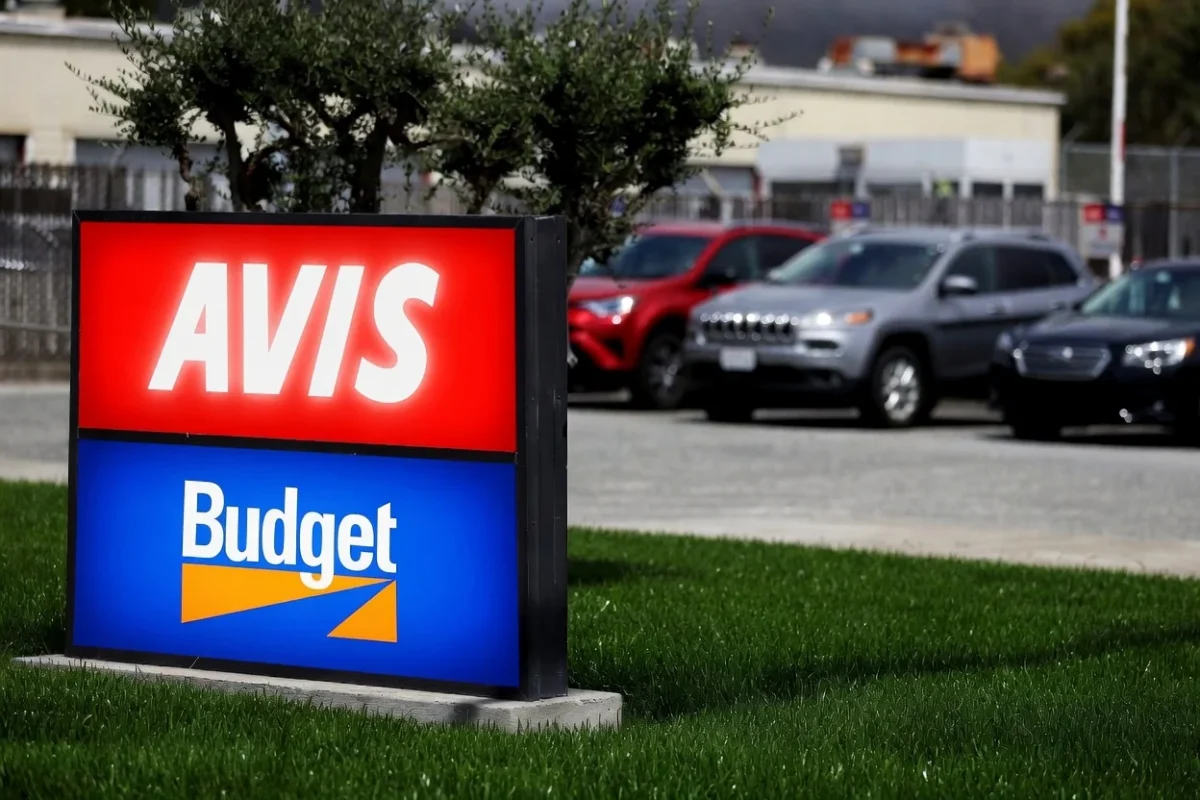
Shares of Verra Mobility were hovering around $13.08 during Wednesday’s premarket hours, marking a devastating decline of over 46% following Tuesday evening’s disclosure that Avis Budget Group has decided to terminate their business relationship. The contract dissolution becomes official in September 2026.
Verra Mobility Corporation, VRRM
The partnership with Avis represents approximately 13.5% of Verra Mobility’s anticipated 2025 revenue — making this a substantial financial blow. According to the company’s statement, losing this contract will strip away between $135 million and $145 million in annualized commercial services revenue, while delivering a crushing $120 million to $125 million hit to annual segment profitability before implementing any mitigation strategies.
CEO David Roberts expressed clear frustration with the development. “We were surprised and disappointed to receive this notice from Avis Budget Group given our longstanding partnership and the significant time invested by both parties in ongoing extension negotiations,” Roberts stated.
Roberts further indicated that management is now pivoting toward expense reduction initiatives, operational adjustments, and strategic repositioning to restore growth momentum.
Avis Budget Group has remained silent on the matter as of press time.

Financial Outlook Slashed
Verra Mobility substantially revised its complete 2026 financial projections in response to the contract loss. Total revenue expectations have been reduced to a range of $985 million to $995 million, representing a notable decrease from the $1.02 billion to $1.03 billion guidance provided just weeks earlier.
Adjusted EBITDA projections were lowered to $380 million–$385 million, down from the previous $405 million–$415 million forecast.
Adjusted earnings per share guidance dropped to a range of $1.19–$1.25, compared to the earlier projection of $1.32–$1.38, while free cash flow expectations were trimmed to $140 million–$150 million from $150 million–$160 million.
This represents a comprehensive revision to the financial trajectory for a company that was already experiencing pressure within its commercial operations segment.
Wall Street Responds
Baird was swift in its response. Analyst David Koning downgraded his VRRM rating from Outperform to Neutral while dramatically reducing the price target from $20 down to $8.
Koning highlighted that the company’s leverage ratio now climbs to approximately 3.5 times on a pro forma basis. He further cautioned that should Verra lose either Enterprise or Hertz — both partnerships scheduled for renewal in 2027 — the entire commercial segment’s sustainability could be jeopardized. Koning noted that comparable firms like FISV, FIS, and GPN currently trade at roughly 4–7 times their 2027 estimated earnings at similar leverage levels, which would theoretically value VRRM between $4 and $8 per share using that valuation framework.
According to InvestingPro data, six analysts have already reduced their earnings projections for the company’s upcoming reporting period.
Before this announcement, Verra Mobility had posted Q1 2026 revenue of $223.6 million, slightly exceeding analyst expectations, with adjusted earnings per share of $0.25 compared to the consensus estimate of $0.24. However, commercial services revenue had already declined 4% on a year-over-year basis during that quarter to $97.8 million, representing an early warning signal that many observers may have overlooked.
The stock had already surrendered 41.6% of its value year-to-date through Tuesday’s market close and had declined 44% over the previous 12-month period. Wednesday’s sharp selloff pushed shares dangerously close to the 52-week low of $12.83.
Get 3 Free Stock Ebooks
Discover top-performing stocks in AI, Crypto, and Technology with expert analysis.
- Top 10 AI Stocks - Leading AI companies
- Top 10 Crypto Stocks - Blockchain leaders
- Top 10 Tech Stocks - Tech giants


