



Key Takeaways
- Futures for the Dow, S&P 500, and Nasdaq all declined during Wednesday’s premarket session
- Brent crude surged past $95 per barrel following Trump’s warning of escalated strikes against Iran
- Treasury yields spiked with the 10-year reaching 4.79% and the 30-year touching 5.27%
- Trade friction between the US and Canada persisted with negotiations stalled
- Key quarterly reports from Broadcom and Snowflake expected Wednesday evening
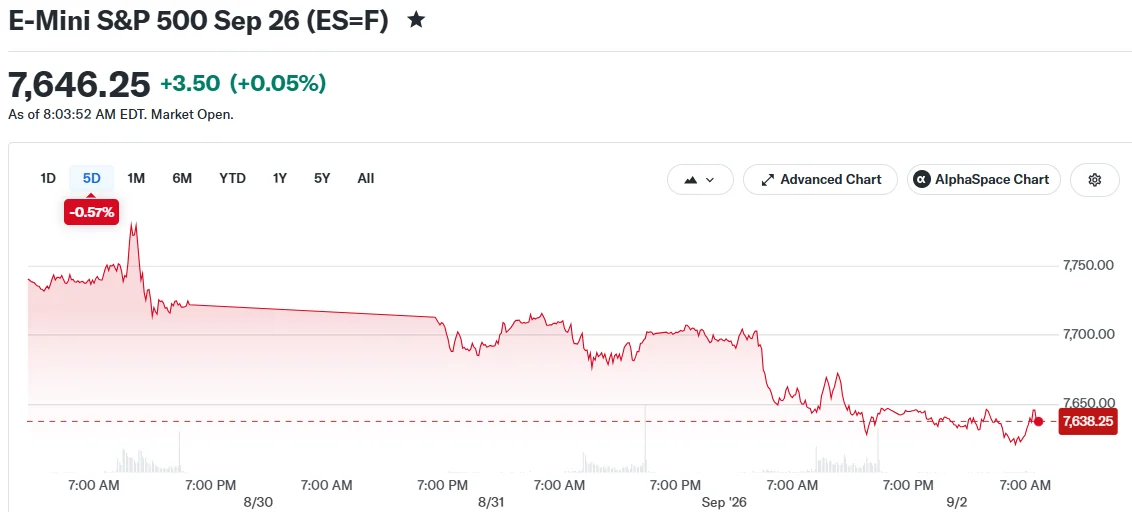
American equity futures retreated Wednesday morning as investors grappled with climbing energy costs and surging bond yields as September trading begins.
Futures tied to the Dow Jones slid approximately 0.2%, S&P 500 contracts declined 0.3%, while Nasdaq-100 futures registered the steepest losses at 0.6%. The downturn followed Tuesday’s challenging session that saw the Nasdaq tumble 1%.
Middle East Tensions Drive Energy Prices and Yields Upward
Brent crude prices surged beyond the $95 per barrel threshold after President Trump warned of significantly stronger military action against Iran in response to Tuesday’s extensive US airstrikes. This escalation drove energy markets higher and intensified existing inflation concerns troubling market participants.
Elevated oil prices contribute to inflation forecasts, subsequently driving Treasury yields higher. Tuesday saw the 10-year Treasury yield climb to 4.79%, while the 30-year benchmark reached 5.27%.
Climbing yields present challenges for equity markets by increasing financing expenses for businesses and households. Additionally, higher-yielding bonds become more appealing alternatives to stocks for investors.

“Stocks and bond prices can go down together during environments where rates are rising at a fast pace,” said Michael Landsberg, CIO at Landsberg Bennett Private Wealth Management.
Landsberg noted that while bonds typically serve as protection against equity turbulence, this hedging characteristic diminishes when interest rates surge rapidly.
Positive quarterly results from Dell released after Tuesday’s market close failed to bolster market confidence. The bond market’s dramatic moves overshadowed corporate performance.
Canada-US Trade Dispute Remains Unresolved
Trade friction with Canada continued drawing attention. Canadian Prime Minister Mark Carney indicated that discussions might restart once the United States ceases “throwing shade” and demonstrates genuine commitment to negotiations.
Treasury Secretary Scott Bessent countered by asserting the US is not engaged in a trade war with Canada. The ongoing diplomatic exchange contributed to market uncertainty.
Wednesday brings the release of ADP’s private-sector employment figures, offering investors an advance look ahead of Friday’s comprehensive monthly jobs report.
Recent labor market indicators suggest stagnant job openings, and forthcoming employment statistics could influence market expectations regarding Federal Reserve monetary policy direction.
Quarterly results from Broadcom and Snowflake are scheduled for release after Wednesday’s closing bell. Both reports carry significant weight given the recent pressure technology stocks have endured from ascending yields.
The Nasdaq has experienced the most severe declines among major indices this week. Technology sector companies face particular vulnerability to rate increases as their stock valuations rely heavily on projected future profits.
In early Wednesday trading, E-Mini Dow futures hovered around $52,937, while E-Mini Nasdaq-100 futures retreated to $29,068.
Investors face a data-heavy remainder of the week with critical employment figures and important earnings announcements still on the calendar.
Get 3 Free Stock Ebooks
Discover top-performing stocks in AI, Crypto, and Technology with expert analysis.
- Top 10 AI Stocks - Leading AI companies
- Top 10 Crypto Stocks - Blockchain leaders
- Top 10 Tech Stocks - Tech giants


