


If you ask frequent online casino users to explain the actual value of their loyalty rewards, you’ll typically get blank stares. Sure, they’re accumulating points. Yes, those points eventually convert into something. There’s a general understanding that increased play yields enhanced perks eventually. But ask them to calculate their exact return per dollar wagered without consulting documentation—most can’t do it.
This lack of clarity isn’t by chance. Casino points frameworks are intentionally convoluted. Game types affect conversion rates differently. Redemption choices carry varying worth. Tier benchmarks are calibrated to keep players perpetually advancing without reaching the top. What emerges is a rewards structure that promises generosity but frequently underdelivers.
When ZunaBet entered the market in 2026, it chose a fundamentally different model. Six straightforward rakeback tiers with clearly stated percentages that apply universally across platform activity. No points accumulation. No conversion charts. No guesswork about whether you’re receiving fair compensation. This piece examines why this approach matters and what ZunaBet’s framework actually provides.
Why Points-Based Systems Fall Short
Points-based casino rewards became ubiquitous because they favor the house. They generate a perception of generosity without guaranteeing specific returns. Players feel acknowledged as points accumulate. Whether those points deliver meaningful value hinges on variables players rarely influence—redemption formulas, tier prerequisites, expiration policies, and game-specific contribution rates that fluctuate dramatically across the platform.
Industry leaders have perfected this approach over time. DraftKings Dynasty Rewards, Caesars Rewards, BetMGM’s tier framework, and FanDuel’s comparable programs all follow similar blueprints. Gameplay generates points. Points exchange for bonus credits, tangible prizes, or—in Caesars’ ecosystem—hotel accommodations and restaurant vouchers. The offline redemption paths hold legitimate appeal for certain users, especially those who frequent Caesars venues. For gamblers focused exclusively on online play rather than hospitality benefits, the equation becomes murky.


The core frustration that alienates users from points frameworks is the valuation challenge. Someone wanting to assess their rewards value must identify the points-per-dollar rate for their chosen games, determine the conversion ratio to their preferred reward type, then calculate whether the outcome justifies their wagering volume. Most skip this analysis entirely. They play, points accumulate, and they occasionally claim rewards without ever confirming whether the exchange was equitable.
Rakeback eliminates this complexity entirely.
Understanding Rakeback Mechanics
Rakeback represents a straightforward percentage return on wagering activity. Players bet, experience wins or losses, and automatically receive a predetermined percentage of their total wagers or net losses as tangible value. The percentage remains constant at their current tier. The return applies uniformly across all games. No conversion steps, no redemption procedures, and zero uncertainty about what’s being received.
The concept originated in poker, where the rake—the house’s percentage from each pot—was refunded to loyal players as a retention incentive. Online casinos expanded this principle into a comprehensive loyalty tool. Within the crypto gambling sector, it has emerged as the dominant loyalty approach because it aligns with what crypto-native users expect from digital platforms—transparency, simplicity, and calculable value.
Someone on a 10% rakeback plan who wagers $1,000 monthly receives $100 returned. At 20% rakeback, that becomes $200. The calculation is instantaneous. The value is unambiguous. No speculation about point conversion rates or wondering if bonus credits justified the effort.
Inside ZunaBet’s Dragon Evolution Rewards
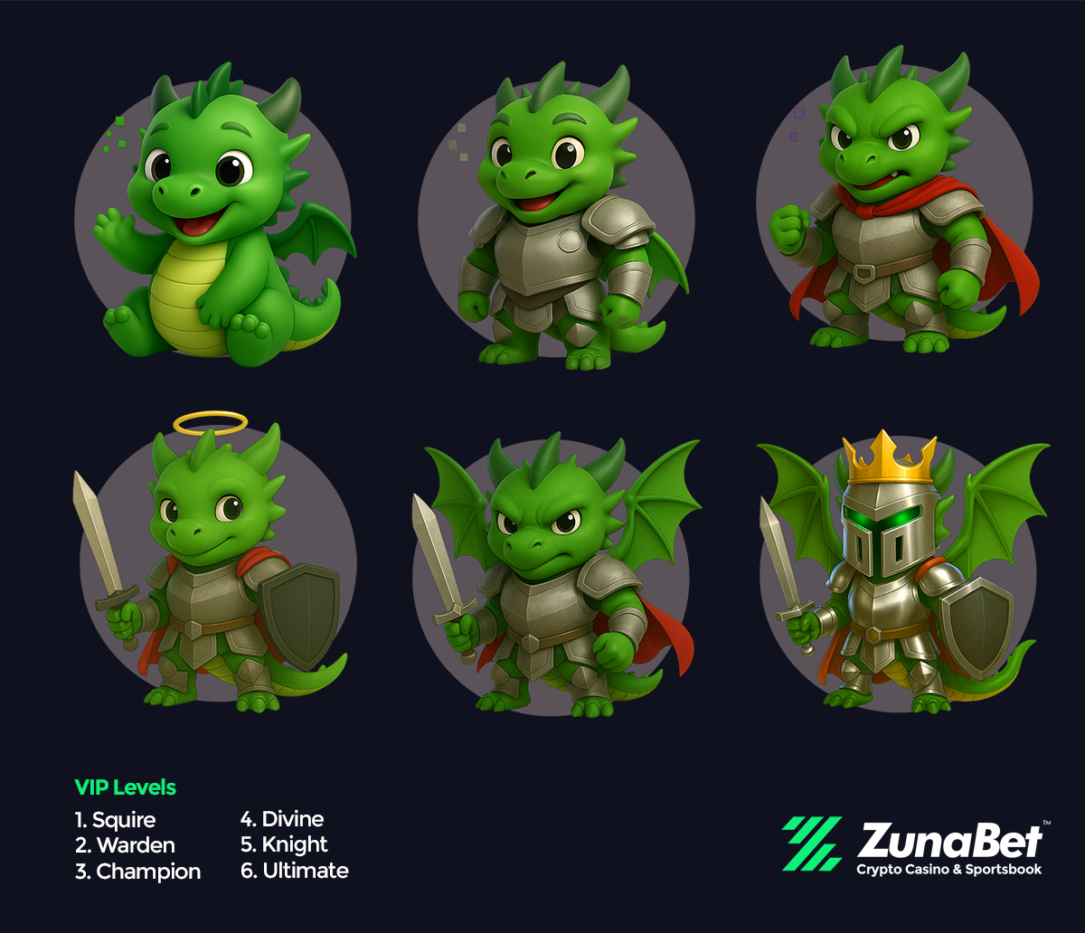
ZunaBet structures its loyalty framework around a dragon evolution concept featuring six tiers and a gamified character named Zuno. The thematic presentation adds character—progression through dragon-themed levels rather than generic numeric ranks—but the real substance lies in the rakeback percentages each tier provides.
Squire launches at 1% rakeback. Warden advances to 2%. Champion reaches 4%. Divine achieves 5%. Knight attains 10%. Ultimate delivers 20%. Each progression beyond the initial tier represents substantial value improvement, with the Knight-to-Ultimate jump—doubling from 10% to 20%—proving especially impactful for high-volume players.
These percentages function across all platform sections. Whether players engage with slots, live dealer tables, or sportsbook offerings, the rakeback applies to their wagering volume regardless of location. This universality transforms it from a specialized promotion into genuinely comprehensive rewards.
Supplementary perks enhance rather than replace the core rakeback foundation. Higher tiers unlock up to 1,000 free spins, VIP club membership, and doubled wheel spin opportunities. These represent concrete additions layered atop a loyalty base already providing direct financial returns. For users reaching premium tiers, the pairing of 20% rakeback with escalating bonuses constitutes one of the crypto casino industry’s most competitive loyalty offerings.
Real-World Value Comparison
Comparing ZunaBet’s loyalty structure against traditional points frameworks reveals practical differences through straightforward scenarios.
Consider someone wagering $500 weekly—$2,000 monthly—on ZunaBet’s Champion tier with 4% rakeback. That generates $80 monthly in direct returns, automatically, without redemption steps. Advancing to Knight tier transforms that same volume into $200 monthly. At Ultimate tier, it becomes $400 monthly.
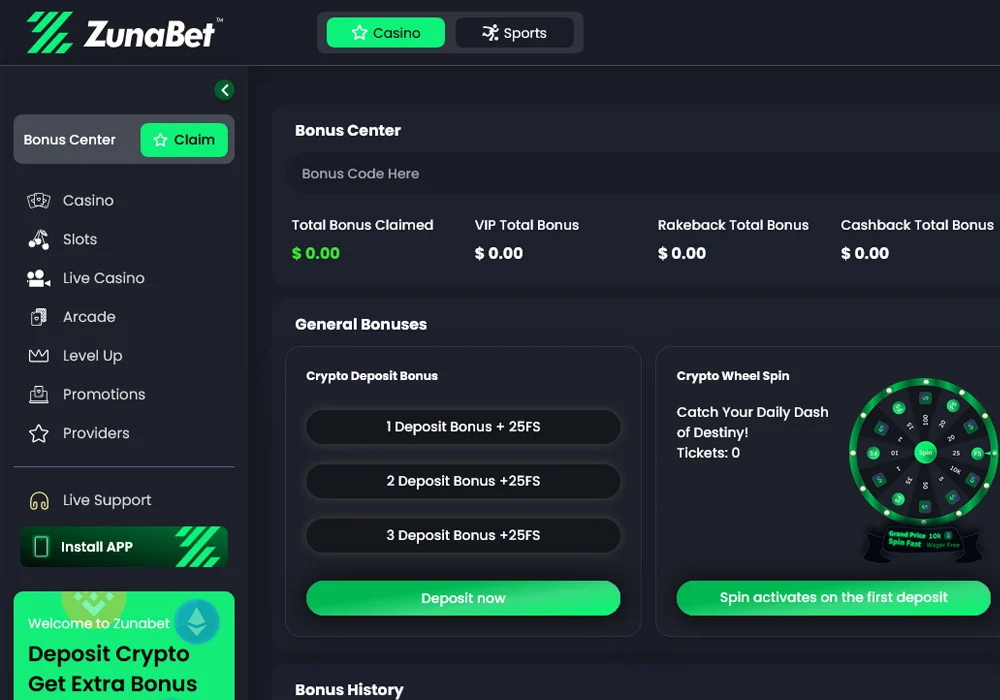
The identical player on traditional points platforms earns points at game-dependent rates, converts those points through variable redemption formulas, and receives something—perhaps bonus credits—with theoretical value but no cash withdrawal option. The actual financial benefit proves difficult to quantify and typically falls below rakeback at comparable volumes.
For occasional players, the distinction matters less. For consistent users maintaining steady platform volume, the contrast between transparent rakeback and obscured points systems becomes financially significant. It separates knowing your loyalty’s precise worth from hoping it has value.
The Foundation Supporting the Rewards
Loyalty programs only deliver value when the underlying platform performs. ZunaBet operates under Strathvale Group Ltd ownership, holds an Anjouan gaming license, and maintains Belize registration. Its 2026 launch came from a team bringing over two decades of combined industry expertise.
The gaming catalog features 11,294 titles from 63 providers—encompassing slots, live dealer experiences, and RNG table games from Evolution, Pragmatic Play, Hacksaw Gaming, Yggdrasil, BGaming, and numerous others. The sportsbook addresses major international sports alongside esports—CS2, Dota 2, League of Legends, Valorant—plus virtual sports and combat disciplines. Payment infrastructure supports over 20 cryptocurrencies with zero processing fees and rapid withdrawals. Applications function across iOS, Android, Windows, and MacOS platforms with round-the-clock live chat assistance.
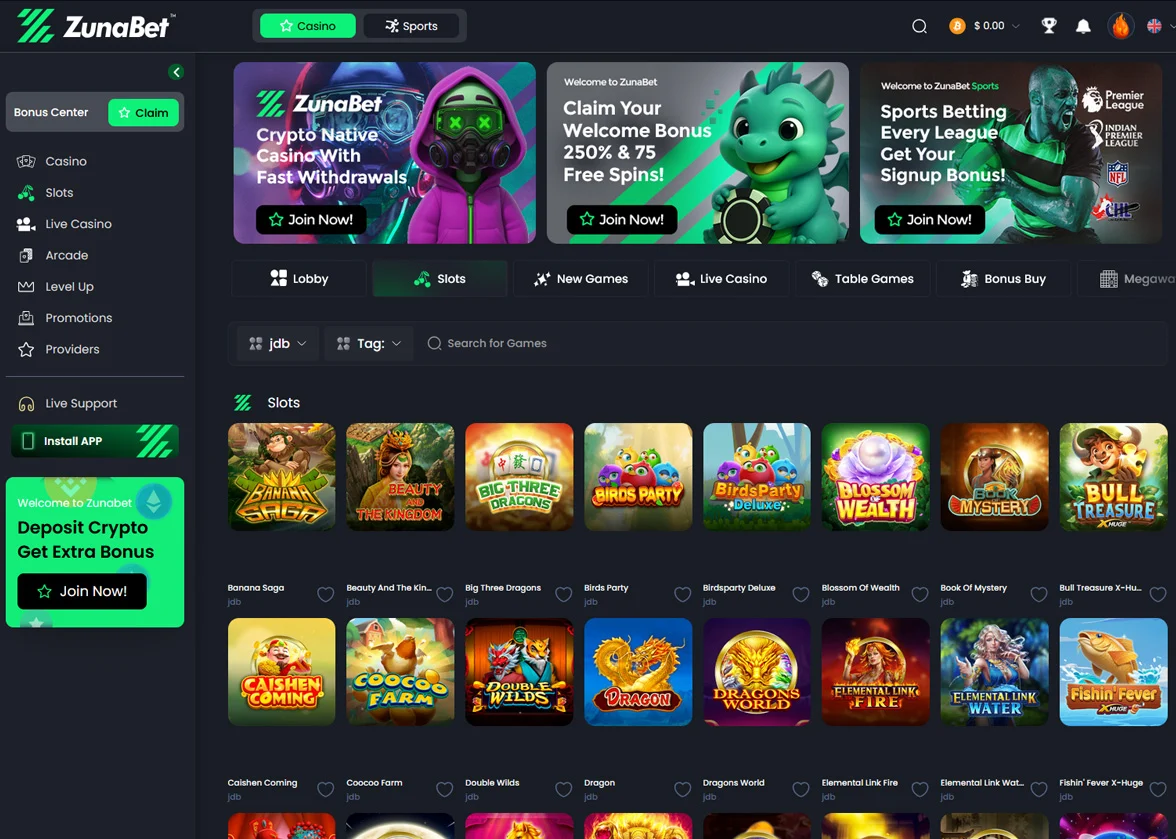
Newcomers access a welcome package spanning three deposits totaling up to $5,000 plus 75 free spins—100% match up to $2,000 with 25 spins initially, 50% match up to $1,500 with 25 spins on the second deposit, and 100% match up to $1,500 with 25 spins on the third.
The platform architecture supports consistent, long-term engagement—precisely the usage pattern where rakeback loyalty programs deliver maximum value. Generous rewards mean little on platforms with limited game selections or unreliable payment processing. ZunaBet combines its loyalty architecture with comprehensive platform features that justify continued engagement.
The Growing Importance of Loyalty Program Transparency
The industry movement toward rakeback and away from points reflects evolving player expectations for digital services. Transparency has transitioned from competitive advantage to baseline requirement. Cryptocurrency users already function within ecosystems where transaction values are visible, fees are disclosed upfront, and institutional opacity doesn’t exist. They apply identical expectations to loyalty frameworks.
Rewards programs requiring calculators and documentation to evaluate clash with these expectations. Programs stating clear percentages and applying them consistently align perfectly. ZunaBet’s dragon evolution system embraces the latter philosophy—and for players frustrated by points systems that promise more than they deliver, this straightforwardness provides compelling reason to consider switching.
ZunaBet launched in 2026, making its long-term performance history still developing. That deserves acknowledgment. But what it introduced—a loyalty framework built on transparency, directness, and rates delivering genuine value at advanced tiers—demonstrates a platform that has seriously considered what regular gamblers actually want. For those players, it presents a persuasive alternative.
Get 3 Free Stock Ebooks
Discover top-performing stocks in AI, Crypto, and Technology with expert analysis.
- Top 10 AI Stocks - Leading AI companies
- Top 10 Crypto Stocks - Blockchain leaders
- Top 10 Tech Stocks - Tech giants


