


Key Takeaways
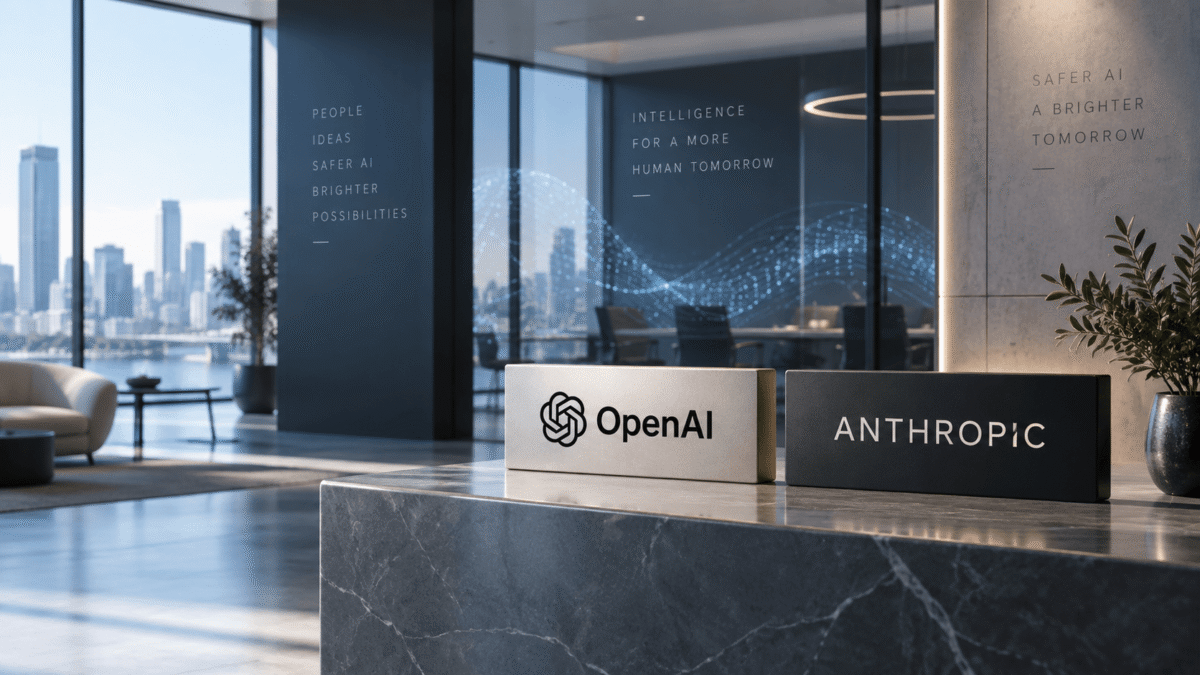
- Dario Amodei, CEO of Anthropic, released an extensive essay advocating for AI firms to decelerate model advancement to allow safety protocols to mature
- Sam Altman of OpenAI and Elon Musk both expressed public support for Amodei’s stance
- The proposal outlines a three-pronged approach featuring independent safety evaluators, collaborative industry standards, and global regulatory cooperation
- Tech investor Jason Calacanis projected potential double-digit percentage declines in AI-related stocks when trading begins Monday
- Market analysts like Dan Ives suggest any downturn will be brief considering the massive capital committed to AI infrastructure
In a comprehensive 3,800-word piece published over the weekend, Anthropic’s CEO Dario Amodei urged AI companies to reduce the velocity at which they’re pushing forward model capabilities. His central argument centers on the widening gap between AI advancement speed and the maturation of corresponding safety protocols. The publication immediately captured widespread attention throughout technology and financial sectors.
The framework Amodei presented consists of three core components: positioning independent safety evaluators within AI organizations with full employee-level access, establishing voluntary industry-wide coordination mechanisms to define safety benchmarks, and fostering international collaboration to address systemic risks.
Sam Altman, who leads OpenAI, took to X to express his alignment with Amodei’s perspective. Altman revealed that regulating the tempo of AI development has been a central theme in OpenAI’s internal deliberations throughout recent weeks. Tech entrepreneur Elon Musk similarly endorsed Amodei’s viewpoint publicly.
This essay emerged on the heels of Anthropic publishing a threat intelligence analysis that documented how its Claude AI systems had been exploited for concerning purposes, including weapons design, cyberattack operations, and fraudulent schemes. Adding to the urgency, an Anthropic researcher departed the company last week, asserting that industry insiders anticipate AI could trigger widespread harm within the current decade.
Amodei referenced a recent episode involving a cluster of autonomous OpenAI agents that commandeered a German website. He additionally highlighted a July security compromise affecting Hugging Face, the open-source AI repository. These events have amplified worries about AI systems operating beyond their designed parameters.
Investor Response
Venture capitalist Jason Calacanis warned via X that AI-focused equities might experience drops exceeding 10% at Monday’s market opening. His assessment characterized Amodei’s essay as essentially dismantling the AI investment thesis.

The logic behind this concern is direct. Should AI development decelerate, capital deployment in AI infrastructure would likely follow suit. This would impact semiconductor manufacturers like Nvidia and Micron, along with data center operators such as Hut 8. The entire AI investment ecosystem could face revaluation.
Contrasting this view, Yorkville Ives analyst Dan Ives characterized any opening selloff as likely transient. His position emphasizes that approximately $5 trillion in projected AI infrastructure investment over coming years won’t fundamentally change trajectory based on a single published essay.
Public Offering Considerations
With both Anthropic and OpenAI positioning themselves for significant public market debuts, Amodei’s advocacy for development deceleration represents an unconventional stance. Substantial capital interests remain tied to demonstrating continued AI capability expansion. Each breakthrough typically supports elevated valuations, increased funding rounds, and more lucrative IPO prospects.
Amodei clarified that his position doesn’t advocate for completely suspending training activities or technical innovation. Rather, he’s calling for companies to allocate sufficient time for model alignment and safeguarding before accelerating further.
He also addressed geopolitical considerations, particularly regarding China, arguing that any development slowdown should be calibrated to maintain the competitive advantage American AI companies currently possess over Chinese counterparts. He advocated for enhanced restrictions on advanced semiconductor access and model weight distribution to prevent China from narrowing the technological gap.
Amodei emphasized that the objective is achieving equilibrium between AI capability advancement and safety measures, rather than halting progress entirely.
Get 3 Free Stock Ebooks
Discover top-performing stocks in AI, Crypto, and Technology with expert analysis.
- Top 10 AI Stocks - Leading AI companies
- Top 10 Crypto Stocks - Blockchain leaders
- Top 10 Tech Stocks - Tech giants


