


Key Takeaways
- Anthropic must navigate strategic decisions on AI model deployment as rivalry with OpenAI escalates before a potential public listing.
- Since debuting in September, OpenAI’s GPT-6 Astra has secured meaningful adoption among enterprise clients, challenging Claude’s position.
- By late July, Anthropic’s annualized revenue run rate hit approximately $65 billion, outpacing OpenAI’s figure of over $40 billion.
- The company faces a delicate trade-off between funding cutting-edge model development and satisfying investor demands for enhanced profitability.
- Emerging open-source and open-weight AI solutions may pose a wider competitive threat by reducing operational costs for organizations.
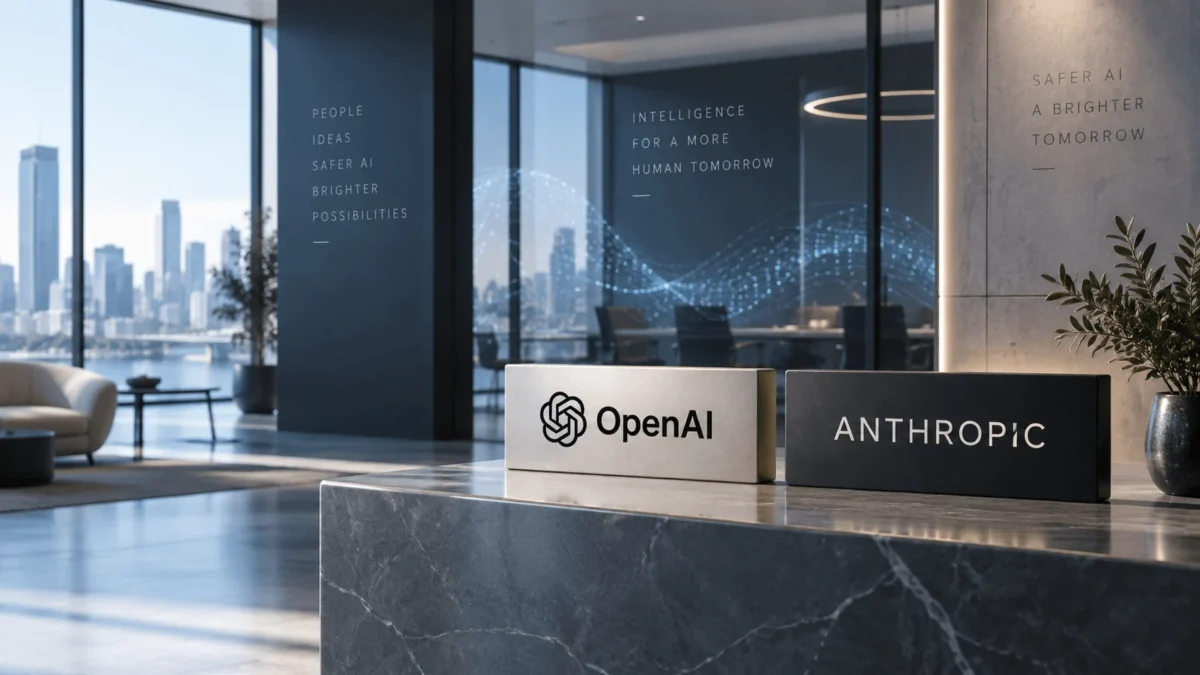
The rivalry between Anthropic and OpenAI has reached a critical juncture as both organizations vie for enterprise artificial intelligence budgets while preparing for potential scrutiny from public markets. Anthropic is evaluating the pace of its model rollouts while managing escalating research expenses, safety considerations and demands for stronger financial performance.
This strategic discussion unfolds as OpenAI builds traction following its recent GPT-6 Astra release. Meanwhile, Anthropic edges closer to a possible stock market debut and confronts mounting challenges in protecting its enterprise market standing.
GPT-6 Astra Drives OpenAI’s Enterprise Push
OpenAI unveiled GPT-6 Astra on September 3, showcasing enhancements in areas including computer interaction, software development, security applications and professional workflows. The technology has since been deployed across ChatGPT premium tiers, OpenAI’s API platform and business distribution networks.
The model has attracted significant attention from both developers and commercial users. According to industry metrics referenced in recent analysis, GPT-6 Astra propelled OpenAI to claim the leading spot on OpenRouter for the first time in over two and a half years.
Business expenditure patterns reflect a comparable trend. Data from Ramp indicates OpenAI represents approximately 13% of tracked enterprise AI investments, while Anthropic’s Claude captures around 8% of the same market segment.
This disparity has captured investor focus as they assess Anthropic’s valuation prospects before a potential market listing. The central question revolves around whether OpenAI can capture additional market share from a competitor that has established substantial enterprise credibility.

Revenue Metrics Favor Anthropic
Notwithstanding OpenAI’s recent progress, Anthropic maintains superiority in a critical financial metric. The company’s annualized revenue run rate climbed to approximately $65 billion by July’s conclusion, rising from roughly $9 billion at 2025’s end.
OpenAI’s corresponding annualized revenue run rate exceeded $40 billion during the identical timeframe. Anthropic is also projecting revenue between $190 billion and $200 billion for 2028, according to reports from sources close to pre-IPO valuation discussions.
Certain investors reportedly believe Anthropic’s established enterprise partnerships provide insulation against rapid market share erosion. Major corporations typically require substantial time to transition AI vendors after embedding models within operational systems.
Nevertheless, OpenAI is intensifying its concentration on this identical segment. CFO Sarah Friar has indicated that business revenue has eclipsed consumer revenue, reinforcing OpenAI’s strategic pivot toward extended corporate agreements.
Public Market Preparations Create Additional Complexity
Anthropic is simultaneously evaluating the financial burden of continued advanced model releases against requirements to showcase improved profitability metrics. Elevated interest rate environments have shifted investor attention toward timelines for transforming revenue growth into sustained earnings.
This dynamic creates tension between preserving technological superiority and managing expenditures. Developing and maintaining frontier AI capabilities demands substantial capital allocation for computational resources, research initiatives and safety validation.
Anthropic’s position is further nuanced by its public commitment to AI safety principles. CEO Dario Amodei recently advocated for more measured pacing in frontier AI advancement, while the organization continues assessing future product launches.
The company is reportedly exploring whether to modify its IPO timeline, potentially providing leadership additional latitude regarding product release schedules. According to industry reports, a postponed listing would offer extended runway for aligning model introductions with public market objectives.
Open-Source Solutions Present Broader Industry Challenge
The most substantial competitive pressure may ultimately emerge beyond the Anthropic-OpenAI competition. Open-source and open-weight model architectures are expanding organizational options for deploying AI capabilities without complete dependence on major commercial providers.
More affordable alternatives could exert downward pressure on token pricing and profit margins throughout the AI sector. Organizations may also elect to develop proprietary infrastructure rather than procuring complete AI capacity from OpenAI or Anthropic.
Currently, Anthropic maintains revenue leadership while OpenAI demonstrates accelerating enterprise penetration. As both entities pursue identical corporate customer segments, forthcoming model releases and their capacity to convert AI demand into profitable operations will remain under intense observation.
Get 3 Free Stock Ebooks
Discover top-performing stocks in AI, Crypto, and Technology with expert analysis.
- Top 10 AI Stocks - Leading AI companies
- Top 10 Crypto Stocks - Blockchain leaders
- Top 10 Tech Stocks - Tech giants


