



Quick Summary
- Bitcoin declined to $62,840, recording a 1.1% drop in 24 hours and a 3.5% weekly decline
- Major altcoins including Ether, XRP, Solana, and Dogecoin experienced losses; Tron bucked the trend with gains
- South Korea’s Kospi plummeted more than 6% amid a worldwide semiconductor stock selloff
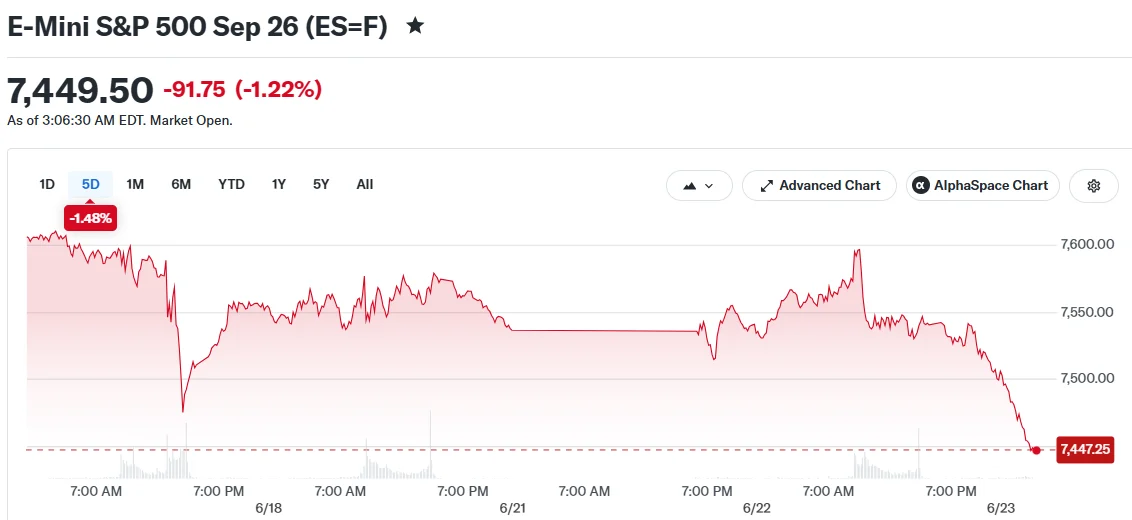
- Nasdaq 100 futures declined 2.1%; S&P 500 futures retreated 1.2%
- Critical upcoming events: Micron’s earnings Wednesday, July 2 US jobs data, July 14 CPI release
Bitcoin slipped beneath the $63,000 threshold on Tuesday as a broad-based technology sector selloff dragged down risk-sensitive assets throughout worldwide markets.
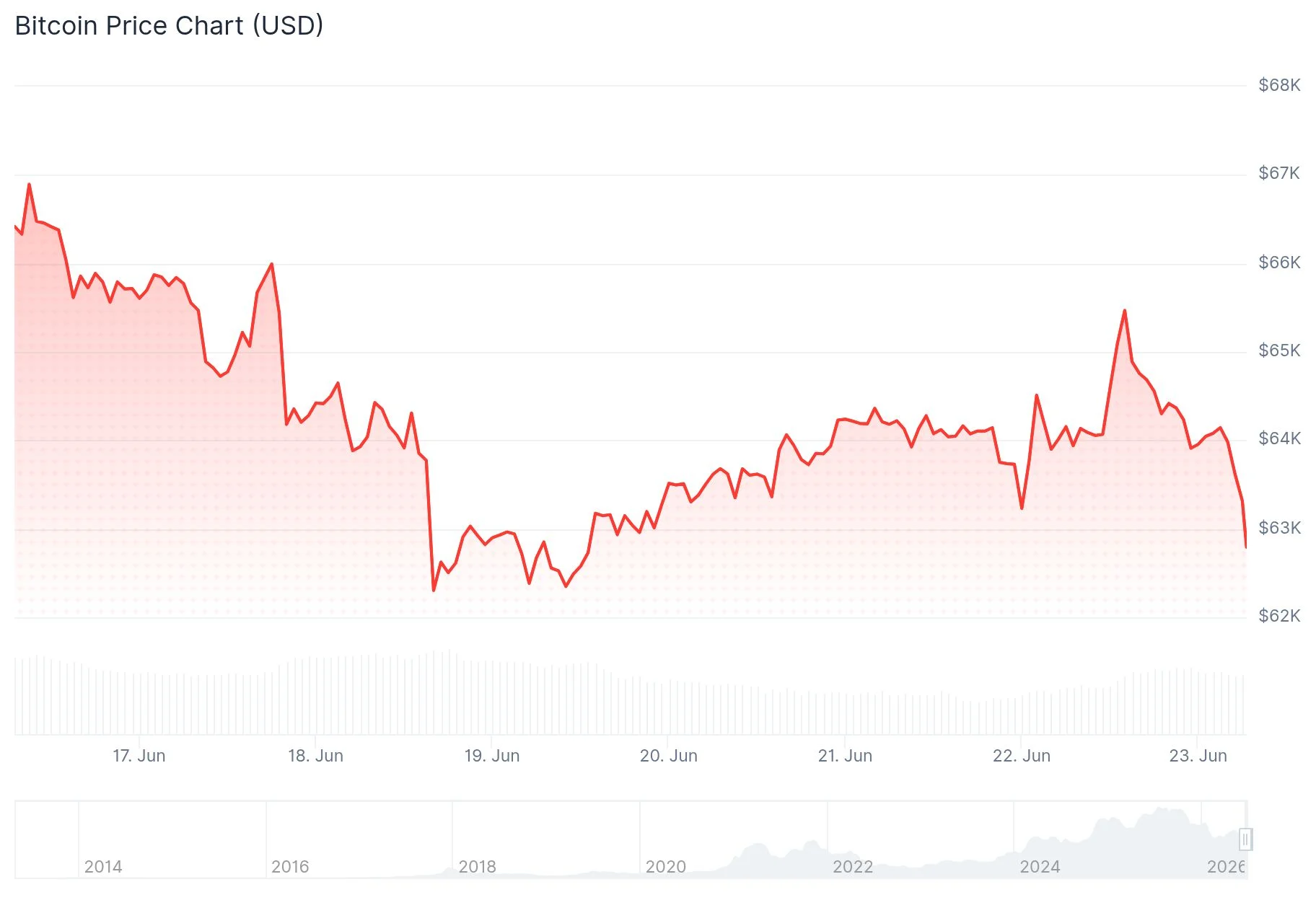
The leading cryptocurrency was changing hands near $62,840, reflecting a 1.1% decline over the previous 24-hour period, based on CoinDesk pricing data. The digital asset had peaked at $65,076 during Monday’s trading before experiencing downward momentum throughout the remainder of the session.
The downturn wasn’t confined to Bitcoin alone. Ether retreated 0.9% to settle at $1,719, marking a 3.3% weekly decline. XRP experienced a 1.6% decrease to $1.12, accumulating a 9% loss over the seven-day period. Solana declined 3.4% to land at $71, while Dogecoin registered a 6.6% weekly drop.
Tron emerged as an outlier, advancing 1.3% during the day and climbing 4.6% across the week. Hyperliquid’s HYPE token recorded a 4.8% weekly decrease.
Technology Sector Drives Market Weakness
The cryptocurrency market’s weakness stemmed from traditional equity market turbulence. Market participants shifted capital away from high-flying technology and semiconductor stocks, triggering widespread declines across Asian trading sessions. South Korea’s Kospi index plunged over 6% on concerns that the chipmaker rally had become overextended.

S&P 500 futures contracted 1.2% while Nasdaq 100 futures tumbled 2.1%. SpaceX equity continued its decline for a third consecutive session. Climbing bond yields additionally pressured US equity markets on Monday.
Brent crude oil retreated below the $78 per barrel mark while gold also experienced pullbacks.
Recent weeks had seen Bitcoin’s price action primarily influenced by diplomatic progress between the United States and Iran. With a peace framework now established and energy prices moderating, the dominant market force appears to have shifted toward AI-related technology trading dynamics.
Critical Events on the Calendar
Micron’s Wednesday earnings release represents a crucial market test. The memory chip manufacturer’s stock has skyrocketed over 300% throughout the current year on artificial intelligence infrastructure spending. The company’s financial results will reveal whether this growth trajectory remains sustainable.
FedEx and Cerebras Systems are scheduled to release earnings on Tuesday. The report will mark Cerebras’ inaugural earnings announcement following its May public offering.
The Federal Reserve’s favored inflation gauge, the PCE report, is due for release on Thursday.
Digital asset company Bitfire Group highlighted additional macroeconomic catalysts approaching on the calendar. The United States employment report arrives July 2, followed by the Consumer Price Index on July 14, with second-quarter corporate earnings season commencing in mid-to-late July.
Bitfire also identified two concerning indicators within cryptocurrency markets. The Coinbase premium metric has turned negative, indicating weakening institutional demand for Bitcoin among US-based buyers. Strategy’s STRC preferred shares have continued declining, momentarily falling beneath $84, which Bitfire identifies as a factor constraining market sentiment.
For Bitcoin traders, the critical support zone to monitor spans $59,000 to $60,000. A decisive breakdown beneath this threshold would indicate the selloff has entered a more serious phase.
Get 3 Free Stock Ebooks
Discover top-performing stocks in AI, Crypto, and Technology with expert analysis.
- Top 10 AI Stocks - Leading AI companies
- Top 10 Crypto Stocks - Blockchain leaders
- Top 10 Tech Stocks - Tech giants


