



Key Highlights
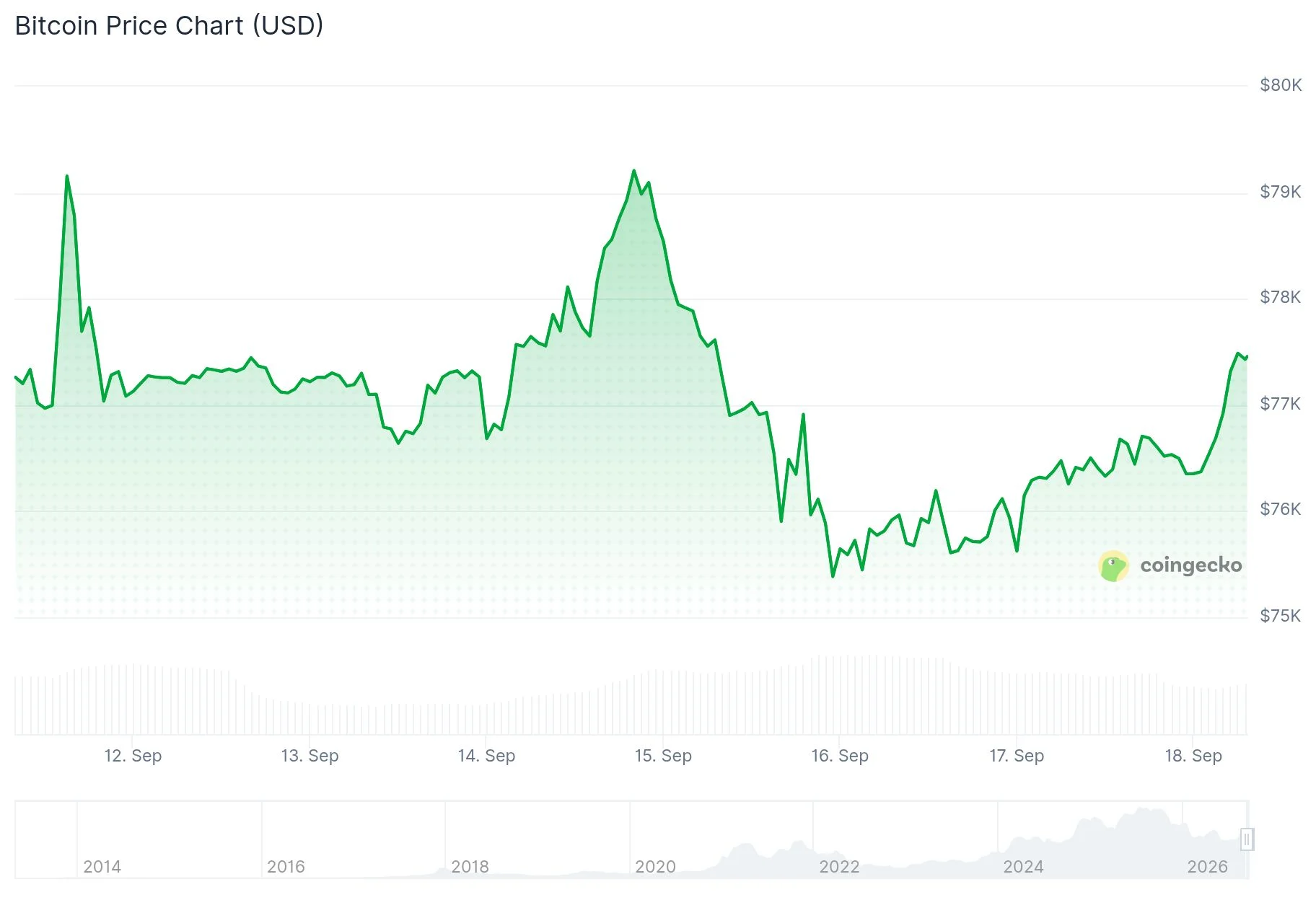
- BTC dropped beneath the $76,000 threshold following the Federal Reserve’s decision to increase rates by 25 basis points, bringing them to 3.75-4%
- This marks the central bank’s first rate increase since July 2023, concluding a three-year period of accommodative monetary policy
- American equity markets bounced back, with the Nasdaq posting a 1.5% gain and the S&P 500 advancing 0.9%
- CryptoQuant’s Bull Score Index declined from 80 to 60 — reaching the platform’s baseline for maintaining bullish market conditions
- Analysts identify crucial support zones at $70,000 and within the $62,000-$65,000 band, per CryptoQuant data
The leading cryptocurrency by market capitalization slipped beneath the $76,000 mark this week as the United States Federal Reserve implemented a 25 basis point interest rate increase. This policy adjustment elevated the benchmark rate corridor to 3.75-4%.
The rate adjustment represents the Fed’s first tightening move since July 2023. This policy shift brought an end to a three-year stretch during which the central bank either reduced borrowing costs or maintained them at existing levels throughout consecutive policy meetings.
Following initial declines, Bitcoin staged a modest recovery, posting a 0.5% gain at press time. The BTC/USD trading pair had touched new monthly lows on Tuesday before experiencing a rebound.
Information from TradingView indicated declining price volatility across the previous 24-hour period. The one-hour chart displayed only marginal price fluctuations.
CoinGlass data revealed deepening bid-ask liquidity clustering near current spot pricing. This configuration typically emerges during sideways trading environments.

American stock indices rebounded during the session notwithstanding the rate increase. The S&P 500 advanced 0.9% while the Nasdaq Composite Index surged 1.5%.
Market commentary source The Kobeissi Letter addressed the equity market recovery in an X platform post. “The asset owner economy just keeps getting better,” the account noted, highlighting the Nasdaq’s performance as proof that asset holders remain advantaged even amid restrictive monetary policy.
Other major central banks have joined the Fed in tightening policy. The European Central Bank implemented a 0.25% rate increase during the previous week.
The Bank of Japan is anticipated to reveal its own rate increase on Friday. This would create a scenario where three significant central banks have raised borrowing costs within a span of mere days.
CryptoQuant Bull Score Reaches Critical Threshold
The Bull Score Index from CryptoQuant, which monitors Bitcoin price cycles, descended from 80 to 60. The analytics platform designates 60 as the minimum threshold for what constitutes bullish market territory.
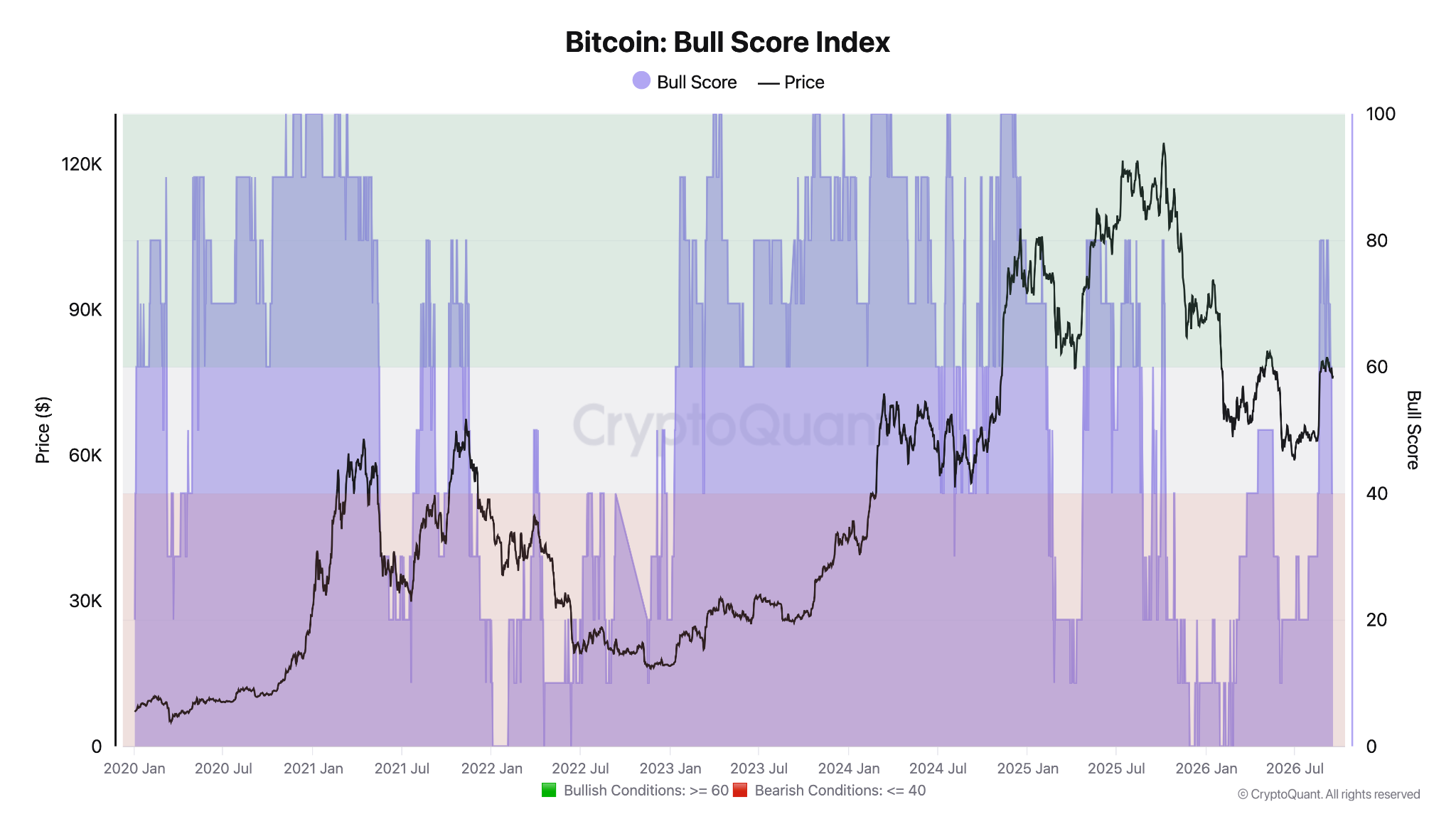
Julio Moreno, CryptoQuant’s head of research, conveyed the company’s perspective in a weekly analysis provided to Cointelegraph. “The trend is still bullish, but momentum and macro are working against it near-term,” he stated.
Moreno identified weakening American demand for Bitcoin alongside increasing altcoin inflows as immediate market challenges. The postponement of the CLARITY Act combined with the Fed’s rate decision were also mentioned as factors likely to promote consolidation.
Critical Support Zones Under Observation
The CryptoQuant analysis highlighted two support areas for market participants to track. These price levels are $70,000 and the zone spanning $62,000-$65,000.
Moreno provided this comprehensive assessment: “Bitcoin is cooling, not turning. A Bull Score of 60 keeps the trend bullish, but fading US demand, rising altcoin inflows, and a week of macro risk — the delay of the CLARITY Act and a likely Fed hike — argue for consolidation.”
Bitcoin’s August uptrend had accumulated 25% gains prior to entering the current consolidation phase. Macroeconomic factors have subsequently emerged as near-term barriers preventing further upward movement.
As of Thursday, CryptoQuant’s Bull Score Index registered at 60/100.
Cryptocurrency market analyst Killa (@KillaXBT) anticipates BTC will establish a higher low before advancing toward the $90K level, though he cautions the rally may not initiate directly from present prices. He suggests BTC could trade sideways for an extended period, with a possible decline into the lower $70K range serving as the actual bottom before upward continuation. He characterizes this as a classic liquidity cycle — eliminate weak hands through volatility, then initiate the genuine price advance.
Get 3 Free Stock Ebooks
Discover top-performing stocks in AI, Crypto, and Technology with expert analysis.
- Top 10 AI Stocks - Leading AI companies
- Top 10 Crypto Stocks - Blockchain leaders
- Top 10 Tech Stocks - Tech giants


