



Key Takeaways
- Bitcoin slipped more than 2.3% to approximately $63,919, breaking beneath the $64,000 threshold
- Climbing US Treasury bond yields are strengthening market expectations for additional Federal Reserve rate increases
- Exchange stablecoin deposits have reached their weakest levels since 2025
- Analyst Ted indicated that $65,000 support has been breached and identified $62,500–$63,000 as the critical zone to watch
- Senate roadblocks for the Digital Asset Market Clarity Act are creating additional regulatory confusion
Bitcoin (BTC) slipped beneath the $64,000 level on Saturday, hovering near $63,919 based on Binance exchange data. This represents approximately a 2.3% pullback within a 24-hour window.
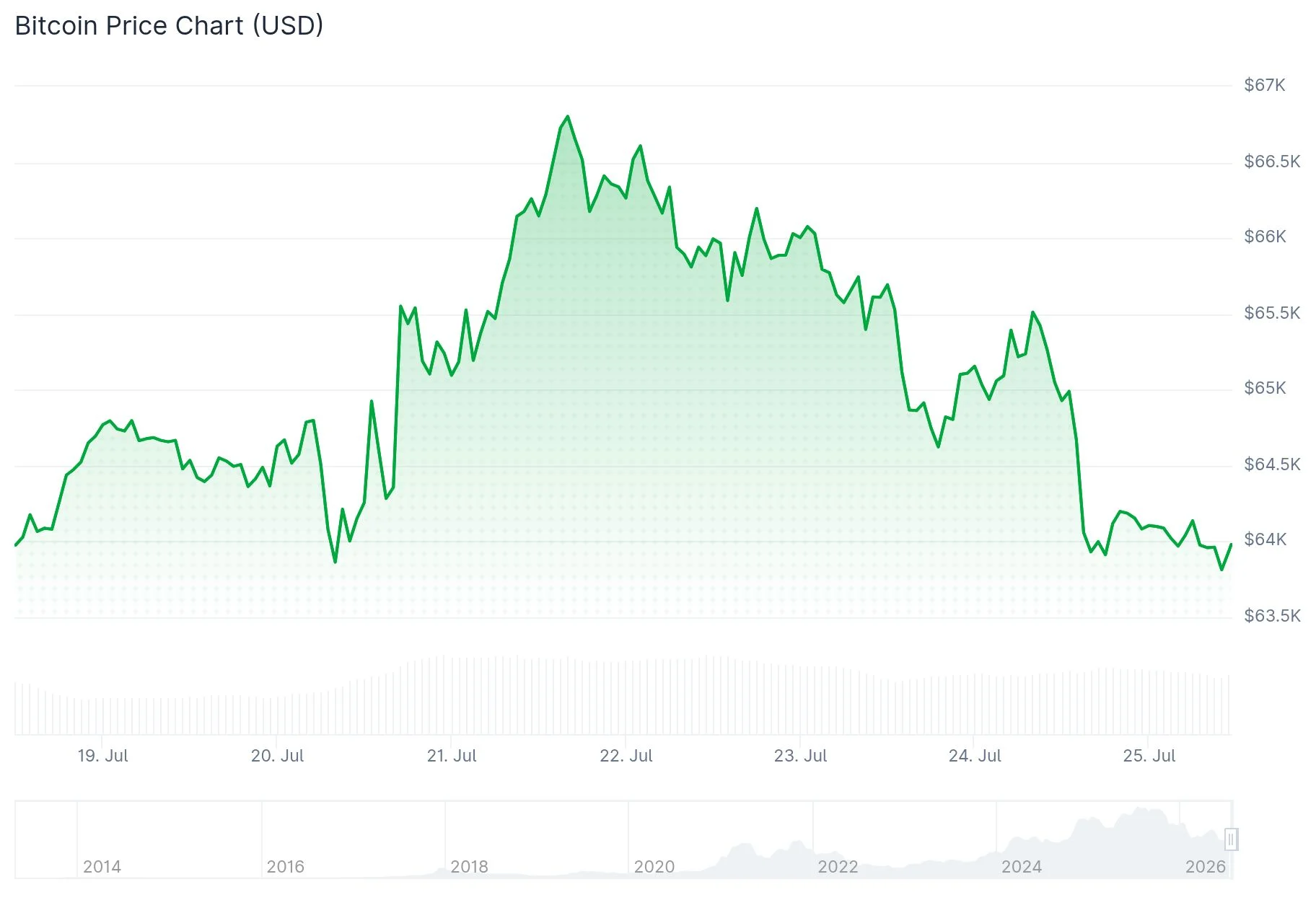
The downward momentum intensified following Friday’s Wall Street market opening. Throughout the trading session, BTC/USD fluctuated within a range spanning approximately $63,703 to $65,396.
Mosaic Asset Company, a trading firm, identified climbing US Treasury bond yields as a primary catalyst. The two-year Treasury yield advanced to 4.31%, positioning it significantly above the Federal Reserve’s present target corridor.
According to Mosaic, “massive moves are underway across the yield curve” notwithstanding a softer CPI print than anticipated. The firm emphasized that advancing yields are exerting bearish pressure on equity indices and speculative assets including cryptocurrencies.
Market pricing reflected in CME Group’s FedWatch Tool indicates expectations for unchanged rates at next week’s meeting. Nevertheless, a 0.25% rate increase is anticipated for September, representing one of two projected hikes before the year concludes.

Market analyst Ted, sharing insights on X, emphasized the breach of the 65,000 support level. His commentary stated: “BTC has lost the $65,000 support zone. The next key zone is $62,500–$63,000, which should hold for the next leg up in Bitcoin.” This assessment suggests market participants are monitoring that price corridor as a probable support foundation.
Exchange Stablecoin Deposits Reach Multi-Year Trough
CryptoQuant’s Darkfost analyst highlighted that stablecoin movements to cryptocurrency exchanges have declined to their weakest point since 2025. The 30-day rolling average for USDT and USDC transfers on the Ethereum network currently registers $2.3 billion, substantially beneath the 365-day average of $3.7 billion.
During Bitcoin’s peak price period, these metrics reached $5.6 billion and $4.3 billion respectively. Diminished inflow volumes indicate reduced available capital entering trading venues, signaling softer purchasing appetite among market participants.
Market trader Killa observed on X that BTC was replicating a recognizable short-duration pattern, referencing a “plunge protection team” phenomenon on Binance. Multiple layers of buy-side liquidity materialized beneath current spot pricing, potentially serving as cushioning against steeper declines.
The Wealthmanager analytics account cautioned that a decisive close below $64,000 would “invalidate” the short-term market structure framework.
Market analyst Rekt Capital observed that Bitcoin continues displaying 2022 bear cycle characteristics, facing rejection at the 50-month exponential moving average positioned at $65,950.
Legislative Uncertainty Compounds Market Headwinds
The Digital Asset Market Clarity Act faces significant Senate obstacles. Democratic lawmakers have dismissed proposed ethics provisions as insufficiently robust, particularly concerning President Trump’s cryptocurrency holdings. Senate Majority Leader John Thune indicated passage before the summer legislative break appears improbable.
Bitcoin presently trades approximately 50% beneath its all-time peak as the bearish cycle initiated in October persists.
Get 3 Free Stock Ebooks
Discover top-performing stocks in AI, Crypto, and Technology with expert analysis.
- Top 10 AI Stocks - Leading AI companies
- Top 10 Crypto Stocks - Blockchain leaders
- Top 10 Tech Stocks - Tech giants


