



Key Takeaways
- BTC dipped beneath $77,000 during Monday’s session, marking its weakest level since the beginning of May
- Crude oil surged past $110 per barrel, intensifying inflation concerns and driving bond yields upward
- The 30-year U.S. Treasury yield reached 5.13%, marking the highest closing level in seventeen years
- Approximately $500 million in leveraged bullish positions were wiped out within a single hour
- Blockchain analytics reveal long-term investors maintaining their positions while recent buyers face unrealized losses
Bitcoin (BTC) slipped beneath the $77,000 threshold during Monday’s Asian trading session, reaching its weakest price point since the start of May. The decline was fueled by a convergence of escalating crude oil prices and climbing Treasury yields, which prompted investors to retreat from higher-risk asset classes.
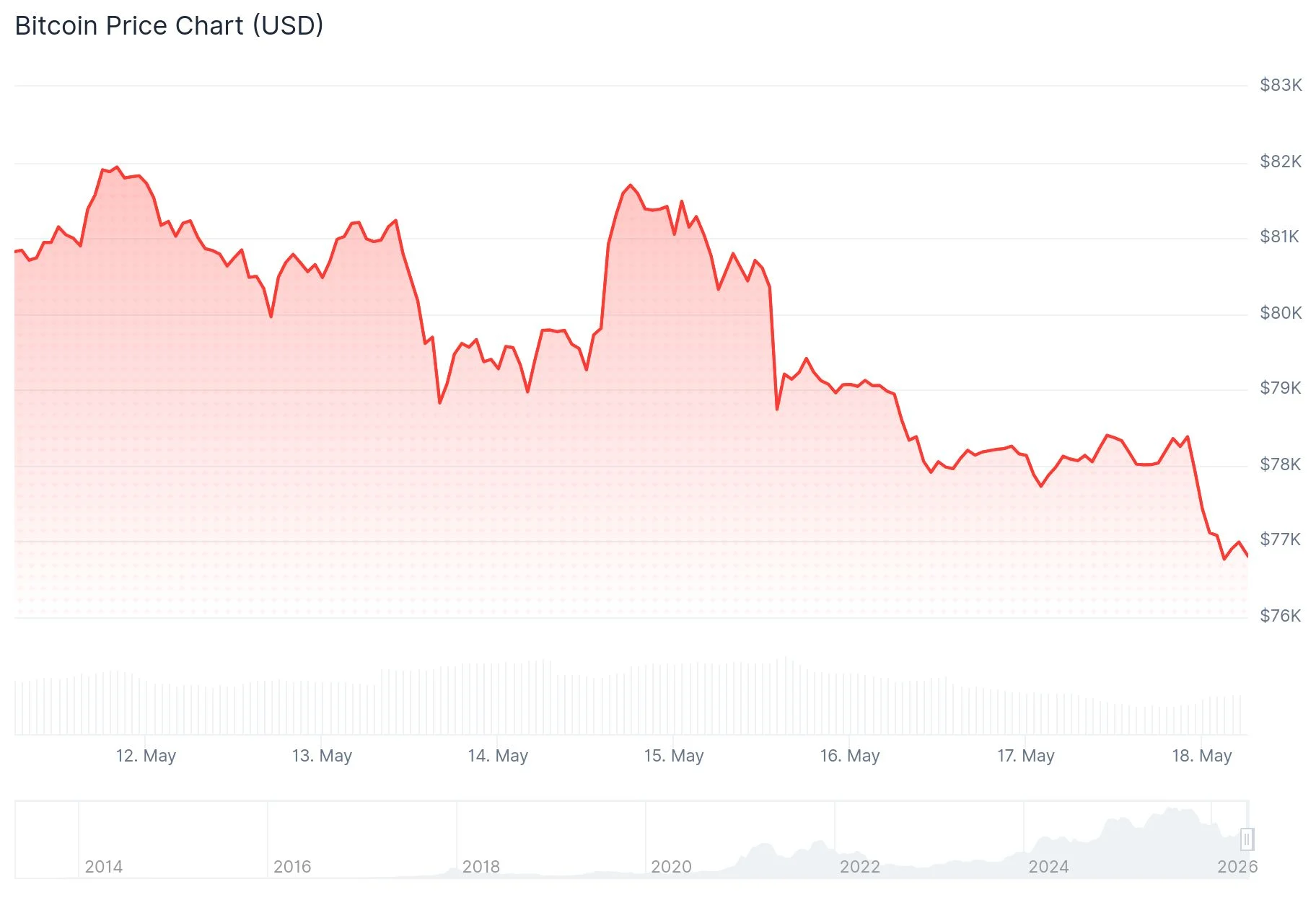
The leading cryptocurrency was trading near $76,726 at press time, representing approximately a 1.5% decline over the 24-hour period. While BTC momentarily breached the $80,000 mark during the previous week, the rally proved short-lived as sellers overwhelmed buyers.
Crude oil prices jumped beyond $110 per barrel during Monday’s session. The surge followed reports of drone-related incidents in the United Arab Emirates combined with stagnating diplomatic negotiations concerning Iran. Adding to geopolitical tensions, U.S. President Donald Trump issued a stern warning over the weekend, stating that “time is ticking” for Iran to finalize an agreement with the United States.
The spike in energy prices amplified concerns about persistent inflation, triggering a selloff in government bonds and pushing yields significantly higher. The 30-year Treasury yield advanced to 5.13%, representing its loftiest closing level since 2007. Meanwhile, the 10-year yield similarly climbed to levels not witnessed since the early months of 2025.
Market analyst The Kobeissi Letter highlighted the dramatic nature of the decline on X, stating: “BREAKING: Bitcoin falls below $77,000 as over $500 million worth of levered long positions are liquidated in 60 minutes.” Such forced liquidations can magnify downward price momentum far beyond what organic selling pressure would typically generate.

Derivatives markets now indicate a 98% probability that the Federal Reserve will maintain current interest rates at its June meeting, with a 94% likelihood for July. Looking further ahead, futures pricing has started incorporating the possibility of a rate increase in 2026. Elevated interest rates enhance the appeal of fixed-income securities relative to non-yielding assets such as BTC.
Recent Buyers Facing Losses
Blockchain analytics from Binance Research, sourcing data from Glassnode, indicated that approximately 60% of bitcoin’s total supply has remained dormant for more than twelve months. Additionally, cryptocurrency exchange reserves have declined to their lowest levels in six years, suggesting limited immediate selling pressure from spot holdings.
Nevertheless, the short-term holder MVRV (Market Value to Realized Value) ratio currently sits below 1. This metric indicates that investors who acquired bitcoin recently are generally experiencing paper losses. Such conditions heighten market vulnerability to further declines, as these holders possess diminished financial resilience to weather additional volatility.
Crypto analyst Daan Crypto Trades observed on X that BTC was challenging a crucial support area referred to as the bull market support band, cautioning that a weekly closing price beneath $75,000–$76,000 would suggest, in his assessment, characteristics of a “dead cat bounce.”
Upcoming Market Catalysts
Market participants are closely monitoring several events scheduled for this week that could influence asset prices. Nvidia’s quarterly earnings announcement on Wednesday has taken on heightened significance as a barometer for overall risk sentiment due to the company’s dominant position in artificial intelligence infrastructure. Thursday brings the release of U.S. Producer Price Index data, offering additional insight into inflationary trends.
Developments surrounding the CLARITY Act, proposed legislation aimed at establishing a regulatory framework for digital assets in Washington, remain on the watchlist for cryptocurrency market observers.
Bitcoin holdings on centralized exchanges continue hovering near six-year lows, while the 30-year Treasury yield maintains its position at the highest closing level recorded since 2007.
Get 3 Free Stock Ebooks
Discover top-performing stocks in AI, Crypto, and Technology with expert analysis.
- Top 10 AI Stocks - Leading AI companies
- Top 10 Crypto Stocks - Blockchain leaders
- Top 10 Tech Stocks - Tech giants


