


Key Takeaways
- The FAA has granted Boeing permission to establish an additional 737 MAX assembly facility in Everett, WA, with plans to reach 52 aircraft monthly production by early 2027.
- Treasury Department sources indicate China may purchase between 500 and 550 additional Boeing planes, potentially coinciding with President Xi’s anticipated September visit.
- Singapore Airlines is in discussions for a minimum of 50 widebody aircraft, with the Boeing 777X among the options being considered.
- Boeing’s first-quarter financial performance exceeded Wall Street forecasts, reporting a $0.20/share loss versus the projected $0.68, while revenue climbed 14% YoY to $22.22 billion.
- Analysts maintain a “Moderate Buy” rating with a mean price target of $259.80; shares closed at $215.72 on Friday.
Boeing (BA) shares settled at $215.72, declining 0.8% during Friday’s session, despite a series of encouraging announcements surrounding the aerospace manufacturer.
Regulatory authorities have cleared Boeing to launch an additional 737 MAX final assembly facility in Everett, Washington. Operations will commence July 6. The company aims to increase production capacity from the current 47 units to 52 aircraft monthly by the first quarter of 2027. CEO Kelly Ortberg has emphasized a cautious approach to the expansion, prioritizing manufacturing quality throughout the scaling process.
In delivery developments, Boeing completed the handover of two 787-9 Dreamliners to Riyadh Air, representing the initial portion of a contract covering up to 72 planes. United Airlines received its first increased Maximum Takeoff Weight (iMTOW) 787-9 variant, enabling extended range and payload capabilities on routes originating from San Francisco.
The company’s latest quarterly financial disclosure surpassed Wall Street expectations. Boeing reported a per-share loss of $0.20, significantly better than the consensus estimate calling for a $0.68 deficit. Total revenue reached $22.22 billion, marginally exceeding projections while representing a 14% increase compared to the same period last year.

The China Factor
Investors are particularly focused on potential business with China. An earlier agreement involving approximately 200 aircraft was viewed as disappointing by market participants. However, recent statements from Treasury Department officials suggest Beijing may ultimately order an additional 500 to 550 planes. A potential catalyst for finalizing this transaction could be President Xi’s planned visit to the United States in September.
China’s ongoing dependence on American-manufactured components for its domestic C919 aircraft program provides additional negotiating dynamics to the bilateral relationship. This geopolitical backdrop has contributed to a significant recovery in Boeing’s stock valuation over recent trading sessions.
Separately, Singapore Airlines has acknowledged early-stage discussions regarding the acquisition of no fewer than 50 large-capacity aircraft. The carrier is evaluating both the Boeing 777X and the Airbus A350-1000 for this potential order. Negotiations remain preliminary.
Challenges Persist
Despite positive momentum, Boeing continues facing operational hurdles. German authorities have initiated an investigation following a 787 Dreamliner nose-gear failure at Frankfurt airport that resulted in injuries to multiple ground personnel. The incident has reignited scrutiny regarding Boeing’s quality assurance protocols for the 787 production line.
NASA has placed the Starliner spacecraft program “under review” after complications during its crewed mission. Future missions are expected to proceed without crew members, with a compressed timeline given the International Space Station’s scheduled decommissioning prior to 2030.
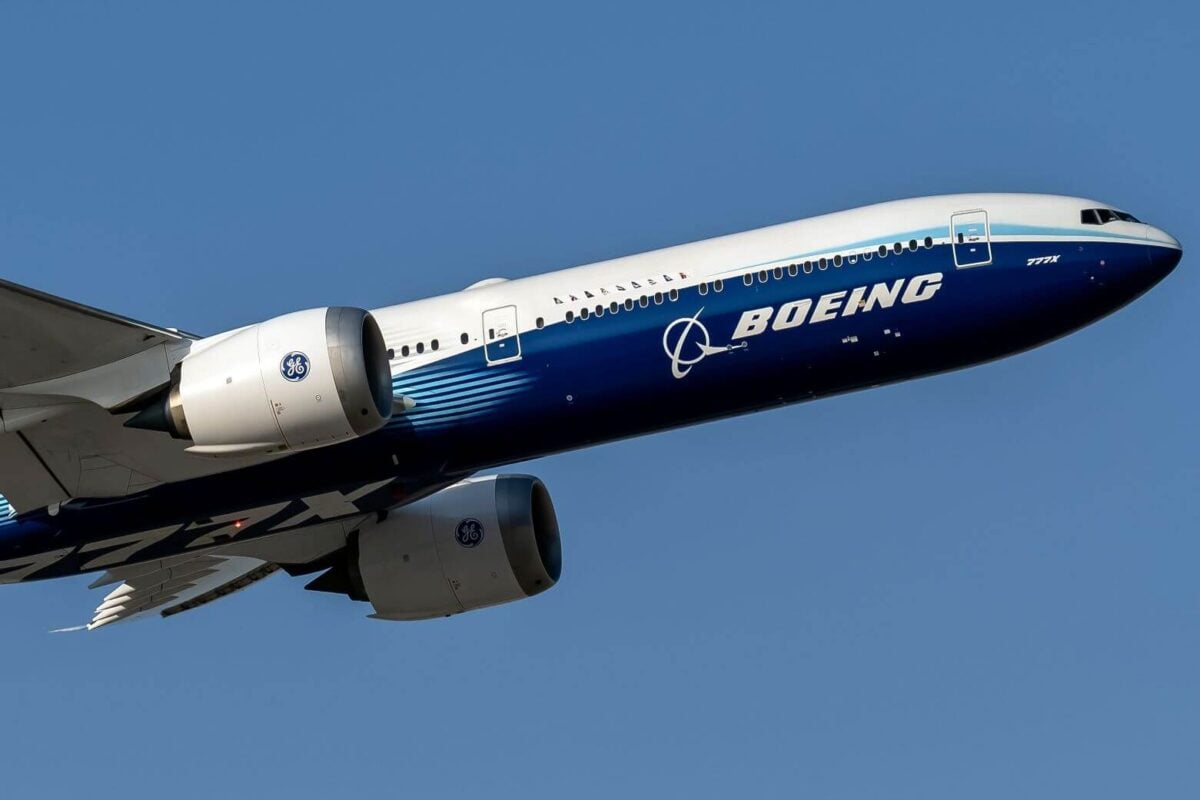
The 777X program continues experiencing delays. Customer deliveries have been postponed until the following year—approximately seven years beyond the original schedule. Several airlines have shifted to Airbus alternatives while awaiting the delayed Boeing aircraft.
ING Groep NV dramatically expanded its Boeing holdings during the fourth quarter, increasing its position by more than 2,000% through the acquisition of 736,861 additional shares, bringing total holdings to 772,400 units. Vanguard and Geode Capital similarly expanded their stakes during this period. Institutional ownership now represents 64.82% of outstanding shares.
Wall Street price targets span from $250 (Wells Fargo and Morgan Stanley with equal-weight ratings) to $295 (Tigress Financial and Jefferies maintaining buy ratings). The average analyst target stands at $259.80, suggesting approximately 20% appreciation potential from present trading levels.
Boeing’s 52-week trading range extends from $176.77 to $254.35, with the 50-day moving average currently positioned at $220.80.
Get 3 Free Stock Ebooks
Discover top-performing stocks in AI, Crypto, and Technology with expert analysis.
- Top 10 AI Stocks - Leading AI companies
- Top 10 Crypto Stocks - Blockchain leaders
- Top 10 Tech Stocks - Tech giants


