



TLDR
- Bitcoin has consolidated in the $62,000–$66,000 corridor for multiple weeks as spot ETF demand battles miner and institutional liquidations
- Michael Saylor’s Strategy has liquidated 6,916 BTC totaling more than $440 million since June, departing from his historic buy-and-hold approach
- Wednesday’s Consumer Price Index release from the U.S. represents the next significant potential trigger for BTC movement
- Digital asset trading activity has plummeted to three-year lows
- A bullish weekly RSI indicator persists, though $60,000 represents critical floor support
The leading cryptocurrency has remained confined within a narrow $62,000 to $66,000 trading corridor throughout much of the summer season, and Tuesday’s session followed the established pattern. BTC drifted toward approximately $63,500, declining 0.6% across a 24-hour period, prolonging a stagnation that has persisted for five weeks.
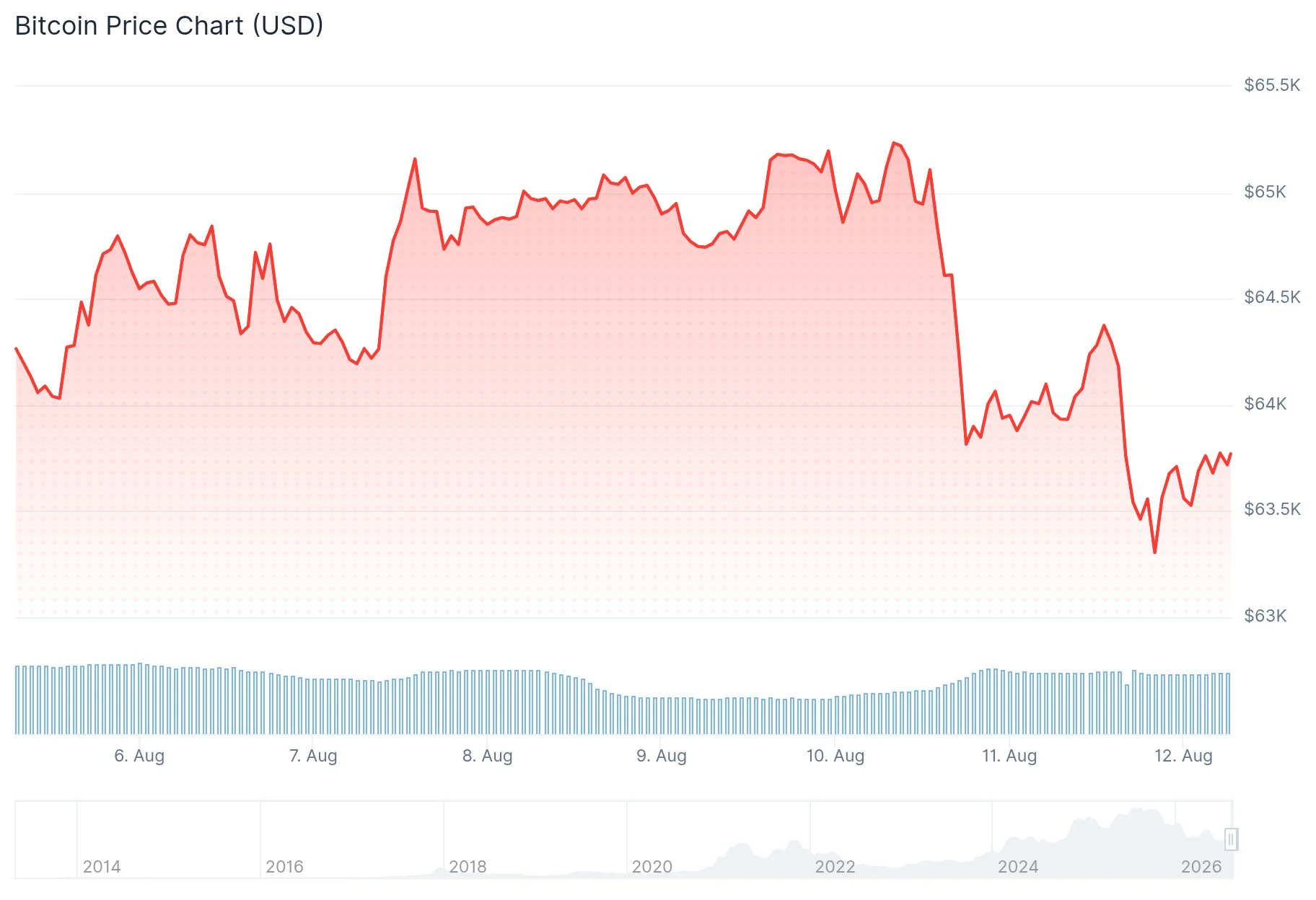
Digital currency trading volumes have collapsed to their weakest levels observed in three years. This liquidity drought leaves insufficient momentum to drive prices decisively in either direction.
“The recent trajectory of Bitcoin’s valuation has been predominantly influenced by consistent ETF accumulation being neutralized by over-the-counter liquidations from mining operations and Strategy,” explained Paul Howard, senior director at Wincent trading firm.
Exchange-traded fund purchasing has maintained stability, yet continues to be counterbalanced. Analysts at Bitfinex observed that corporate treasury operations have generated compensating sell-side pressure, explaining why BTC advanced merely 2% during the previous week despite robust ETF capital inflows.

Strategy’s Bitcoin Liquidations Draw Scrutiny
The company controlled by Michael Saylor has disposed of 6,916 BTC — representing more than $440 million in value — since June, executing four consecutive sales transactions. Two transactions were deployed to establish a USD reserve position, while the remaining two funded MSTR stock repurchase programs.
This represents a notable departure from Saylor’s longstanding philosophy of permanent Bitcoin accumulation. Large-holder wallets have acquired approximately 30,000 BTC throughout August exclusively, yet Strategy’s distribution has contributed additional bearish pressure.

The Coldcard wallet security breach introduced further market uncertainty. Loss estimates range between 1,400 and 1,700 BTC, representing more than $100 million in value.
Wednesday’s U.S. Consumer Price Index inflation statistics have emerged as the market’s primary attention point. This represents the initial major inflation measurement following Fed Chair Kevin Warsh’s inflation-centered press briefing after the July Federal Reserve gathering.
“Directional confidence remains minimal across both bulls and bears as summer liquidity conditions dominate,” stated Jeff Anderson, managing partner at STS Digital.
Technical Analysis Perspective
Examining the weekly timeframe, a purchase signal initiated when the Relative Strength Index touched 30 continues to remain valid. This technical signal has historically identified bear market conclusions on two of three previous instances.
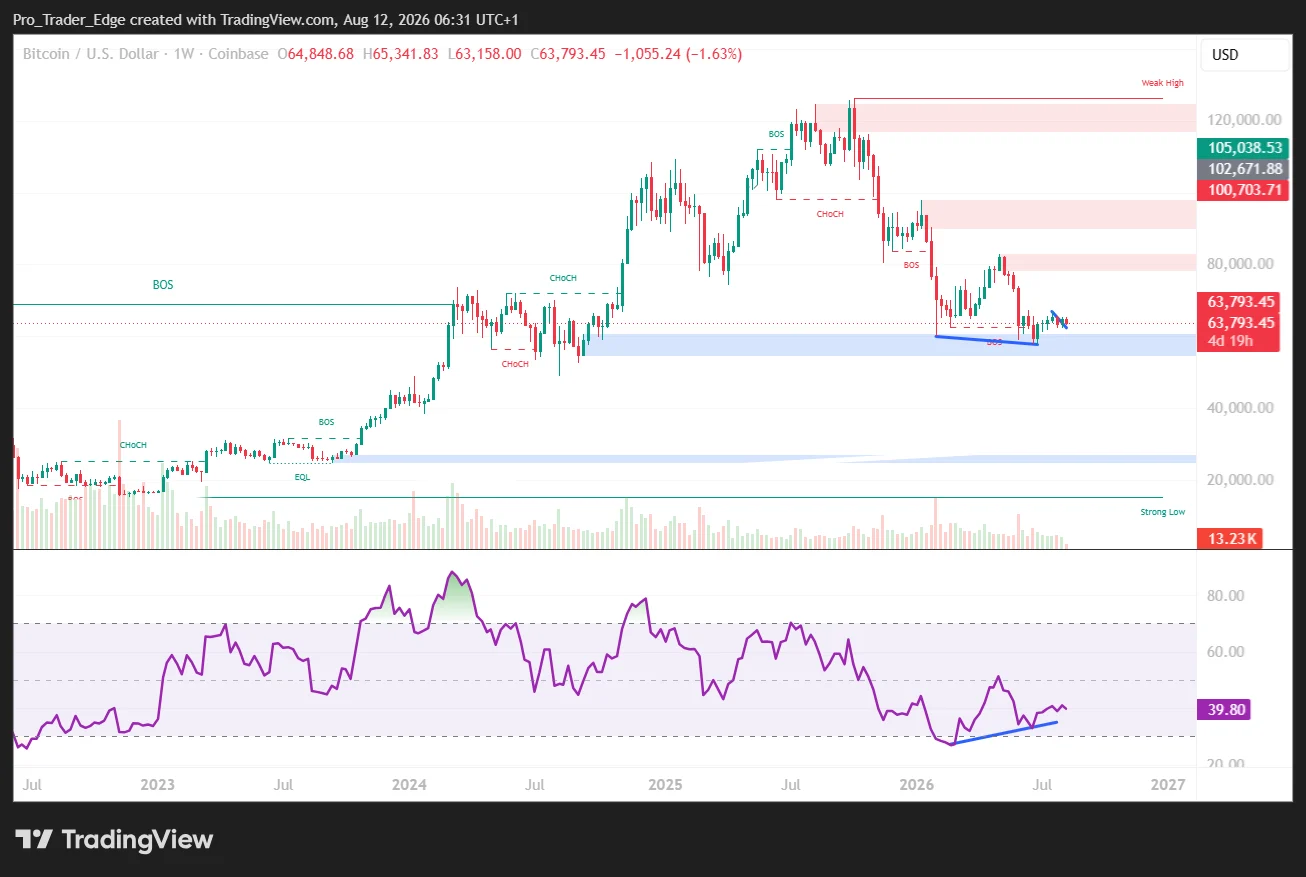
Nevertheless, $60,000 represents the crucial threshold for monitoring. A decisive breach beneath that floor would undermine the probability of this signal delivering similar results.
Market analyst Ted Pillows highlighted on X that Bitcoin surged 10.75% during the week following June’s CPI disclosure and 7.58% after July’s release. With another CPI announcement scheduled for Wednesday, he posed the question: “What’ll happen this time?”
September has traditionally represented Bitcoin’s most challenging month, recording an average 4% contraction since 2013, based on CoinGlass historical data.
Get 3 Free Stock Ebooks
Discover top-performing stocks in AI, Crypto, and Technology with expert analysis.
- Top 10 AI Stocks - Leading AI companies
- Top 10 Crypto Stocks - Blockchain leaders
- Top 10 Tech Stocks - Tech giants


