


Key Highlights
- Bristol Myers Squibb is installing a second-generation Nvidia DGX SuperPOD featuring advanced DGX Vera Rubin NVL72 technology to scale its artificial intelligence drug development capabilities.
- The upgraded infrastructure provides a tenfold performance improvement per megawatt compared to earlier systems.
- BMS gains access to Nvidia’s specialized BioNeMo platform alongside the Agent Toolkit designed for life sciences applications.
- This expansion follows nearly three years of successful collaboration, during which the initial SuperPOD reduced target identification timeframes from weeks to mere days.
- The enhanced computing power will fuel investigations spanning oncology, hematology, cardiovascular conditions, immunology, and neuroscience programs.
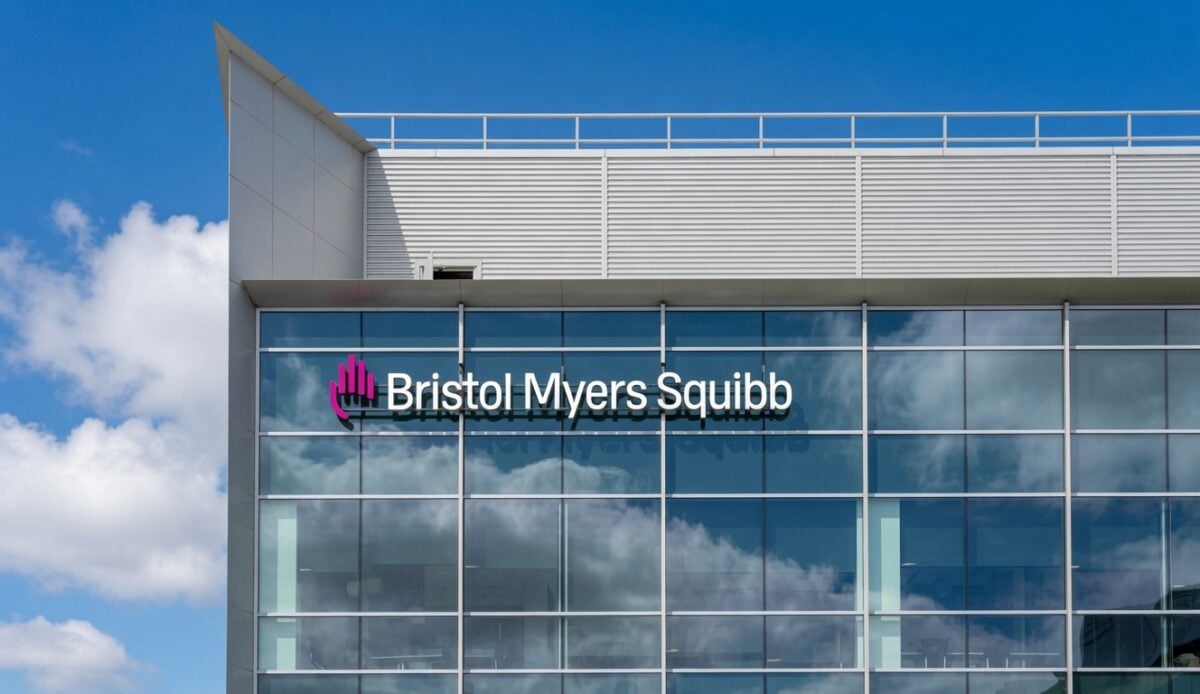
In a significant expansion of their strategic alliance, Bristol Myers Squibb (BMY) and Nvidia (NVDA) announced plans for BMS to implement a second Nvidia DGX SuperPOD, constructed with eight cutting-edge DGX Vera Rubin NVL72 systems. Following the announcement, BMY stock climbed 0.31% while NVDA shares rose 2.28%.
Bristol-Myers Squibb Company, BMY
This latest development represents a natural progression of a partnership initiated approximately three years earlier when BMS first introduced its inaugural DGX SuperPOD. The original system has proven its value by transforming AI-powered target identification processes that previously required weeks of manual analysis into operations completed in just days.
The Vera Rubin platform represents a substantial leap forward in computational capability. According to Nvidia’s specifications, it achieves up to ten times greater performance per megawatt than its predecessor generation, enabling BMS to tackle significantly more demanding AI workloads while maintaining energy efficiency.
Neither organization has revealed specific financial details regarding the arrangement.

Capabilities of the Enhanced Infrastructure
BMS intends to integrate both SuperPOD systems into a cohesive, unified computing environment accessible to research teams across its worldwide facilities. This architecture eliminates previous constraints that restricted high-performance computing access to select specialized personnel.
The consolidated platform will enable diverse applications ranging from proprietary foundation model training to executing agentic AI processes — sophisticated workflows where artificial intelligence agents autonomously perform functions such as target identification and validation requiring minimal human oversight.
Particularly noteworthy is BMS’s implementation of a “Predict First” methodology. Rather than following traditional protocols of synthesizing molecules and conducting laboratory testing initially, researchers leverage AI predictive capabilities to determine which molecular candidates merit pursuit before committing to experimental procedures. This approach efficiently eliminates unpromising programs at early stages, concentrating laboratory resources on the most viable opportunities.
The advanced system will additionally empower scientists to assess broader chemical landscapes and execute increasingly sophisticated molecular predictions.
BioNeMo Integration and Pipeline Enhancement
Under the expanded agreement, BMS obtains access to Nvidia’s BioNeMo platform together with the BioNeMo Agent Toolkit — specialized software architectures developed exclusively for biological and pharmaceutical artificial intelligence implementations.
The integrated hardware-software ecosystem enables researchers to execute predictions, construct agentic workflows, and train sophisticated models utilizing BMS’s proprietary scientific datasets.
BMS has already leveraged its current AI infrastructure to broaden its portfolio of CELMoD compounds — precision-engineered molecules designed to selectively eliminate disease-causing proteins. These innovative therapeutics are presently under investigation for blood cancers and additional disease indications.
Research domains supported by the expanded computing infrastructure encompass small molecule development, biologics, clinical applications, and digital twin modeling.
Greg Meyers, serving as Chief Digital and Technology Officer at BMS, indicated the organization has “made a deliberate bet on AI” and is beginning to observe tangible returns throughout its development pipeline and operational framework.
Robert Plenge, Chief Research Officer, articulated the strategic objective succinctly: “It’s raising the probability that each program we advance is the right one.”
Get 3 Free Stock Ebooks
Discover top-performing stocks in AI, Crypto, and Technology with expert analysis.
- Top 10 AI Stocks - Leading AI companies
- Top 10 Crypto Stocks - Blockchain leaders
- Top 10 Tech Stocks - Tech giants


