


Key Takeaways
- Charles Schwab has announced a collaboration with Cboe Global Markets to introduce binary options contracts based on S&P 500 outcomes
- These contracts function as yes-or-no propositions, delivering either a predetermined payout or zero value at expiration
- A planned “Plus Zone” mechanism may provide proportional returns when forecasts come close to actual results
- The move places Schwab alongside Coinbase and Robinhood in the prediction market arena
- Regulatory challenges from Congress and the CFTC continue to shape the prediction markets landscape
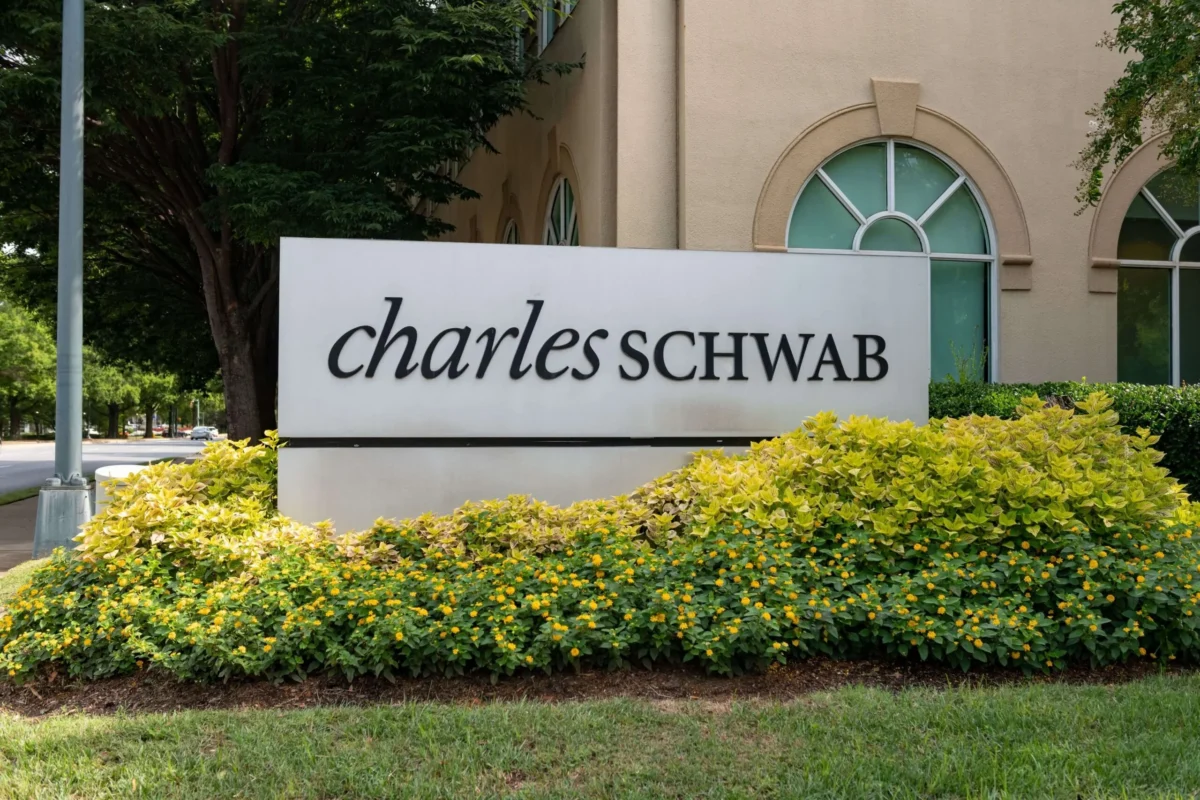
Charles Schwab is set to break into the prediction markets arena through a new offering that enables clients to wager on whether the S&P 500 index will settle above or below a predetermined threshold.
The financial services giant has formed a strategic alliance with Cboe Global Markets to bring this product to market, with availability expected for customers in the coming months, as reported by the Wall Street Journal on Friday.
Different from platforms like Polymarket and Kalshi that provide futures-based contracts across diverse events, Schwab’s approach centers on binary options mechanics. Each contract delivers a set cash payment upon favorable outcomes or becomes worthless otherwise.
Schwab and Cboe are currently negotiating the inclusion of a “Plus Zone” capability. This innovation would enable participants to collect a proportional payout when their forecast approximates the actual closing price, regardless of whether it matches the exact threshold.
Both organizations have explored broadening the product lineup beyond the S&P 500 to encompass additional market indexes and financial indicators. Schwab has stated its intention to limit offerings exclusively to events with objectively measurable outcomes in financial markets, excluding political or sporting events.
Schwab Joins Coinbase and Robinhood in Market Expansion
Schwab isn’t breaking new ground as the first established financial institution to pursue this opportunity. Coinbase and Robinhood have each introduced prediction market offerings in recent quarters.

Kalshi and Polymarket, currently the dominant prediction market operators, have existing event contracts linked to S&P 500 performance. Industry analysts forecast the entire prediction market sector could achieve $1 trillion in yearly trading volume by 2030.
Schwab has previously demonstrated its commitment to emerging asset classes. The brokerage introduced spot Bitcoin and Ether trading for individual investors in May 2026. During the first quarter of 2026, the firm reported net income totaling $2.5 billion.
Regulatory Landscape Remains Uncertain
Prediction market platforms are experiencing heightened examination from state and federal regulatory bodies.
Numerous state gaming commissions have questioned the legality of platforms such as Kalshi and Polymarket offering contracts tied to sporting events. Congressional representatives have expressed apprehension regarding the potential for elected officials to exploit confidential information for gains on these services.
A Republican legislator has introduced legislation aimed at prohibiting insider trading on prediction market platforms, although the measure would exclude White House personnel from its provisions.
The US Commodity Futures Trading Commission, led by Chair Michael Selig, maintains that prediction market event contracts constitute “swaps,” thereby granting the commission sole regulatory jurisdiction over them.
Several ongoing legal proceedings involving Kalshi, Polymarket, and the CFTC remain unresolved in the courts.
Schwab’s entrance into this sector represents a notable evolution for an established brokerage house, introducing prediction market-type instruments to mainstream retail investment channels.
Get 3 Free Stock Ebooks
Discover top-performing stocks in AI, Crypto, and Technology with expert analysis.
- Top 10 AI Stocks - Leading AI companies
- Top 10 Crypto Stocks - Blockchain leaders
- Top 10 Tech Stocks - Tech giants


