


TLDR
- Shares of Charter Communications surged over 9% Monday following news of a possible SpaceX mobile collaboration.
- The proposed arrangement involves SpaceX routing select Starlink data through Charter’s terrestrial network infrastructure while expanding Spectrum’s broadband coverage.
- Major wireless carriers including T-Mobile, AT&T, and Verizon saw stock declines Monday amid concerns about potential SpaceX disruption to the telecom sector.
- Citi Research maintained its Buy recommendation on Charter while reducing its price objective 17% to $190 due to challenging Q2 comparisons.
- Charter’s Q2 financial results are scheduled for release before market hours on July 24, with focus on broadband average revenue per user and Cox Communications merger developments.
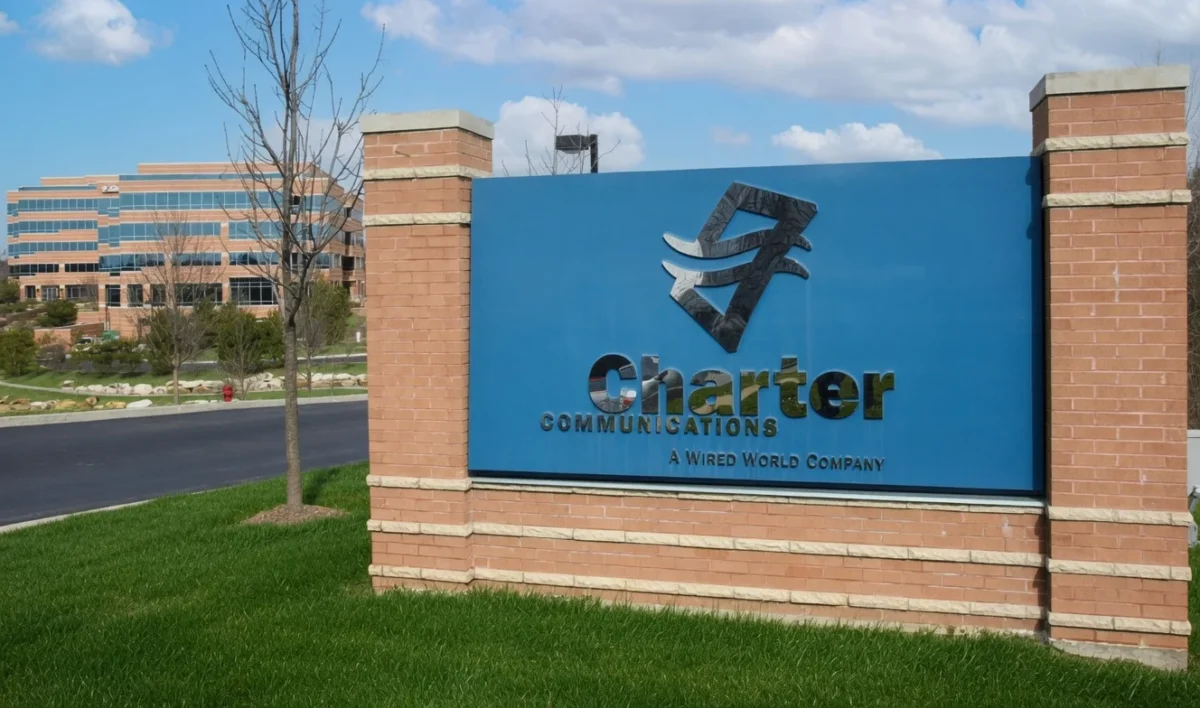
Shares of Charter Communications (CHTR) rocketed more than 9% during Monday’s trading session, marking one of the strongest gains in the S&P 500 index. The rally followed a Bloomberg report detailing potential mobile service collaboration discussions between SpaceX and the cable provider.
Charter Communications, Inc., CHTR
According to the report, the arrangement under discussion would allow SpaceX to route certain Starlink network traffic through Charter’s existing ground-based internet infrastructure. Charter would benefit by accessing Starlink’s satellite technology to expand its broadband service reach.
Wolfe Research’s Peter Supino characterized the companies as “potential frenemies” in client communications. He suggested such a partnership could provide Starlink with connectivity to millions of additional residential locations and public venues, simultaneously boosting Charter’s fixed broadband operations.
The stock rally received additional momentum from Comcast’s Monday announcement regarding its NBCUniversal spinoff plans, which elevated sentiment across the cable industry.

SpaceX’s Mobile Ambitions
SpaceX President Gwynne Shotwell indicated earlier this month that Starlink Mobile services are expected to surpass the company’s residential broadband operations in scale. Starlink currently maintains 10.3 million worldwide broadband customers as of March figures.
BNP Paribas analyst Sam McHugh suggested the Charter speculation could trigger broader consolidation theories, potentially including a future T-Mobile merger. He observed that a Charter arrangement “would create synergies but not alter the long-term prospects” of either company, while a T-Mobile combination “could be more impactful” and present genuine challenges to Charter’s business.
T-Mobile’s exclusive domestic direct-to-cellular agreement with SpaceX, offering Starlink Mobile as a $10 monthly add-on, concludes next month. Industry analyst Tim Farrar noted the current deal provides minimal revenue for SpaceX, while T-Mobile has resisted paying higher fees for a service representing merely 0.0002% of its May network traffic.
Major wireless carrier stocks tumbled Monday. T-Mobile declined approximately 5%, AT&T dropped 4%, and Verizon plunged 5.2%, recording its steepest single-session loss since March 2025.
Analyst Perspectives on Charter’s Upcoming Results
Charter will announce second-quarter financial performance before market opening on July 24. Citi Research’s Michael Rollins anticipates potential EBITDA weakness stemming from difficult year-over-year comparisons and stagnant broadband average revenue per user without pricing adjustments.
Rollins highlighted Charter’s 64% year-over-year stock decline and noted that competitive ARPU dynamics remain unfavorable for near-term results. He expressed skepticism regarding the feasibility of a comprehensive SpaceX mobile agreement.
Rollins pointed out Charter’s current mobile virtual network arrangement with Verizon typically prohibits extension to additional parties. He proposed a more probable scenario involving a distribution framework where Charter markets its Spectrum Mobile offerings alongside SpaceX services, rather than establishing deeper infrastructure integration.
Despite these reservations, Citi maintained its Buy rating on Charter while lowering its price target 17% to $190.
TD Cowen’s Gregory Williams outlined several potential SpaceX wireless market strategies: maintaining current operations, developing proprietary infrastructure, forming carrier partnerships, or acquiring an existing carrier. He described the uncertainty surrounding SpaceX’s intentions as an “overhang” affecting the wireless industry.
SpaceX representatives did not provide immediate comment responses, and Charter declined to address the speculation.
Get 3 Free Stock Ebooks
Discover top-performing stocks in AI, Crypto, and Technology with expert analysis.
- Top 10 AI Stocks - Leading AI companies
- Top 10 Crypto Stocks - Blockchain leaders
- Top 10 Tech Stocks - Tech giants


