


Key Highlights
- Chinese manufacturer CXMT captured 10% of global DRAM market share in Q2 2026, more than doubling from 4% year-over-year
- Micron expanded DRAM market presence to 24% and NAND presence to 15% during Q2 2026
- SK Hynix experienced a DRAM share decline from 29% to 25% between quarters
- Micron’s entire high-bandwidth memory production is secured under binding take-or-pay agreements through year-end 2026
- Western Digital derives 89% of revenues from enterprise and cloud sectors, with hard disk drive capacity committed through 2028
The global memory chip landscape is experiencing a significant shift as Chinese manufacturers expand their market presence. Recent findings from Counterpoint Research reveal that CXMT, a Chinese semiconductor company, has secured 10% of the DRAM market during Q2 2026, representing a substantial increase from its 4% share in the corresponding period last year.
This expansion is occurring at a rapid pace. CXMT commanded 8% market share in Q1 2026, indicating momentum is building. Another Chinese manufacturer, YMTC, has captured 14% of the NAND flash segment, climbing from 9% year-over-year.
Micron Strengthens Market Position
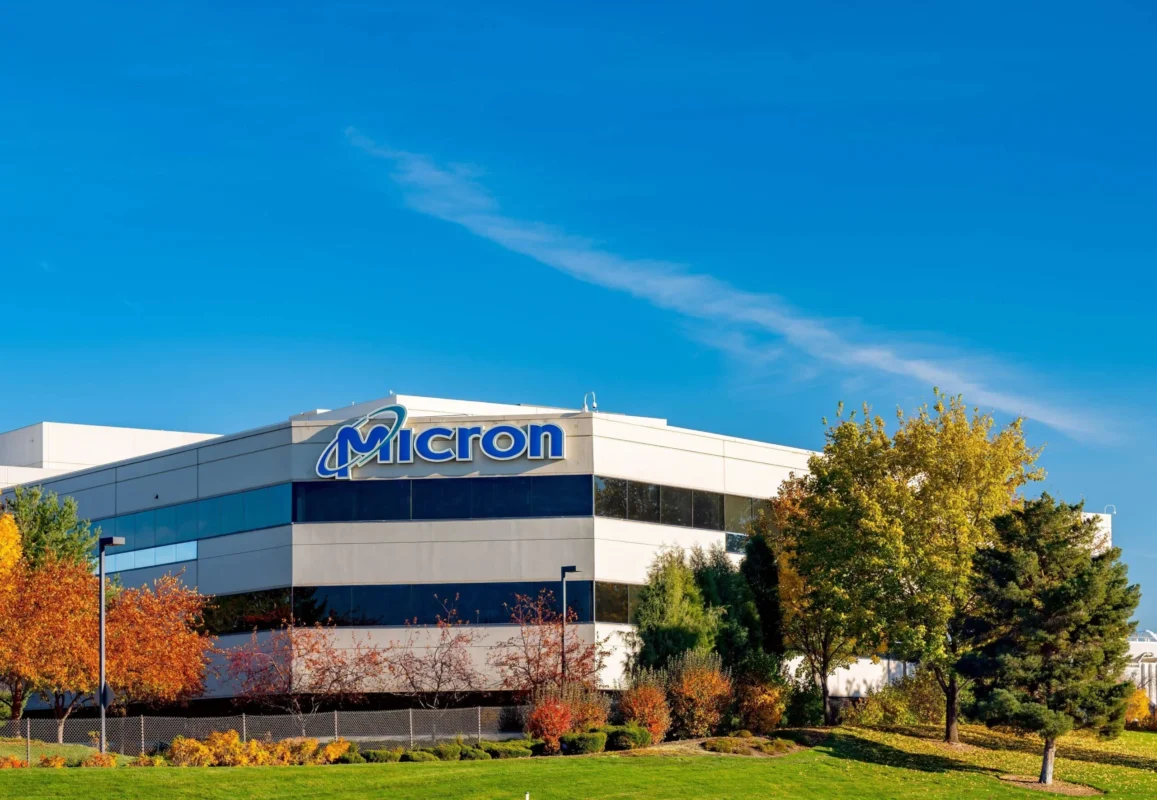
Micron has successfully maintained and expanded its position despite emerging competition. The American semiconductor manufacturer increased its DRAM market share to 24% in Q2, rising from 22% in the previous quarter. Similarly, its NAND segment share climbed from 13% to 15%.
Critically, Micron’s high-bandwidth memory (HBM) production capacity is completely secured. All output is committed under binding, take-or-pay agreements extending through 2026. This contractual protection means Chinese advancement in commodity chips poses no immediate risk to Micron’s core revenue streams.

Micron’s net margin over the trailing twelve months hovers around 55%. Its forward price-to-earnings multiple stands at approximately 13, which market analysts consider attractive given the company’s revenue certainty.
SK Hynix and Sandisk Navigate Headwinds
Some competitors face steeper challenges. South Korean manufacturer SK Hynix watched its DRAM market share contract from 29% to 25% within a single quarter. Sandisk’s NAND share similarly declined, falling from 13% to 11%.
SK Hynix has been reallocating investment toward high-bandwidth memory production for artificial intelligence applications. While this strategic pivot may temporarily impact overall market share metrics, it positions the firm in premium, higher-margin product categories.
The broader DRAM market expanded 57% quarter-over-quarter. NAND experienced 70% growth. Even companies experiencing share erosion are participating in a rapidly expanding total addressable market.
Western Digital has fundamentally reoriented its business model toward enterprise and cloud storage solutions. These segments currently represent approximately 89% of total company revenue. Its hard disk drive production capacity is substantially committed through 2028.
Western Digital recently reported trailing net margins approaching 73%. While shares have declined more than 10% in recent trading, long-term supply agreements with hyperscale cloud providers deliver revenue predictability.
CXMT has initiated limited-volume production of high-bandwidth memory and intends to begin mass production of LPDDR6 chips later this year. This represents technological progress, though worldwide AI-driven demand continues to significantly exceed supply capabilities from any single geographic region.
Manufacturing advanced AI processors requires approximately three times the wafer fabrication capacity compared to conventional DRAM production. Cleanroom infrastructure and extreme ultraviolet lithography equipment represent persistent supply constraints.
The memory semiconductor market has departed from its historical cyclical volatility. Demand originating from AI datacenter buildouts is creating what industry analysts characterize as a sustained, multi-year capacity shortage.
Micron trades at approximately 13 times forward earnings. Western Digital is valued at roughly 23 times. Both companies are generating substantial profitability while simultaneously deploying capital toward next-generation production capacity.
The strategic landscape is becoming clear. Chinese semiconductor manufacturers are establishing meaningful presence in the broader memory market, yet the scale of AI-driven demand growth is sufficient that incumbent leaders like Micron and Western Digital retain strong competitive positioning for the foreseeable future.
Get 3 Free Stock Ebooks
Discover top-performing stocks in AI, Crypto, and Technology with expert analysis.
- Top 10 AI Stocks - Leading AI companies
- Top 10 Crypto Stocks - Blockchain leaders
- Top 10 Tech Stocks - Tech giants


