



Key Takeaways
- American military operations targeted Iranian rocket installations on Larak Island adjacent to the Strait of Hormuz over the weekend
- Brent crude futures jumped 2.5% to reach $90.28 per barrel; WTI climbed 2.2% to settle at $85.24 per barrel
- Tehran launched retaliatory missile strikes against American personnel stationed in Jordan, with most projectiles intercepted
- Approximately 6 to 8 million barrels daily continue transiting through the strategic waterway amid heightened tensions
- President Trump revealed intentions to refill America’s Strategic Petroleum Reserve with Venezuelan crude
Crude oil markets experienced significant upward momentum early this week following American military operations against Iranian positions situated near a globally vital shipping corridor.
American armed forces conducted strikes against Iranian rocket launching systems positioned on Larak Island over the weekend. This island location sits in proximity to the Strait of Hormuz, a waterway responsible for transporting substantial volumes of worldwide petroleum supplies. The operation marked the first documented American military action against Iranian targets since the conclusion of July.
According to statements from an American defense official, Iranian Revolutionary Guard personnel were in the process of preparing to deploy rockets equipped with maritime mines into the strait prior to the military intervention.
Energy Futures Show Strong Gains
Brent crude contracts for November delivery advanced 2.5% to reach $90.28 per barrel during Asian trading sessions on Monday. West Texas Intermediate futures increased 2.2% to achieve $85.24 per barrel.
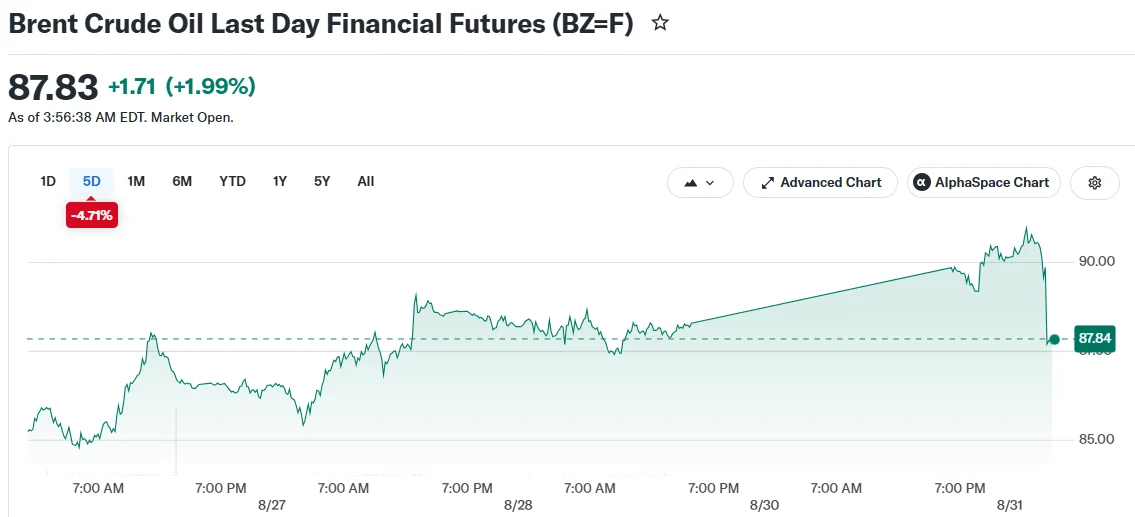
The price action concluded a turbulent month for Brent contracts, which had fluctuated across approximately $17 per barrel throughout August as military confrontations persisted and diplomatic negotiations remained deadlocked.

Iranian forces responded to the Larak Island operations by firing missiles toward American military installations in Jordan. According to Fox News reporting based on defense sources, nearly the entire barrage was successfully intercepted. No American casualties were documented.
Critical Shipping Lane Faces Uncertainty
Energy analysts at ING highlighted that the critical consideration moving forward centers on whether additional military exchanges occur and whether maritime shipping companies grow reluctant to navigate through the strategic passage.
During early August, Brent reached its strongest settlement price since late July as skepticism intensified regarding advancement in U.S.-Iran diplomatic discussions. Iranian officials had indicated the strait would remain blocked unless American policy shifted substantially.
Notwithstanding the continuing military tensions, maritime cargo analysts monitoring vessel movements reported that between 6 and 8 million barrels daily were still successfully transiting through Hormuz. Iran’s semi-official Mehr news service indicated that certain shipping traffic was proceeding on a restricted basis, with vessels remitting passage fees along designated corridors.
Oil producers operating throughout the region had demonstrated increased confidence utilizing the strait during recent weeks, with approximately 5 million barrels per day on average passing through the strategic chokepoint before the weekend military actions.
Market observers indicated that American military responses have fallen short of market anticipations, with certain analysts characterizing Washington’s pressure campaign against Tehran as insufficient to this point.
Regarding supply developments, President Donald Trump announced over the weekend that America would commence replenishing the Strategic Petroleum Reserve utilizing crude oil secured through a recently concluded arrangement with Venezuela.
Energy market participants will maintain vigilant observation for any subsequent military confrontations and whether maritime transport firms modify their navigation routes in reaction to the intensified hostilities near Hormuz.
Get 3 Free Stock Ebooks
Discover top-performing stocks in AI, Crypto, and Technology with expert analysis.
- Top 10 AI Stocks - Leading AI companies
- Top 10 Crypto Stocks - Blockchain leaders
- Top 10 Tech Stocks - Tech giants


