



TLDR
- Brent benchmark declined 2.5% to reach $86.38 while WTI decreased 2.2% to settle at $80.53 per barrel
- Tehran and Muscat engaged in negotiations regarding a provisional arrangement for Strait of Hormuz access
- The nations committed to collaborative mine-clearing operations in the strategic waterway
- Crude benchmarks have declined more than 6% during the current trading week on renewed diplomatic momentum
- Ongoing Russia-Ukraine hostilities present additional threats to worldwide petroleum availability
Crude benchmarks extended their downward trajectory for a third consecutive trading session Tuesday following diplomatic discussions between Iranian and Omani officials that sparked optimism regarding potential access restoration to the Strait of Hormuz, alleviating concerns over worldwide petroleum availability.
The Brent benchmark for October contracts decreased 2.5% to settle at $86.38 per barrel. The WTI benchmark declined 2.2% to finish at $80.53, having briefly traded beneath the $80 threshold during intraday activity. Both contracts were positioned for their weakest closing prices in approximately fourteen days.
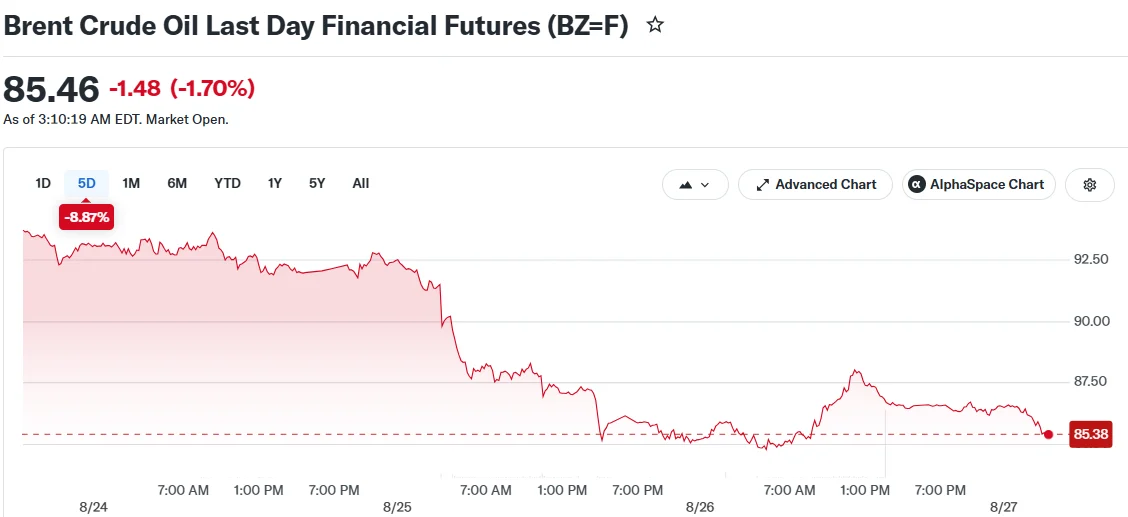
The market retreat followed announcements from Iranian and Omani representatives that their respective foreign ministers conducted negotiations in Tehran focused on establishing a provisional arrangement to restore passage through the Strait of Hormuz. The critical waterway had previously facilitated approximately 20% of worldwide crude transportation before regional hostilities interrupted shipping activities.
According to a bilateral announcement, both nations outlined a proposed framework designed to create a provisional maritime route through the contested passage. Additionally, they pledged coordinated efforts to remove explosive devices from the waterway.
Hormuz Deal Still Has Hurdles
President Trump posted on Truth Social that U.S. Naval forces had successfully neutralized or removed all explosive devices from the strait. Multiple market observers have expressed skepticism regarding that assertion.

According to the bilateral announcement, discussions between Omani and Iranian representatives will proceed, targeting consensus on a lasting maritime passage and subsequent oversight of the waterway.
However, energy analysts at ING cautioned that even a successful accord between the two nations would not rapidly restore petroleum transportation to pre-conflict volumes. They emphasized that Washington would need to withdraw its blockade of Iranian harbors and relax economic restrictions before genuine normalization could materialize.
Washington implemented more stringent economic penalties against Iran during the early portion of this week and cautioned international partners against conducting commerce with Tehran. Iranian officials accused Washington of hindering advancement on a Hormuz arrangement with Muscat.
Nevertheless, Russian government media sources indicated that Washington and Tehran had finalized a fresh ceasefire arrangement scheduled for public announcement within the coming days. Pakistan, functioning as a regional intermediary, similarly confirmed that peace negotiations were advancing productively.
According to Axios reporting, approximately 40 vessels successfully navigated the strait during the weekend period. U.S. diplomatic personnel are also reportedly preparing to return to the Middle Eastern region.
Russia-Ukraine Conflict Adds Supply Risk
Oil’s weekly price deterioration occurred despite emerging intelligence warning of potential supply interruptions from alternative sources. Moscow is purportedly evaluating intensified ballistic missile operations targeting Kyiv and additional infrastructure assets following assessments that peace negotiations have reached an impasse.
Ukrainian forces have historically responded to Russian military operations by targeting Moscow’s energy facilities and petroleum refining capabilities. Any intensification could compound existing pressures on already constrained worldwide supply networks.
U.S. CIA Director John Ratcliffe reportedly conducted a visit to Moscow during the current week for consultations with Russian authorities. The specific topics discussed during that engagement were not immediately disclosed.
Maritime tracking information indicated that transportation volumes through Hormuz continue operating substantially below pre-conflict benchmarks notwithstanding the ongoing diplomatic engagement.
Get 3 Free Stock Ebooks
Discover top-performing stocks in AI, Crypto, and Technology with expert analysis.
- Top 10 AI Stocks - Leading AI companies
- Top 10 Crypto Stocks - Blockchain leaders
- Top 10 Tech Stocks - Tech giants


