



Key Highlights
- Crude oil extended gains for a fourth consecutive trading session amid geopolitical uncertainty
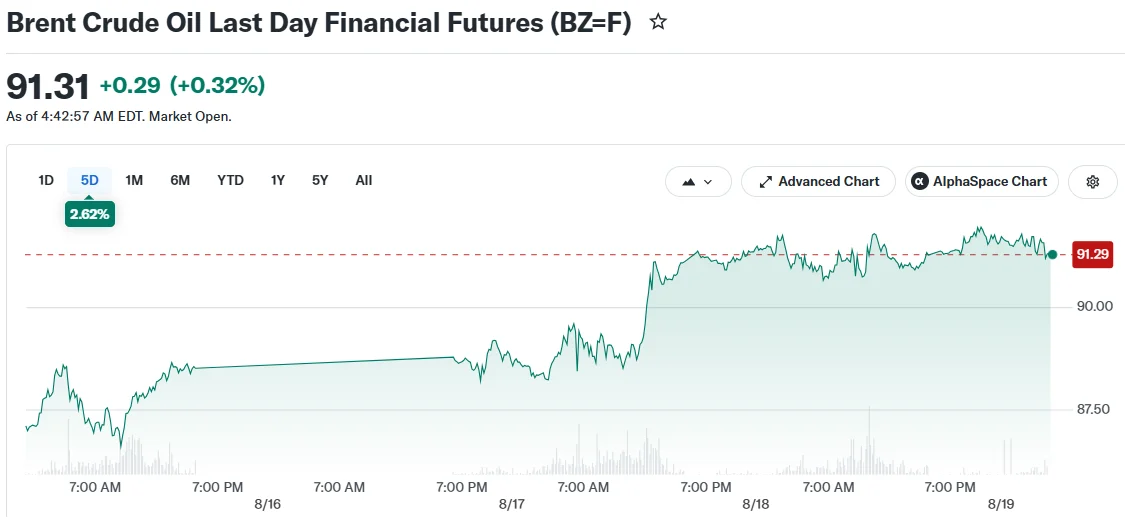
- Brent crude climbed to $91.71 while WTI reached $84.73 per barrel
- Monday’s expiration of the U.S.-Iran ceasefire has not been followed by renewal talks
- Conflicting reports emerge as Iran claims Hormuz closure while Trump declares it operational
- Declining U.S. crude stockpiles contribute additional bullish momentum to oil markets
Crude oil markets extended their rally for a fourth consecutive session on Wednesday, driven by persistent uncertainty surrounding the Strait of Hormuz as diplomatic tensions between Washington and Tehran remain unresolved.
Brent crude futures advanced 0.76% to settle at $91.71 per barrel, while West Texas Intermediate crude increased 0.8% to $84.73. Both benchmark contracts reached their strongest levels since July 24 during trading earlier in the week.
The focal point of concern remains the Strait of Hormuz, a critical maritime chokepoint that previously handled approximately 20% of global oil shipments before hostilities escalated. Current vessel tracking data indicates that commercial traffic through this strategic waterway continues to operate at significantly reduced levels compared to pre-conflict volumes.
The temporary cessation of hostilities between Washington and Tehran lapsed on Monday, with no indication from either party regarding potential extension or renewal of the agreement.
During remarks on Tuesday, U.S. President Donald Trump stated that diplomatic discussions with Iran were not currently underway. He maintained that the strait remained accessible for commercial shipping operations. Tehran contradicted this assertion, declaring that the Strait of Hormuz would remain closed until Washington fulfills the terms outlined in a June provisional agreement.

A high-ranking Iranian government official informed Reuters that the nation was transitioning to a “fully offensive” military strategy in response to the stalled diplomatic process. However, no new military actions were documented on Tuesday.
Trump additionally issued threats to target Oman over its intermediary role in U.S.-Iran negotiations, while demanding Tehran’s compliance with American stipulations.
Alternative Export Pathways Under Development
Iraq has taken steps to establish backup export channels for its crude oil. The Iraqi cabinet greenlit a strategy to transport oil through both international and domestic companies utilizing various shipping outlets. These arrangements are scheduled to operate for a three-month period commencing September 1.
Two prominent Chinese maritime transport firms have suspended tanker operations through both the Strait of Hormuz and the Bab al-Mandeb strait. These companies have adapted by retrieving oil shipments from locations outside the Persian Gulf region.
Declining U.S. Stockpiles Support Price Rally
Weekly inventory data released by the American Petroleum Institute revealed decreases in U.S. crude oil and distillate supplies, though gasoline inventories showed an increase.
Market analysts surveyed by Reuters had anticipated a crude oil inventory drawdown of approximately 600,000 barrels during the week concluded on August 14. Official government statistics from the U.S. Energy Information Administration were scheduled for release on Wednesday.
The U.S. Strategic Petroleum Reserve has declined to its lowest point in over four decades, a situation directly attributable to the protracted confrontation with Iran.
Diminishing inventory levels combined with compromised international supply chains have maintained upward momentum in oil prices. Market participants are closely monitoring whether diplomatic breakthroughs materialize or if the impasse persists through the upcoming weeks.
Get 3 Free Stock Ebooks
Discover top-performing stocks in AI, Crypto, and Technology with expert analysis.
- Top 10 AI Stocks - Leading AI companies
- Top 10 Crypto Stocks - Blockchain leaders
- Top 10 Tech Stocks - Tech giants


