



TLDR
- Brent crude surged up to 5% during Thursday’s trading before retreating, settling around $105-106 per barrel
- Yemen’s Houthi forces launched six ballistic missiles at Saudi targets including Taif and Yanbu, which were intercepted
- Diplomatic channels between Washington and Tehran are reportedly discussing a staged agreement to restore Strait of Hormuz operations
- The kingdom has brought its East-West pipeline back online following previous attacks that halted crude flows to Yanbu
- American crude stockpiles unexpectedly increased by 3 million barrels last week, contrary to forecasts predicting a decline
Oil prices experienced dramatic fluctuations this week as regional hostilities in the Middle East collided with emerging diplomatic channels between Washington and Tehran.
Brent crude rallied as high as 5% during Thursday trading. By Friday morning, prices had stabilized in the $105 to $106 per barrel range.
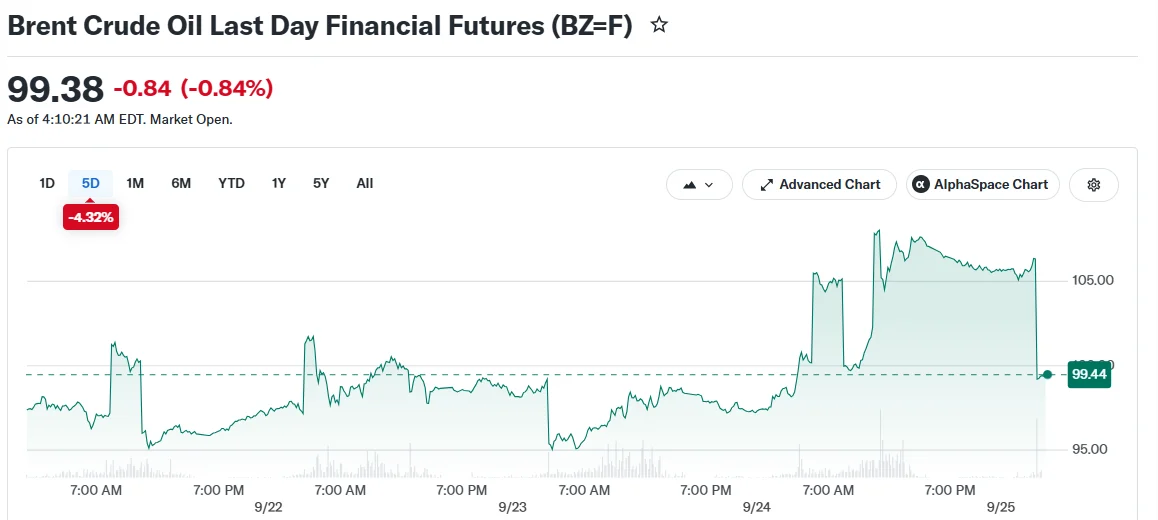
West Texas Intermediate followed comparable movements. Prices hovered between $92 and $94 per barrel after Thursday’s substantial gains.
The volatility followed an announcement from Saudi Arabia’s military coalition that it had successfully intercepted six ballistic missiles launched by Yemen’s Houthi militants, who receive backing from Iran. The projectiles targeted locations including Taif and the Red Sea coastal area of Yanbu.
Yahya Saree, a military representative for the Houthi forces, claimed the group deployed numerous missiles and unmanned aircraft in what he described as an extensive military operation against Saudi installations in Jazan.

Saudi Civil Defense authorities issued an urgent alert in Mecca. Residents were instructed to comply with official guidance amid potential threats in the vicinity.
Why Yanbu Matters to Oil Markets
Yanbu serves as a critical Red Sea shipping terminal linked to Saudi Arabia’s oil-producing eastern provinces. The facility had already experienced disruptions from previous damage to the nation’s East-West pipeline infrastructure.
The kingdom has been ramping up crude production destined for Yanbu. Nevertheless, tanker operations from the terminal had not completely normalized at the time of this report.
U.S. Secretary of State Marco Rubio announced this week that Saudi Arabia had successfully reactivated its East-West pipeline. This alternative route enables crude to circumvent the Strait of Hormuz chokepoint.
Rubio further confirmed that the Strait of Hormuz continues to operate. He noted that daily oil volumes transiting the waterway have been increasing.
U.S. and Iran Explore a Phased Deal
Thursday’s price gains moderated after emerging reports indicated that American and Iranian representatives meeting in New York are discussing a graduated approach to resolving the standoff.
The proposed framework would reportedly involve Tehran restoring access through the Strait of Hormuz in return for Washington removing its economic sanctions against Iran.
Iranian President Masoud Pezeshkian indicated Tehran’s willingness to engage in talks aimed at ending hostilities. He emphasized that Iran would not abandon its nuclear activities or submit to what he characterized as American coercion.
A senior adviser to Iran’s Supreme Leader warned that Tehran could extend military operations to the Indian Ocean should the U.S. or Israel conduct further strikes.
U.S. Central Command reported it had diverted 115 commercial vessels as of Wednesday. This action formed part of its enforcement measures related to the naval restrictions on Iran.
Reuters documented that merely 17 commodity-carrying ships transited the Strait of Hormuz during one recent weekend. This stands in stark contrast to pre-conflict averages of approximately 125 vessels daily.
Regarding supply metrics, American commercial crude inventories grew by 3 million barrels during the week ending September 18. Market analysts had anticipated a drawdown of 641,000 barrels.
Gasoline stockpiles decreased by 1.7 million barrels over the identical period. Distillate reserves dropped by 400,000 barrels.
Diesel costs in the United States reached unprecedented highs this week. The Trump administration is evaluating strategies to enhance domestic diesel availability.
Energy Secretary Chris Wright has reportedly initiated conversations with senior officials at major refining companies regarding voluntary limitations on diesel shipments abroad.
Reuters previously documented discussions surrounding a potential 90-day prohibition on diesel exports. White House officials have rejected claims that such a ban is under consideration.
Get 3 Free Stock Ebooks
Discover top-performing stocks in AI, Crypto, and Technology with expert analysis.
- Top 10 AI Stocks - Leading AI companies
- Top 10 Crypto Stocks - Blockchain leaders
- Top 10 Tech Stocks - Tech giants


