


TLDR
- Brent crude advanced 0.6% to reach $72.40 per barrel; WTI climbed 1% to approximately $69.64–$70.07 per barrel on Monday
- Washington and Tehran exchanged military strikes during the weekend following disputes regarding Iran’s territorial claims in the Strait of Hormuz
- Both nations have committed to suspending military operations and participating in fresh diplomatic negotiations in Qatar this week
- Crude markets had tumbled more than 10% during the previous week following the announcement of a preliminary U.S.-Iran peace framework
- Market experts caution that normalizing oil supply flows may require until the end of 2026 given vessel congestion and infrastructure damage
Crude oil markets experienced upward momentum on Monday following renewed military tensions between the United States and Iran over the weekend, which disrupted the fragile diplomatic progress between the two nations.
Brent crude futures for August delivery climbed 0.6% to $72.40 per barrel during early European trading sessions. WTI contracts for September delivery posted gains of approximately 1% to $69.64 per barrel.
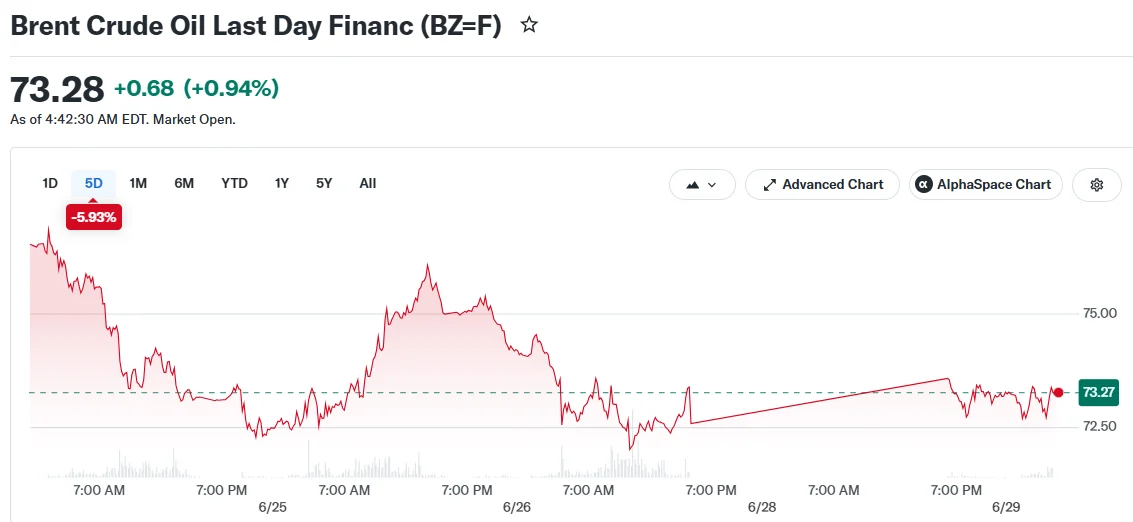
Monday’s rally follows last week’s slide that pushed oil to four-month lows. Crude had plummeted over 10% after Washington and Tehran announced an interim peace framework, prompting traders to remove geopolitical risk premiums from valuations.
Weekend Military Confrontation
The two nations engaged in military exchanges from late last week through the weekend. These confrontations arose from tensions over Tehran’s claims of sovereignty in the Strait of Hormuz, a critical waterway for international petroleum shipments.
The military activity disrupted vessel movements through the Strait of Hormuz, contributing to Monday’s price increase. Nevertheless, gains remained limited after Axios confirmed both nations agreed to an immediate cessation of military operations.
Washington and Tehran have reportedly committed to convening fresh diplomatic discussions in Qatar this week. The nations had previously agreed to a 60-day negotiation period aimed at establishing a more comprehensive peace framework.
Strait of Hormuz Traffic Remains Restricted
Even prior to the weekend’s military activity, petroleum shipments through Hormuz had not returned to pre-conflict volumes. Traffic had approached normal levels last week, but the renewed confrontations have introduced additional uncertainty.

“While commercial shipping is expected to resume ahead of renewed peace talks, traffic through Hormuz remains below normal levels,” MUFG analyst Soojin Kim said.
ANZ analysts shared similar concerns, highlighting that actual petroleum movements remain limited by vessel backlogs, compromised infrastructure, and halted production operations.
“Recovery will be gradual and asymmetric,” ANZ wrote, adding it could take the rest of 2026 for oil supplies to normalize.
An additional complication in the diplomatic process involves the ongoing military conflict between Israel and Lebanese faction Hezbollah. Tehran has insisted that Lebanon must be incorporated into any comprehensive peace agreement. Israel and Hezbollah have maintained hostilities in Southern Lebanon despite numerous ceasefire initiatives.
MUFG’s Kim also observed that oil prices are expected to face continued downward pressure as geopolitical risk premiums diminish and regional production gradually recovers.
The critical uncertainty centers on whether Washington and Tehran can successfully negotiate a comprehensive and durable peace agreement during their 60-day diplomatic window.
Get 3 Free Stock Ebooks
Discover top-performing stocks in AI, Crypto, and Technology with expert analysis.
- Top 10 AI Stocks - Leading AI companies
- Top 10 Crypto Stocks - Blockchain leaders
- Top 10 Tech Stocks - Tech giants


