



Key Highlights
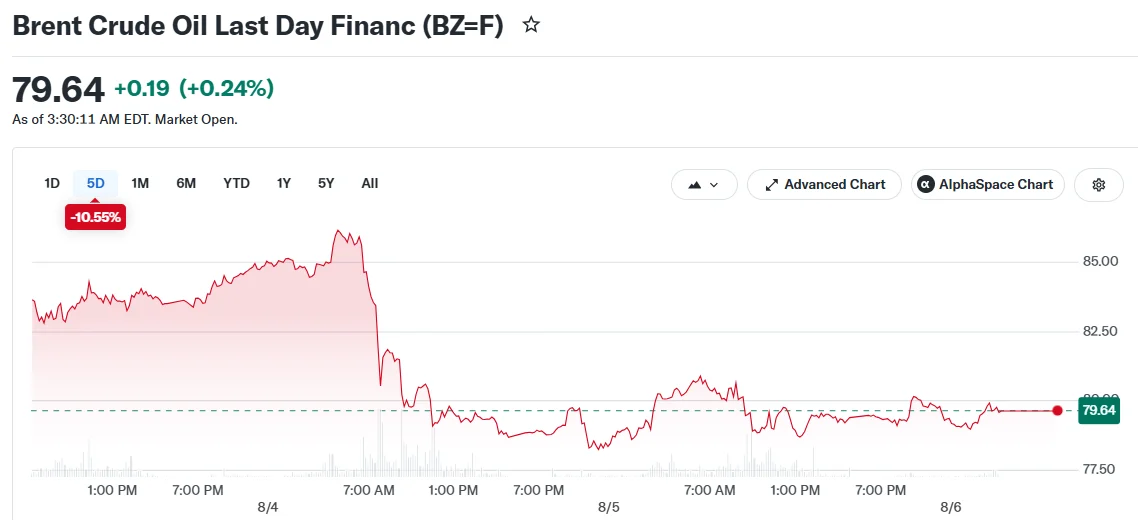
- Brent crude trades at $79.54 while WTI stands at $75.27, with both benchmarks dropping more than 10% over seven days
- Tehran and Muscat have agreed on geographical markers for a potential Strait of Hormuz corridor, but negotiations continue
- Yemen’s Houthi militants targeted two Saudi petroleum tankers in separate Red Sea and Gulf of Aden incidents
- American crude stockpiles increased by 2.5 million barrels, defying forecasts of a 1.5 million barrel decline
- Persian Gulf petroleum shipments currently run approximately 40% lower than pre-conflict February levels
On Thursday, Brent crude futures maintained a position at $79.54 per barrel. Meanwhile, U.S. West Texas Intermediate contracts held steady at $75.27. The past seven trading sessions have witnessed both oil benchmarks declining by over 10%.
Tehran and Muscat have established consensus on the specific geographical coordinates that would define a potential maritime corridor through the Strait of Hormuz. Despite this progress, a comprehensive agreement remains incomplete. Negotiations covering transit fees, vessel inspection protocols, and security frameworks continue without resolution.
Iran’s diplomatic representatives acknowledged that a collaborative statement was nearing completion, while cautioning that external parties might still obstruct finalization.
Market participants remained skeptical. Experts from KCM Trade referenced a previous memorandum of understanding executed last June that subsequently collapsed, fueling doubts about whether any new arrangement would prove more durable.
Prior to the outbreak of hostilities in late February, the Strait of Hormuz facilitated the passage of approximately 20% of worldwide daily petroleum and liquefied natural gas volumes. Current Gulf crude oil and condensate shipments operate at levels roughly 40% beneath pre-conflict benchmarks.

U.S. President Donald Trump indicated Wednesday that Washington had entered discussions with Iranian counterparts, adding he would “see what happens.” Tehran publicly refuted claims that diplomatic negotiations were in progress.
Strategists at ING emphasized that substantial advancement in American-Iranian dialogue would be necessary before interrupted energy shipments could realistically recommence.
Yemeni Strikes and American Stockpile Growth Weigh on Markets
Houthi military forces in Yemen announced missile operations against two Saudi petroleum carriers—one positioned off the Red Sea facility at Yanbu and another in Gulf of Aden waters. Riyadh has not provided official verification of either attack.
Roberto Cominotto, an analyst with Julius Baer, noted that Houthi operations have yet to materially disrupt hydrocarbon supplies, though he cautioned that intensified conflict could alter this dynamic.
American petroleum reserves expanded by approximately 2.5 million barrels during the previous week. Energy traders had anticipated a withdrawal of 1.5 million barrels. This unexpected accumulation suggests weakening immediate consumption.
Gasoline reserves contracted by 1.64 million barrels, while distillate stocks decreased 3.47 million barrels, indicating some tightening within refined product segments.
Iranian officials issued warnings to Gulf nations that any additional American military action against Iranian assets would prompt retaliatory measures targeting regional energy facilities.
Saudi Arabia implemented a modest reduction in its official selling price for Arab Light crude destined for Asian markets in September deliveries. A significant petroleum refining complex in Russia’s Yaroslavl territory experienced fire damage following a Ukrainian unmanned aerial vehicle attack, with emergency response teams working to control the situation.
Energy markets continue waiting for a confirmed agreement that would translate into tangible increases in petroleum flows through the strategic waterway.
Get 3 Free Stock Ebooks
Discover top-performing stocks in AI, Crypto, and Technology with expert analysis.
- Top 10 AI Stocks - Leading AI companies
- Top 10 Crypto Stocks - Blockchain leaders
- Top 10 Tech Stocks - Tech giants


