



TLDR
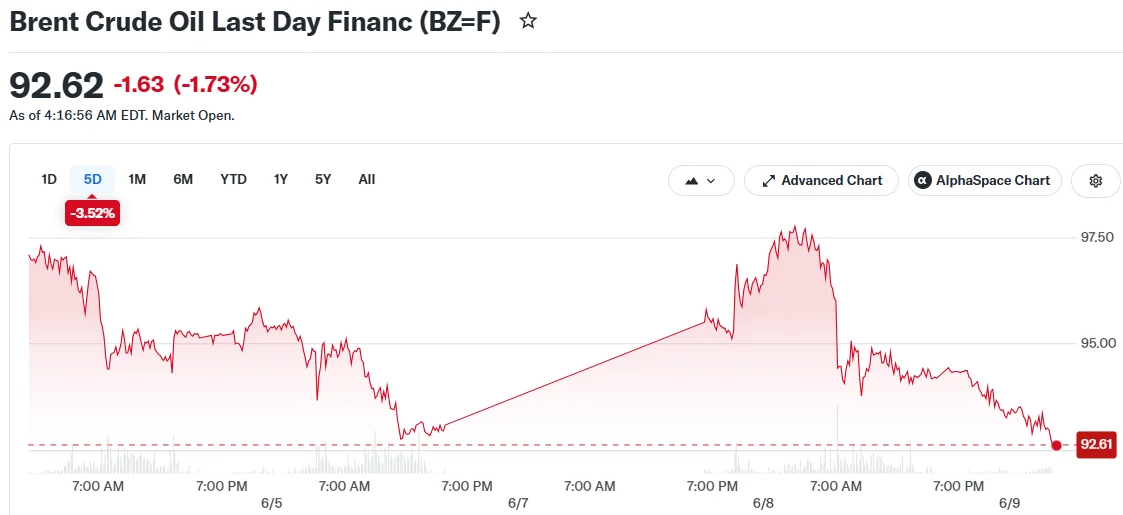
- Brent crude declined 1.4% to $92.92 while WTI decreased 1.9% to $89.57 following ceasefire announcements from Iran and Israel
- President Trump suggested a diplomatic resolution could materialize within days, projecting complete success in two weeks
- Critical shipping lanes through the Strait of Hormuz stay shut by both Iranian and American forces, strangling energy flows
- Chinese crude purchases plummeted 29% in the previous month, hitting an eight-year nadir
- Market experts contend that pricing must climb well above $100 to accurately represent severely diminished worldwide reserves
Crude oil markets retreated Tuesday following declarations from Iran and Israel that hostilities had been suspended, prompted by diplomatic pressure from President Donald Trump to reduce regional tensions.
Brent crude surrendered 1.4% of its value, settling at $92.92 per barrel. West Texas Intermediate experienced a steeper 1.9% decline to $89.57. These losses effectively erased the majority of Monday’s rally, which had been fueled by fresh Israeli military operations against Iran and weekend violence in Lebanon.
Speaking to journalists in New York Tuesday, Trump expressed optimism about imminent progress. “We’re in the final throes of what will be a very, very good deal,” he stated, suggesting an announcement might arrive within the next day or two. The president additionally forecasted that America would announce “total victory” in the conflict before two weeks elapse.
Israeli Prime Minister Benjamin Netanyahu indicated his nation would maintain its current pause but reserved the right to retaliate should Iranian aggression resume. Iranian state media broadcast comparable statements from Tehran’s leadership.
Strait of Hormuz Still Closed
Notwithstanding the temporary cessation of military action, the Strait of Hormuz remains impassable. Prior to the outbreak of conflict, this critical waterway transported roughly one-fifth of global crude oil and liquefied natural gas supplies. Tehran has effectively sealed most maritime traffic through the passage, while Washington has implemented its own naval blockade around Iranian harbor facilities.
On Monday, American military personnel disabled a commercial oil tanker in the Gulf of Oman after it attempted to reach an Iranian port despite the blockade. Israeli defense forces simultaneously intercepted an unidentified airborne object originating from Yemen.

Energy analysts caution that even with a diplomatic breakthrough, normalizing petroleum transportation will require substantial time. Naval mines throughout the Hormuz waterway must be located and neutralized. Previously shuttered oil production facilities may need months before resuming operations. Additionally, energy infrastructure damaged by aerial strikes and missile attacks requires extensive reconstruction.
China’s Imports Drop Sharply
Chinese crude petroleum imports contracted 29% during the previous month, reaching their weakest point in over eight years. April had already witnessed imports declining to approximately 9.3 million barrels daily, compared with the pre-conflict average of 11 million barrels per day. Rather than securing replacement supplies, China has been drawing from strategic reserves while simultaneously reducing refinery throughput.
Tamas Varga, an analyst with PVM Oil Associates, highlighted that worldwide petroleum inventories are being rapidly exhausted. He cautioned that once comprehensive data regarding stockpile levels becomes publicly available, the awareness of “dangerously low” oil reserves could propel Brent back beyond the $100 threshold.
Al Salazar, who directs oil and gas research at Enverus, characterized the current petroleum market as “headline driven.” He emphasized that pricing must climb into triple-digit territory to genuinely reflect the severity of depleted global inventory positions.
A tenuous ceasefire currently holds, though both nations have maintained the possibility of renewed military engagement.
Get 3 Free Stock Ebooks
Discover top-performing stocks in AI, Crypto, and Technology with expert analysis.
- Top 10 AI Stocks - Leading AI companies
- Top 10 Crypto Stocks - Blockchain leaders
- Top 10 Tech Stocks - Tech giants


