



Key Highlights
- Brent crude declined more than 1% to approximately $88 per barrel Tuesday amid ongoing U.S.-Iran hostilities
- International mediators have put forward a 10-day ceasefire proposal aimed at resurrecting a June preliminary agreement
- Iranian Revolutionary Guards attacked and disabled a vessel navigating the Strait of Hormuz
- Houthi forces in Yemen announced intentions to establish a naval blockade targeting Saudi Arabian shipping
- Weekly petroleum inventory reports from the API and EIA are expected to draw significant market attention
Oil prices tumbled more than 1% Tuesday as market participants weighed diplomatic ceasefire initiatives between Washington and Tehran against continued maritime aggression and emerging shipping threats.
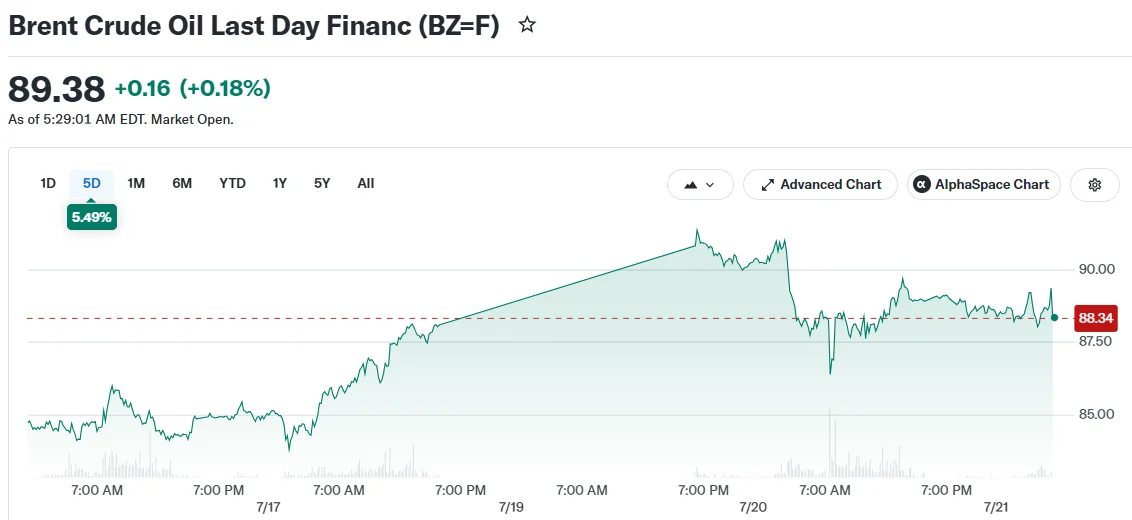
Brent crude declined to approximately $88 per barrel, while West Texas Intermediate in the United States retreated to around $82. Both benchmark contracts had closed higher during the previous session, with Brent momentarily surpassing the $90 threshold.
International mediators have presented a 10-day cessation of hostilities between the United States and Iran, a senior Iranian government source disclosed to Reuters. The diplomatic initiative seeks to resurrect the interim agreement established on June 17 and establish groundwork for comprehensive negotiations.
Hostilities commenced February 28 following coordinated U.S.-Israeli military operations against Iranian installations. U.S. Central Command has acknowledged executing ten successive days of airstrikes targeting Iranian military infrastructure, with detonations documented in Bandar Abbas, Qeshm Island, and Konarak.
Notwithstanding the ceasefire overture, substantial disagreements persist between Washington and Tehran. U.S. President Donald Trump pledged additional military responses following casualties among American military personnel in the ongoing confrontation.

Tuesday witnessed an unidentified projectile striking a commercial tanker transiting the Strait of Hormuz, compelling crew evacuation. Iran’s Islamic Revolutionary Guards Corps acknowledged carrying out the assault. Maritime traffic through the strategic waterway has been diminishing.
The Strait of Hormuz represents one of the planet’s most vital petroleum transportation corridors. Any prolonged interruption would significantly impact worldwide crude distribution networks.
Yemen’s Houthis Introduce Additional Risk to International Energy Markets
The Iran-aligned Houthi organization in Yemen declared intentions to implement a maritime blockade against Saudi Arabia. This strategy would impact the Bab al-Mandab Strait, a critical passageway facilitating approximately 12% of international commerce.
“The naval blockade threats directed at Saudi Arabia by Houthi forces carry considerable weight as they amplify disruption risks to another major petroleum exporting nation,” stated Tim Waterer from KCM Trade.
ING analysts indicated that markets remain skeptical regarding the blockade’s potential effectiveness. Nevertheless, they emphasized it would elevate maritime insurance expenses for regional vessel operations. Commercial shipping would require rerouting around the African continent should the blockade materialize.
SEB Research observed that recent American military strikes might represent negotiating leverage preceding diplomatic resolution. However, they emphasized that prolonged impasse scenarios remain probable, potentially maintaining energy supply uncertainty and elevated petroleum prices.
Geopolitical instability continues underpinning crude valuations. Nevertheless, price appreciation has been constrained by historical precedents where Middle Eastern conflicts de-escalated without producing sustained supply interruptions.
Market participants are currently focused on weekly U.S. petroleum stockpile data scheduled for release by the American Petroleum Institute Tuesday and the Energy Information Administration Wednesday, seeking indicators of consumption patterns in the world’s dominant oil-consuming economy.
Get 3 Free Stock Ebooks
Discover top-performing stocks in AI, Crypto, and Technology with expert analysis.
- Top 10 AI Stocks - Leading AI companies
- Top 10 Crypto Stocks - Blockchain leaders
- Top 10 Tech Stocks - Tech giants


