


Key Highlights
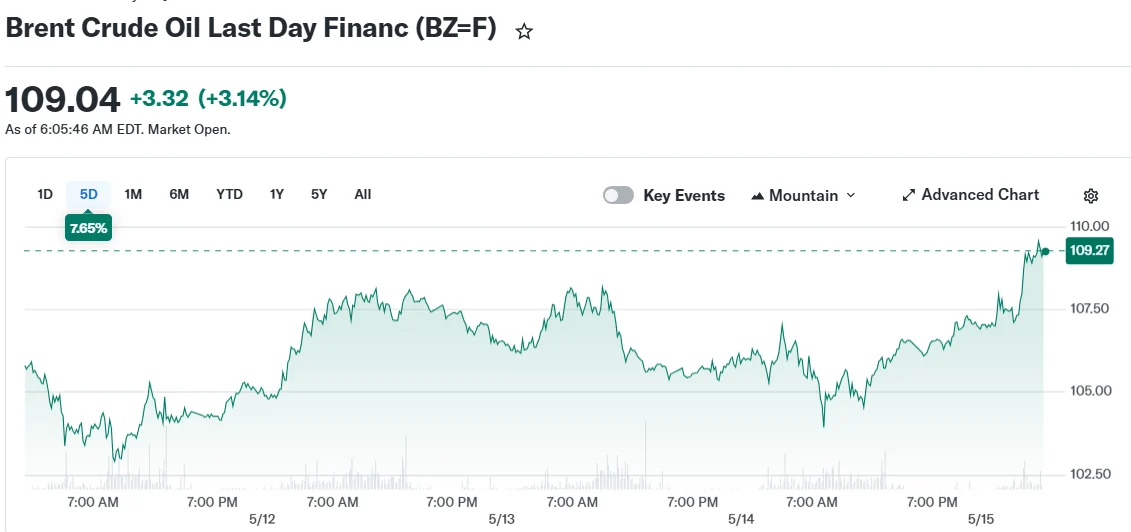
- Brent crude surged past $109 per barrel, marking a nearly 8% weekly increase
- The critical Strait of Hormuz corridor continues operating far below capacity
- Trump issued stern warnings to Iran, suggesting potential escalation in military response
- IEA projects continued “severe undersupply” in global oil markets extending into October
- Beijing summit between Trump and Xi concluded with no substantial agreements on energy or trade
Crude oil markets experienced significant gains this week as the critical Strait of Hormuz remained predominantly closed and efforts to resolve the Iranian crisis showed minimal progress.
By Friday’s close, Brent crude had pushed above the $109 per barrel threshold, registering approximately 8% growth for the week. West Texas Intermediate hovered around $105. These represented the most substantial weekly advances for both benchmarks in several months.
The Strait of Hormuz serves as the planet’s most critical oil transportation corridor. Under normal conditions, approximately 20% of worldwide petroleum supplies transit through this waterway.
Following the outbreak of hostilities in late February, vessel movement through the strait has plummeted dramatically. According to U.S. Energy Information Administration data, crude oil and refined product flows declined by nearly 6 million barrels per day during the first quarter.
Iranian government sources indicated roughly 30 vessels navigated the passage this week. Nevertheless, maritime activity remains substantially depressed compared to typical levels, with tanker companies maintaining heightened caution about resuming normal operations amid ongoing security concerns.

Major trading entity Vitol Group has begun marketing Iraqi crude originating from outside the Hormuz corridor to prospective buyers. This development indicates certain shipments have successfully identified alternative export pathways from the region.
Presidential Warnings Intensify Against Tehran
President Trump adopted an increasingly forceful stance toward Iran on Friday, declaring on Truth Social regarding the “military decimation of Iran (to be continued!).” During a Fox News appearance, he stated: “I am not going to be much more patient. They should make a deal.”
While a ceasefire agreement has technically held since early April, multiple incidents have threatened its stability. Washington and Tehran remain deeply divided on achieving any permanent settlement.
Trump characterized the current truce as existing on “massive life support” in recent comments. Market observers suggest the substantial divide between the parties makes further escalation more probable than diplomatic resolution in the immediate future.
“The path of least resistance very near term for prices remains more to the bullish side as we continue to see crude oil and fuel inventories contract,” said Dennis Kissler, senior vice president at BOK Financial Securities.
The ongoing conflict has depleted worldwide petroleum reserves at an unprecedented rate. The International Energy Agency warned this week that global markets may continue experiencing “severe undersupply” through October, even assuming hostilities cease within the next month.
Beijing Summit Produces Limited Results
President Trump conducted a two-day summit meeting with Chinese President Xi Jinping in Beijing. Discussions encompassed the Iranian military situation, global energy stability, and bilateral commercial relationships.
Both national leaders acknowledged the necessity of maintaining open access through the Strait of Hormuz for international energy commerce. Xi additionally indicated China’s willingness to increase purchases of American crude oil as a strategy to diminish reliance on Persian Gulf sources.
Xi announced that China and the United States had committed to stabilizing commercial relations and enhancing dialogue on regional security matters. Chinese official media reported the parties achieved “important consensus.”
Nevertheless, the summit yielded no significant tangible agreements. Trump mentioned Xi responded favorably to expanded American oil purchases, though China’s official communications did not reference energy topics among the discussion points.
Friday additionally witnessed widespread selling across bond markets. Market participants expressed mounting apprehension that petroleum flows will not return to normal levels rapidly, potentially driving inflation pressures higher.
Physical crude markets have experienced renewed tightening in recent sessions, mirroring the broader pressure on worldwide oil production and distribution systems resulting from the continuing conflict.
Get 3 Free Stock Ebooks
Discover top-performing stocks in AI, Crypto, and Technology with expert analysis.
- Top 10 AI Stocks - Leading AI companies
- Top 10 Crypto Stocks - Blockchain leaders
- Top 10 Tech Stocks - Tech giants


