


TLDR
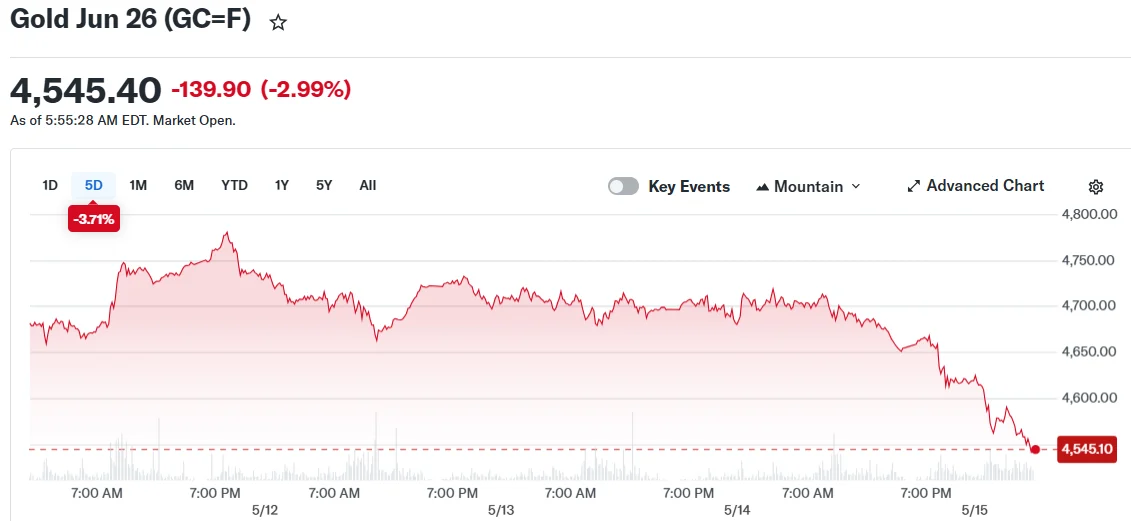
- The yellow metal tumbled up to 2.2% toward $4,550 per ounce, marking a weekly decline of approximately 3.4%
- April’s producer price index showed the strongest annual increase in four years; consumer price data similarly exceeded projections
- Market participants reduced Federal Reserve rate cut expectations while some started anticipating potential rate increases
- Ongoing closure of the Strait of Hormuz due to Iran conflict continues supporting elevated energy costs and inflation concerns
- ANZ Group revised its $6,000 gold price forecast to mid-2027 from its previous early next year projection
Precious metals experienced significant declines Friday following the release of US inflation figures that strengthened the dollar and lifted Treasury yields, diminishing the attractiveness of non-yielding assets.
The spot price of the yellow metal declined by as much as 2.2% approaching $4,550 per ounce, positioning it for a weekly retreat of approximately 3.4%. Bullion has surrendered over 13% of its value since hostilities with Iran commenced.
Silver experienced more severe losses, plummeting as much as 7.1% during trading sessions. The white metal concluded approximately 6% lower at $78.50 per ounce. Platinum and palladium similarly retreated.
The US Dollar Index advanced 0.3% intraday and gained more than 1% across the week. When the greenback strengthens, it increases the cost of dollar-denominated commodities for international purchasers, generally suppressing demand.
Two-year Treasury yields advanced to multi-month peaks. Rising yields diminish the appeal of assets that generate no income, such as the yellow metal.

Why Inflation Is Driving the Sell-Off
US wholesale inflation accelerated at the swiftest annual rate since 2022 during April. Consumer inflation figures also surpassed analyst forecasts. Retail spending numbers revealed resilient consumer activity despite elevated energy expenses.
The economic releases prompted market participants to reduce their expectations for Federal Reserve monetary easing this year. Certain investors advanced further, beginning to factor in the prospect of additional monetary tightening.
Gold historically thrives during periods of uncertainty and inflation anxiety, but when financial markets interpret inflation as necessitating tighter monetary policy, this advantage dissipates. Elevated interest rates amplify the opportunity cost associated with maintaining gold positions.
The Strait of Hormuz, the critical passage for worldwide petroleum transport, continues its closure due to the persistent Iran conflict. Crude oil prices advanced weekly, sustaining upward pressure on global inflation.
“Inflation expectations, higher yields and a stronger dollar are likely to keep gold under pressure in the near term,” wrote ANZ analysts Daniel Hynes and Soni Kumari. ANZ pushed back its $6,000 per ounce gold target to mid-2027.
Trump-Xi Talks and Iran Escalation Add Pressure
Market observers closely monitored the Trump-Xi Beijing summit for indications regarding trade relations and the Iran crisis. The gathering concluded without substantial developments, although both nations characterized the discussions as productive.
Chinese official media reported that both countries committed to preserving stable commercial relationships and coordinating on global matters. Trump characterized the US-China relationship as “very strong” and mentioned Xi’s willingness to assist with the Hormuz crisis.
However, Trump also posted on Truth Social that “the military decimation of Iran (to be continued!),” raising fears of further escalation.
Copper prices also weakened, with London Metal Exchange contracts declining 2.6% to $13,644 per ton. Copper had received support from the AI-driven stock market advance, which the fixed income market correction disrupted.
India contributed additional negative sentiment for the yellow metal, implementing stricter import regulations to protect the rupee following recent import duty increases. India represents the planet’s second-largest gold consumer market.
The precious metal has consolidated within a narrow trading band since experiencing sharp losses when the Iran conflict initiated. Financial markets remain divided between inflation concerns that could sustain elevated rates and economic growth worries that might ultimately compel central banks toward policy accommodation.
Get 3 Free Stock Ebooks
Discover top-performing stocks in AI, Crypto, and Technology with expert analysis.
- Top 10 AI Stocks - Leading AI companies
- Top 10 Crypto Stocks - Blockchain leaders
- Top 10 Tech Stocks - Tech giants


