



Key Highlights
- Brent crude surged more than 3% to approximately $94 per barrel following weekend military confrontation between the U.S. and Iran
- WTI futures gained about 3.5% to reach $90.40 per barrel, recovering from significant weekly declines
- Washington launched strikes on Iranian military infrastructure; Tehran retaliated with attacks on a U.S. air facility
- Diplomatic negotiations continue on a ceasefire framework, though critical obstacles persist after nearly two months of dialogue
- Approximately 20% of worldwide oil transport passes through the Strait of Hormuz, which continues facing disruptions
Crude oil markets experienced a sharp rally exceeding 3% on Monday following a weekend of military confrontation between Washington and Tehran, intensifying worries about potential supply chain interruptions across the Middle East.
Brent crude futures advanced to approximately $93.95 per barrel, while West Texas Intermediate contracts pushed up to nearly $90.40. These gains came after both benchmarks suffered roughly 10% losses during the prior week — marking their steepest weekly declines in recent trading sessions.
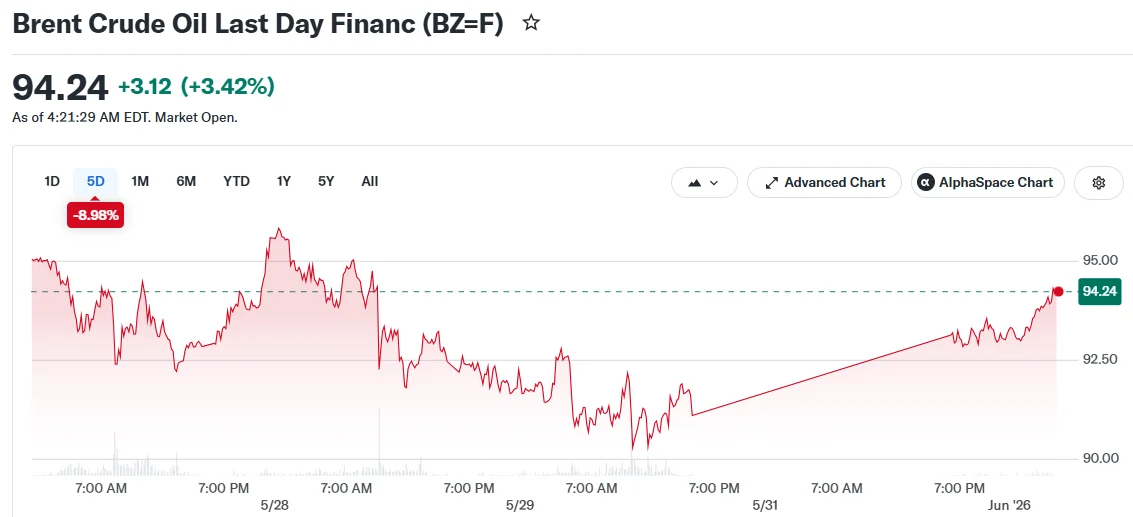
Last week’s downturn followed emerging reports suggesting that the United States and Iran were advancing toward a potential ceasefire agreement. However, optimism quickly evaporated following the weekend’s military escalation.
Weekend Military Escalation Details
U.S. defense officials confirmed strikes targeting Iranian air defense systems, unmanned aerial vehicle command centers, and supporting military infrastructure. The operation followed Tehran’s alleged downing of an American surveillance drone operating in international airspace.
[[EMBED_0]]Iran’s Revolutionary Guards launched a retaliatory strike against an air installation utilized by American military personnel. Kuwait’s defense systems intercepted additional missile and drone attacks, underscoring the growing volatility throughout the region.

Israel intensified tensions further by directing military forces to advance deeper into southern Lebanon, expanding operations against Hezbollah. This development amplified concerns regarding a potential broader regional confrontation.
Critical Shipping Chokepoint Under Pressure
The Strait of Hormuz represents the planet’s most crucial oil transportation corridor. Roughly one-fifth of worldwide oil supplies transit through this narrow waterway.
Maritime traffic through the strategic passage remains significantly reduced from typical volumes. Market experts indicate that current pricing has not fully accounted for a complete or prolonged closure scenario, suggesting substantial upward price potential should conditions deteriorate further.
Ipek Ozkardeskaya, a senior market analyst at Swissquote, noted that international petroleum reserves are depleting rapidly and emphasized that meaningful upside risks persist for oil valuations if strait disruptions continue.
Diplomatic Efforts Progress Slowly Despite Urgency
Negotiators from both nations are working on a memorandum of understanding. The proposed framework would address Strait of Hormuz navigation obstacles and establish a 60-day negotiation period to resolve disagreements concerning Iran’s nuclear activities and sanctions removal.
President Trump stated on Saturday that the United States was nearing “a very good deal” with Iran. Nonetheless, he indicated that renewed military action remained a possibility should negotiations collapse.
Amarpreet Singh, commodities specialist at Barclays, observed that markets are anxious to price in a successful resolution, but a comprehensive agreement remains out of reach following seven weeks of intensive negotiations.
Major unresolved issues encompass regional security frameworks, sanctions relief mechanisms, and maritime passage rights through the strategic waterway.
Crude prices have demonstrated significant volatility in recent weeks as market participants responded to constantly evolving developments on both military and diplomatic fronts.
During early Monday sessions, both Brent and WTI maintained their upward momentum, although market watchers emphasized that conditions could shift rapidly based on whether diplomatic progress materializes or military confrontation intensifies.
Get 3 Free Stock Ebooks
Discover top-performing stocks in AI, Crypto, and Technology with expert analysis.
- Top 10 AI Stocks - Leading AI companies
- Top 10 Crypto Stocks - Blockchain leaders
- Top 10 Tech Stocks - Tech giants


