



Key Takeaways
- Brent crude closed above the $100 per barrel threshold on Thursday, the first time since May 22
- Ongoing U.S. military operations against Iran reached day 12, causing significant disruptions to Strait of Hormuz maritime traffic
- Iran-backed Houthi forces launched strikes on Saudi oil tankers in Red Sea waters, escalating supply concerns
- Tehran turned down a U.S.-supported ceasefire agreement, signaling a breakdown in diplomatic channels
- Goldman Sachs projects sustained elevated prices through summer months, though forecasts indicate a drop to $80 by December if hostilities subside
Global oil markets witnessed a dramatic surge this week, with crude prices breaking through the $100 per barrel ceiling as U.S. military operations against Iran persisted and critical Middle Eastern shipping lanes experienced severe disruptions.
Brent crude futures concluded Thursday’s trading session at $100.69, marking a 7% daily increase. This represented the first closing price exceeding $100 since late May. Meanwhile, West Texas Intermediate climbed 6.2% to reach $92.19 per barrel.
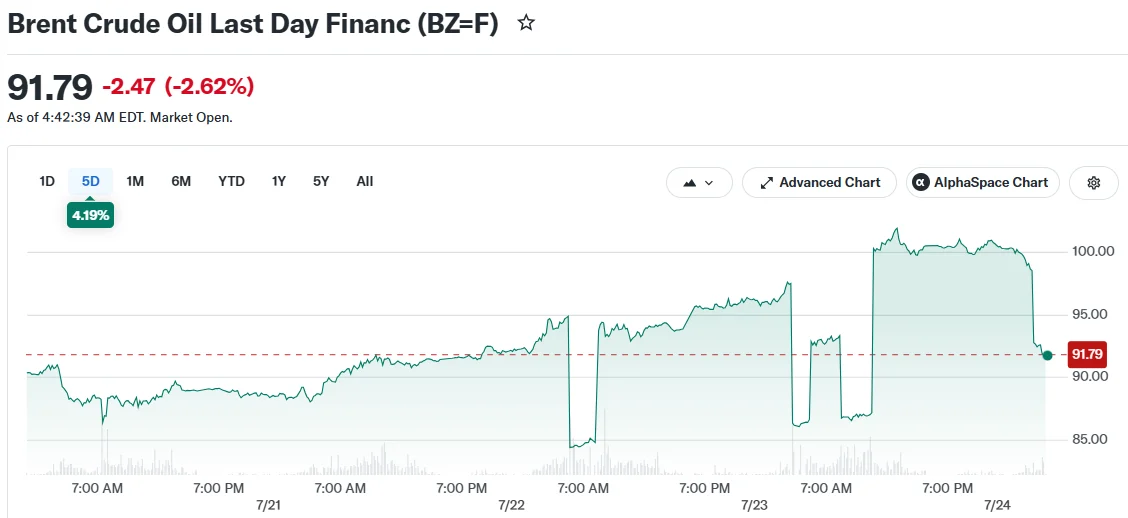
Friday witnessed a partial retreat as market participants secured gains. Brent declined 1.7% to $99.01 while WTI slipped to $90.64 following the previous session’s robust performance.
Despite Friday’s pullback, Brent has climbed approximately 14% over the week, representing its third consecutive week of substantial appreciation.
Critical Maritime Chokepoints Under Pressure
American military strikes against Iranian targets continued for a twelfth straight day through Thursday, creating substantial obstacles for oil tanker movements through the Strait of Hormuz. This narrow waterway represents one of the world’s most vital passages for petroleum transportation.

The Iranian-supported Houthi militia in Yemen announced responsibility for two separate assaults on Saudi Arabian tankers navigating Red Sea waters. These incidents targeted vessels transiting the Bab al-Mandap Strait, an alternative passage Saudi Arabia had been utilizing to circumvent Hormuz-related complications.
President Trump issued warnings Thursday regarding “major military punishment” directed at Iran and Houthi forces. The president additionally stated that Iranian financial resources would be allocated to compensate for vessel and cargo damages.
According to reporting from the New York Times, Tehran dismissed a U.S.-supported ceasefire initiative. Iranian officials indicated unwillingness to pursue temporary arrangements, pointing to fundamental disagreements regarding Strait of Hormuz jurisdiction.
Iraqi Prime Minister Ali al-Zaidi had conveyed the ceasefire framework to Iranian leadership. Regional intermediaries from Pakistan and Qatar have maintained mediation attempts despite deteriorating circumstances.
Market Outlook From Financial Institutions
Daan Struyven, an analyst with Goldman Sachs, projected that current price levels would maintain stability throughout July and August, bolstered by reduced Middle Eastern production capacity and heightened seasonal travel consumption.
Should tensions fail to de-escalate, Goldman Sachs cautioned that Brent crude could surge beyond $120 per barrel during the final quarter of the year, potentially maintaining a $100 average through 2027 if Hormuz disruptions continue.
Natasha Kaneva from J.P. Morgan suggested that existing prices incorporate only a moderate risk premium related to geopolitical factors. She observed that worldwide consumption has actually decreased, with China reducing oil imports and curtailing petrochemical production activities.
Energy Sector Gains While Broader Markets Struggle
Elevated crude valuations provided a boost to petroleum industry equities. Exxon Mobil shares advanced 2% while Chevron posted a 1.2% gain. France’s TotalEnergies disclosed its strongest second-quarter earnings performance in over two years.
The S&P 500 declined 1.4% during Thursday’s session, as energy sector strength proved insufficient to support overall market sentiment.
Intelligence reports suggest Iran’s leadership is making contingency preparations for potential broader military engagement with the United States, as American strikes continued into their thirteenth consecutive day on Friday.
Get 3 Free Stock Ebooks
Discover top-performing stocks in AI, Crypto, and Technology with expert analysis.
- Top 10 AI Stocks - Leading AI companies
- Top 10 Crypto Stocks - Blockchain leaders
- Top 10 Tech Stocks - Tech giants


