



TLDR
- Brent crude poised for 7% weekly surge; WTI targeting 10% increase, reaching six-week peaks
- U.S.-Iran military confrontations intensified this week, striking targets in Kuwait, Bahrain, and Jordan
- Vessel movements through Strait of Hormuz dropped to merely 4 ships Thursday, significantly below the 15-ship 10-day average
- Diesel prices in the U.S. reached unprecedented levels, fueling inflation concerns and elevating bond yields
- Citi elevated Q3 Brent projection to $86 per barrel; ANZ forecasts near-term prices at $95
Crude oil prices experienced a modest retreat on Friday while maintaining trajectory for one of their strongest weekly showings in recent months. The persistent military tensions between Washington and Tehran continue to rattle global energy markets.
Brent crude futures hovered near $95.15 per barrel Friday morning, declining approximately 0.4% during the trading session. West Texas Intermediate dropped 0.6% to $90.77. Notwithstanding the intraday pullback, Brent posted a 6.6% weekly advance while WTI climbed 8.8%, marking its strongest weekly performance since mid-July.
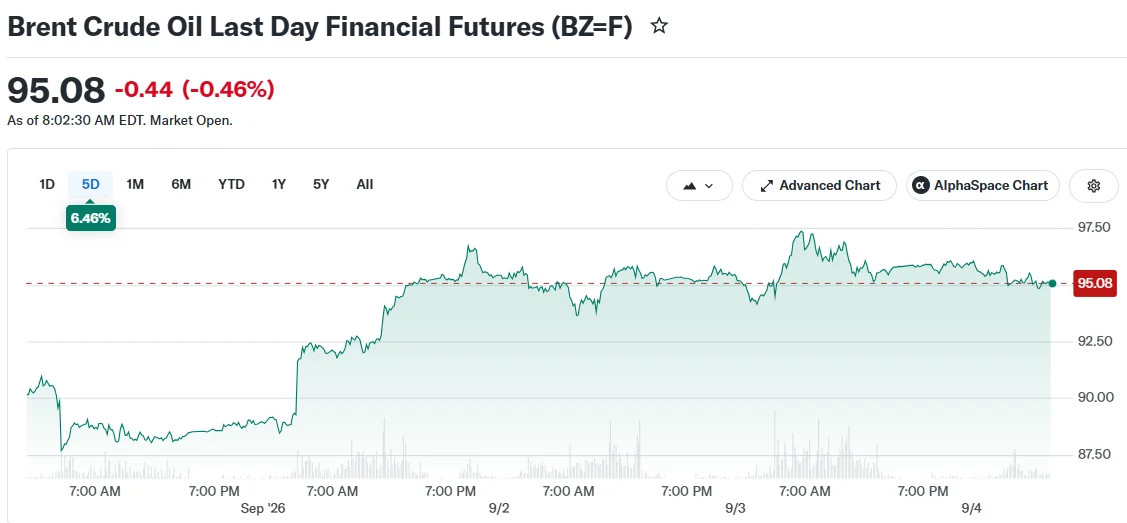
The confrontation between Washington and Tehran has entered its seventh month. Recent days witnessed some of the most intense military exchanges since July, with American forces targeting positions near the Strait of Hormuz. Iranian forces retaliated with missile and unmanned aerial vehicle strikes against American and coalition installations in Kuwait, Bahrain, and Jordan.
Reports indicate one American strike impacted a location where a wedding celebration was underway in southern Iran, resulting in civilian casualties. Iranian officials strongly denounced the incident.
Hormuz Shipping Slows Sharply
The Strait of Hormuz represents the planet’s most critical oil transit corridor. Iranian authorities have broadened limitations on international maritime traffic through this strategic waterway following the recent escalation.

A mere four commercial cargo vessels navigated the strait on Thursday, contrasting sharply with the approximately 15-vessel 10-day rolling average. This dramatic reduction provides unmistakable evidence that transportation remains severely compromised, contradicting U.S. administration assertions that traffic volumes have normalized.
Maritime tracking services and independent energy analysts confirm the disruption persists. The disconnect between official pronouncements and empirical evidence has amplified market volatility.
Vice President JD Vance stated Thursday that Washington would refuse negotiations with Tehran until Iranian forces ceased targeting merchant shipping.
Diesel Hits Record Highs
Diesel fuel prices across the United States climbed to historic peaks this week. Market experts attribute this surge partially to the petroleum supply disruption, alongside continued Ukrainian operations against Russian refining infrastructure.
“Diesel impacts every economic segment,” observed Claudio Galimberti, chief economist at Rystad Energy. He noted that elevated diesel costs are amplifying inflation forecasts, consequently driving upward pressure on U.S. Treasury yields.
The energy cost escalation has triggered concerns about potential severe economic deceleration globally.
Commercial petroleum stockpiles in the United States decreased to 424.5 million barrels during the week concluded August 28, down from 428.9 million barrels the preceding week, based on Energy Information Administration data.
OPEC+ is anticipated to maintain its October production strategy during Sunday’s scheduled meeting. The coalition recently completed reversing one phase of output reductions, though Hormuz disruptions have obscured the consequences of those policy adjustments.
Citi revised its Q3 Brent average projection upward to $86 per barrel from $80, citing delayed normalization of strait operations. ANZ boosted its near-term Brent estimate to $95, indicating additional upside potential should hostilities escalate.
Iraq increased its August petroleum exports to approximately 2.34 million barrels daily, rising from 1.35 million in July.
Get 3 Free Stock Ebooks
Discover top-performing stocks in AI, Crypto, and Technology with expert analysis.
- Top 10 AI Stocks - Leading AI companies
- Top 10 Crypto Stocks - Blockchain leaders
- Top 10 Tech Stocks - Tech giants


