



Key Highlights
- Brent crude futures reached $91.50 while WTI advanced to $85.22, marking three-week peaks
- President Trump declined to renew Iran ceasefire agreement that lapsed on Monday
- UK maritime officials confirmed vessel struck by projectile during Hormuz transit
- Iranian forces captured UAE-connected tanker for alleged regulatory violations
- Shipping activity through the strategic waterway remains significantly suppressed
Global crude oil benchmarks surged to their strongest position in almost three weeks Tuesday as geopolitical friction between Washington and Tehran continued to intensify around the strategically vital Strait of Hormuz.
Brent crude contracts advanced 0.7% to settle at $91.50 per barrel, while West Texas Intermediate futures gained 0.85%, touching $85.22 per barrel. These marked the highest trading levels for both benchmarks since July 30.
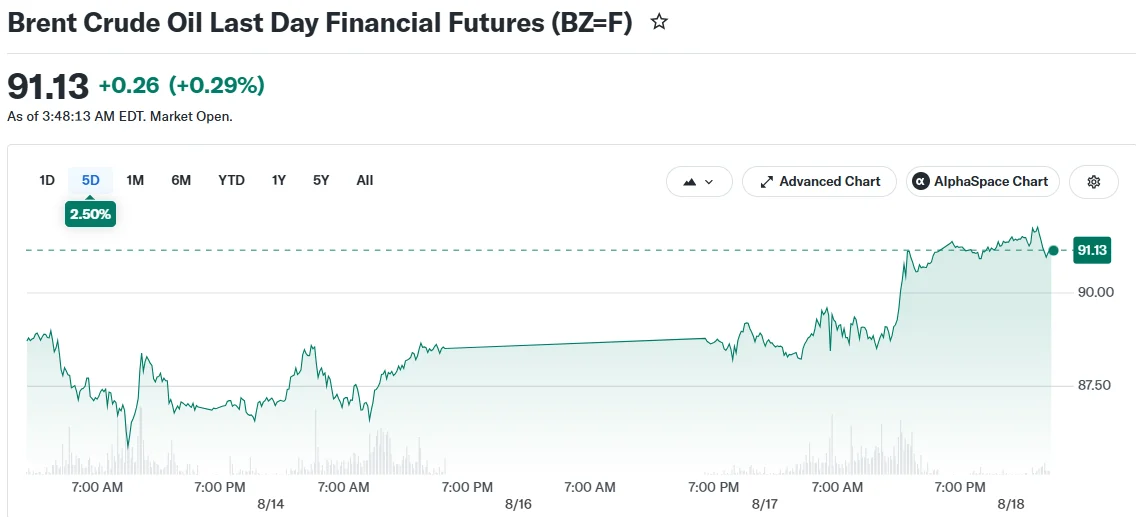
The upward momentum followed President Donald Trump’s announcement that Washington would not renew its ceasefire arrangement with Iran. The temporary truce, initially established in mid-June, officially lapsed Monday.
Trump reiterated his position that American forces maintain complete operational authority over the Strait of Hormuz, a claim Tehran continues to reject.
Maritime Incidents Compound Market Anxiety
Energy markets received additional upward pressure following confirmation from UK Maritime Trade Operations that an outbound commercial vessel sustained damage from an unidentified projectile while navigating through Hormuz waters.

Iranian state-affiliated media sources confirmed separately that authorities had seized a tanker with connections to the United Arab Emirates. Officials in Tehran claimed the vessel had breached transit regulations within the waterway.
Fars News Agency, a state-linked outlet, announced via X that the tanker “has been detained,” referencing Iran’s enforcement of mandatory transit fee payments for ships crossing through Hormuz. Neither the vessel’s identity nor its cargo details have been officially disclosed.
Brent crude concluded Monday’s trading session at $90.87, representing a 2.7% increase, following initial reports of the tanker detention.
Oil prices have experienced volatile fluctuations throughout the conflict period, reacting to statements from both American and Iranian officials, some of which have proven unreliable. Tehran has adopted an increasingly aggressive posture in recent weeks, launching attacks against multiple tankers attempting passage through the strait.
Oman Faces Threats as Diplomatic Efforts Falter
The U.S. president also issued threats against Oman, warning he would “bomb the s*** out of” the Gulf nation if it “gets in the way.” This statement emerged as Iranian and Omani representatives indicated they were conducting negotiations regarding the potential reopening of commercial shipping lanes through Hormuz.
Neither Tehran nor Muscat has formally announced any concrete agreement resulting from these discussions.
Maritime commercial activity through the strait continues to operate at substantially reduced capacity compared to pre-conflict volumes. Persistent concerns about potential Iranian military action have deterred vessel operators from attempting the passage.
Prior to the outbreak of hostilities, approximately 20% of worldwide crude oil supplies transited through the Strait of Hormuz. The effective blockage has created significant constraints on global petroleum availability.
American officials characterize diplomatic engagement with Iran as continuing, though Tehran has challenged this representation of the situation.
Energy traders are closely monitoring developments in the Oman-Iran shipping negotiations, as any breakthrough agreement could potentially alleviate current supply pressures.
Meanwhile, market participants continue to factor in extended disruption scenarios, with minimal expectations for an imminent diplomatic breakthrough.
Get 3 Free Stock Ebooks
Discover top-performing stocks in AI, Crypto, and Technology with expert analysis.
- Top 10 AI Stocks - Leading AI companies
- Top 10 Crypto Stocks - Blockchain leaders
- Top 10 Tech Stocks - Tech giants


