



Key Highlights
- The Kingdom has established an alternative export route using Oman’s Sohar port following drone strikes on its Red Sea infrastructure
- Brent benchmark declined to $108.16 per barrel while WTI settled at $104.63, ending a brief rally
- American crude stockpiles increased by 7.1 million barrels, significantly exceeding analyst projections of a 1.6 million barrel decline
- European gasoil futures reached unprecedented levels amid Middle Eastern supply constraints
- American diesel costs exceeded $6 per gallon for the first time in history last week
Crude benchmarks retreated on Wednesday following Saudi Arabia’s establishment of an alternative shipping channel through Oman, alleviating concerns regarding Middle Eastern supply constraints. Brent benchmark settled at $108.16 per barrel, while the West Texas Intermediate marker declined to $104.63.
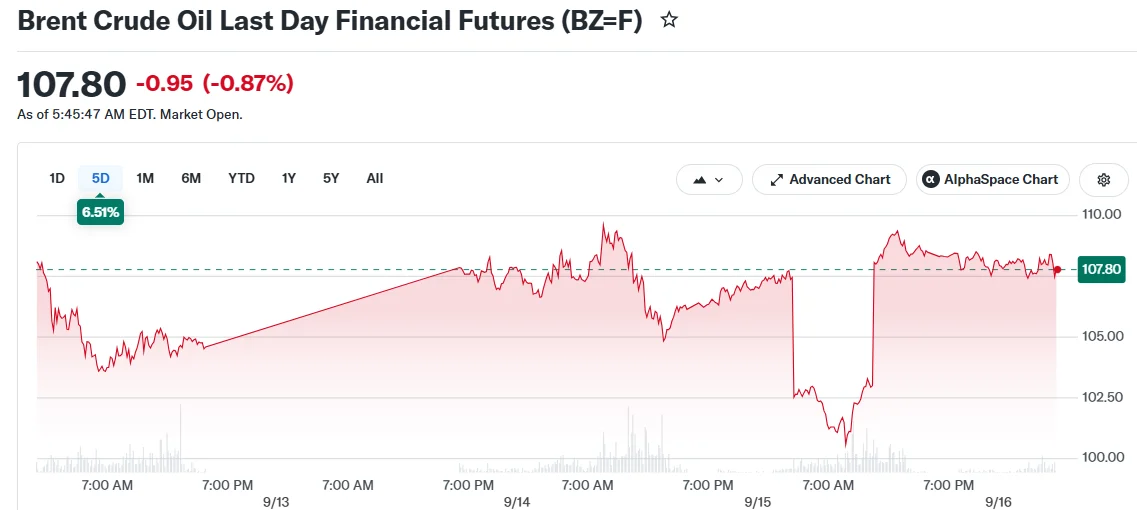
The decline came after a 48-hour surge that had elevated both benchmarks by over 6% across the week. The upward momentum stemmed from intelligence indicating Houthi drone operations had compromised Saudi Arabia’s critical east-west pipeline infrastructure, compelling the kingdom to halt operations at its Yanbu Red Sea terminal.
Kingdom Establishes Backup Export Channel
The Saudi government is currently providing crude to Asian processing facilities via ship-to-ship transfer operations near Oman’s Sohar port facility. This contingency solution has diminished immediate apprehensions that supply interruptions might prove extensive or protracted.
UBS energy analyst Giovanni Staunovo noted that Saudi Arabia’s ability to export from Gulf facilities indicated that broader disruption concerns were diminishing.
Maritime traffic navigating the Strait of Hormuz contracted to merely four vessels on Tuesday, considerably beneath the ten-day moving average of 18 transits. The strategic waterway previously facilitated approximately one-fifth of worldwide petroleum and natural gas movement before U.S.-Israeli confrontations with Iran commenced in late February.

Research from Macquarie suggests that Strait of Hormuz throughput has maintained stability despite escalating geopolitical pressures, potentially achieving volumes exceeding 7.5 million barrels daily since hostilities resumed on August 30.
Citi’s commodities team anticipates short-term geopolitical friction will sustain elevated crude valuations but forecasts the Strait of Hormuz will resume normal operations during Q4 2026 through diplomatic interventions.
Distillate Costs Reach Unprecedented Territory
European diesel valuations climbed to their peak level since April on Tuesday, with gasoil futures establishing a new record settlement. Market observers attribute this to Europe’s loss of diesel and aviation fuel supplies from Middle Eastern sources, compounded by Eastern European tensions that have disrupted Russian refining operations.
The nationwide average diesel cost in America surpassed $6 per gallon last week, marking an all-time high.
Energy market specialist Frank Walbaum characterized diesel’s exceptional performance as a product-specific scarcity layered atop elevated crude valuations.
Compounding supply dynamics, production at three Libyan extraction sites has reportedly been halted.
The petroleum price escalation has simultaneously elevated the benchmark 10-year U.S. Treasury yield to levels not witnessed in approximately twenty years.
Financial markets are currently assigning a 92% probability to a Federal Reserve interest rate increase at Wednesday’s policy meeting. A rate adjustment could combat inflationary pressures but potentially constrain employment expansion and broader economic activity.
America’s Strategic Petroleum Reserve has contracted by approximately 130 million barrels throughout 2026 to date, currently holding 285.36 million barrels.
Get 3 Free Stock Ebooks
Discover top-performing stocks in AI, Crypto, and Technology with expert analysis.
- Top 10 AI Stocks - Leading AI companies
- Top 10 Crypto Stocks - Blockchain leaders
- Top 10 Tech Stocks - Tech giants


