



Key Highlights
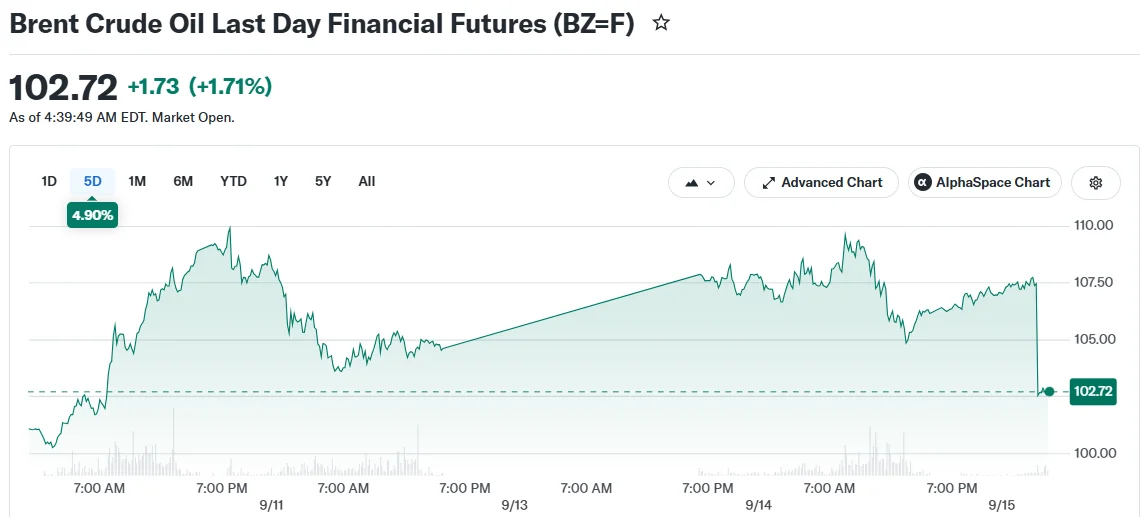
- Brent crude advanced 2% to reach $107.83 per barrel while WTI gained 2.1% to hit $103.50 on Tuesday
- Yemen-based Houthi forces captured Perim Island in the Bab al-Mandeb Strait following their takeover of Mokha port
- Saudi Arabia’s critical East-West Pipeline remains shut down, with complete restoration projected to require six to eight weeks
- Negotiations between Iran and Gulf nations regarding Strait of Hormuz access have been postponed without a rescheduled date
- Energy experts caution that worldwide crude stockpiles may provide only five to eleven weeks of coverage
Oil prices surged beyond the $107 per barrel threshold on Tuesday as renewed Houthi militant activity targeting Saudi infrastructure and a significant pipeline disruption intensified supply anxieties throughout international crude markets.
Brent crude benchmark contracts climbed 2.0% to settle at $107.83 per barrel during early European market hours. The West Texas Intermediate benchmark experienced a 2.1% increase, reaching $103.50 per barrel. Both indices momentarily achieved elevated levels on Monday, with Brent peaking at $109.80 before retreating.
Critical Pipeline Outage Intensifies Market Tensions
The East-West Pipeline in Saudi Arabia was forced offline following Houthi assault operations last week that inflicted damage on multiple pumping facilities. This 750-mile infrastructure system possesses the capacity to transport up to 7 million barrels daily from Saudi Arabia’s eastern regions to the Red Sea terminal at Yanbu.
Saudi authorities are pursuing efforts to reinstate limited operations in the coming days. Nevertheless, comprehensive repairs addressing the compromised pumping stations are anticipated to require between six and eight weeks, per reporting from the Wall Street Journal.
This pipeline infrastructure represents a vital alternative route enabling Saudi crude shipments to circumvent the Strait of Hormuz. The current shutdown eliminates a primary safeguard against regional supply interruptions.

Saudi crude shipments from Yanbu had climbed beyond 4 million barrels daily during the April through June period. However, that volume plummeted to merely 1.1 million barrels per day by August as Houthi militant operations elevated threats to Red Sea maritime traffic, based on LSEG tracking data.
Energy analyst Janiv Shah from Rystad Energy calculates that Saudi Arabia maintains approximately two to six days’ worth of crude reserves at Yanbu. Accessing stockpiles maintained in Egyptian facilities could potentially extend that timeframe by a minimum of seven additional days.
Yemen Rebels Consolidate Control at Strategic Maritime Gateway
Iranian-supported Houthi forces took control of Perim Island located in the Bab al-Mandeb Strait during the weekend following their seizure of Mokha port. These tactical advances provide the organization with enhanced capabilities to interfere with petroleum shipments traversing the Red Sea channel.
Energy market specialists at ING stated that oil valuations maintain strong underlying support and that this price floor appears unlikely to collapse until markets obtain more definitive information regarding Saudi supply conditions after the pipeline closure.
Diplomatic discussions between Iranian officials and Gulf state representatives concerning the reopening of Strait of Hormuz passage have experienced delays. Omani authorities announced during the weekend that a scheduled Monday conference had been deferred indefinitely. Alternative timing has not been established.
The Strait of Hormuz historically facilitated approximately one-fifth of global petroleum movement before the U.S.-Iran military conflict commenced in late February. Transit volumes have consistently remained substantially below historical benchmarks since the strait was effectively closed at the outbreak of hostilities.
Commonwealth Bank of Australia market analyst Vivek Dhar indicated that elements previously providing market stability are deteriorating. Chinese crude acquisition volumes are increasing incrementally, while supplementary non-OPEC production capacity outside Middle Eastern territories is not projected to materialize until 2027.
Dhar noted that CBA’s conservative projection, estimating global reserve coverage at only five to eleven weeks of consumption, is becoming progressively more probable.
U.S. President Donald Trump reiterated claims on Monday suggesting Iran was pursuing peace negotiations. Iranian officials refuted these assertions, stating engagement in diplomatic discussions would not occur until specific preconditions were satisfied.
Get 3 Free Stock Ebooks
Discover top-performing stocks in AI, Crypto, and Technology with expert analysis.
- Top 10 AI Stocks - Leading AI companies
- Top 10 Crypto Stocks - Blockchain leaders
- Top 10 Tech Stocks - Tech giants


