


Key Takeaways
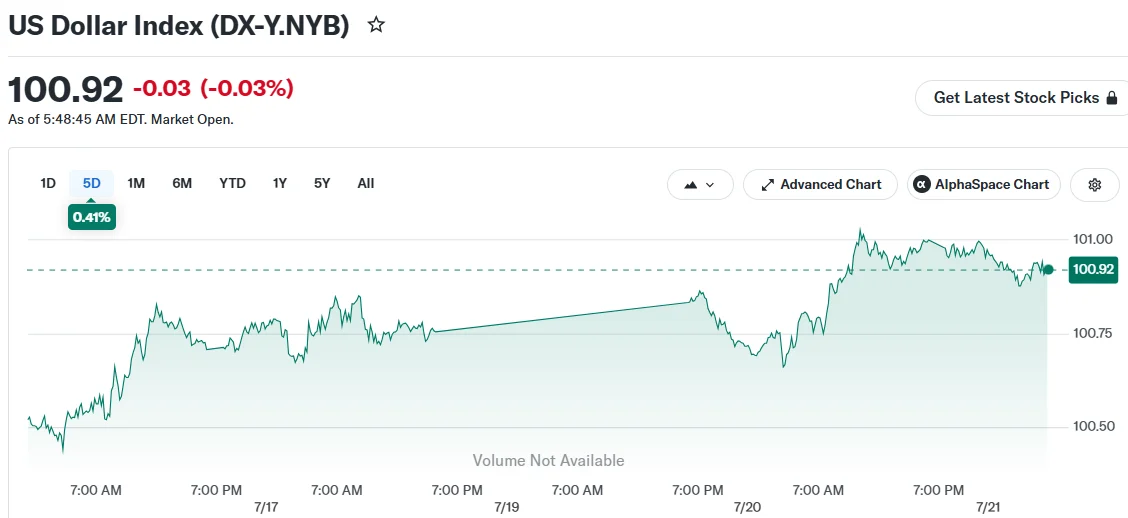
- The U.S. Dollar Index maintained strength around 100.93, hovering near its one-week peak as geopolitical tensions in the Middle East sustained safe-haven appetite
- American military operations against Iran have continued for ten straight nights, though diplomatic channels have introduced a potential 10-day ceasefire framework
- Sterling gained 0.1% following newly appointed UK Prime Minister Andy Burnham’s commitment to maintaining current fiscal guidelines
- The euro remained stable around $1.1424 as traders await Thursday’s European Central Bank policy announcement, with rates expected to stay unchanged
- Federal Reserve rate expectations show an 85% probability of holding steady at the upcoming meeting, as inflation trajectory remains uncertain
The greenback has maintained its position near the strongest level witnessed since mid-July, bolstered by elevated Treasury yields. The benchmark 10-year Treasury yield continues to hover around 4.59%, with the 30-year duration trading above the 5% threshold.
Foreign exchange markets are currently navigating between two conflicting dynamics: intensifying military confrontation in the Middle East region versus the potential for a negotiated diplomatic resolution.
American military forces have executed consecutive nightly operations targeting Iranian command infrastructure and maritime facilities for a full ten days, as confirmed by U.S. Central Command statements. Traditionally, such military escalation drives capital flows toward safe-haven instruments including the U.S. dollar.
However, diplomatic channels remain active. A high-ranking Iranian representative confirmed to Reuters that Tehran has received a mediated proposal for a 10-day cessation of hostilities. This development has prevented forex traders from establishing significant directional positions.
“The absence of directional clarity regarding the conflict’s trajectory has placed the dollar in a holding pattern,” noted Jimmy Jean, chief economist at Desjardins, who further suggested that any meaningful dollar depreciation appears more probable by 2027.
Houthi Naval Restrictions Compound Energy Market Concerns
Iran-backed Houthi forces in Yemen have declared a new maritime blockade targeting Saudi Arabia, intensifying worries about global oil transportation corridors. Brent crude prices have surged approximately 21% throughout the current month, despite experiencing a 1.1% retreat on Tuesday.

Energy market disruptions carry significant implications for currency valuations, as energy-driven inflation pressures could compel central banks to maintain elevated interest rate policies for extended periods.
“Dollar risk factors continue tilting toward appreciation as markets demonstrate a concerning level of complacency regarding the military re-escalation,” stated Francesco Pesole, foreign exchange strategist at ING.
Sterling Advances Following UK Leadership’s Fiscal Commitment
The British pound appreciated 0.1% versus the dollar, reaching $1.3441, positioned to break a three-session decline.
Andy Burnham officially assumed the role of Britain’s prime minister on Monday—marking the nation’s seventh premier within a single decade. His administration has committed to adhering to established fiscal frameworks while naming John Healey as finance minister.
Financial markets in the City reacted favorably to the fiscal discipline pledge, though uncertainty persists regarding Burnham’s strategy for financing campaign promises without imposing additional tax burdens on the workforce.
The euro experienced modest appreciation to $1.1424 in anticipation of Thursday’s ECB monetary policy determination. The European Central Bank is broadly anticipated to maintain current rate levels without signaling future reductions while energy-related inflation risks persist.
The Federal Reserve convenes its policy meeting next week. Current market pricing reflects an 85% expectation that rates will remain unchanged, as central bankers assess how Middle Eastern developments may influence inflationary pressures.
The Canadian dollar stabilized following a decline to one-month lows, after the United States implemented a 50% tariff on various Canadian exports amid ongoing trade disagreements.
Get 3 Free Stock Ebooks
Discover top-performing stocks in AI, Crypto, and Technology with expert analysis.
- Top 10 AI Stocks - Leading AI companies
- Top 10 Crypto Stocks - Blockchain leaders
- Top 10 Tech Stocks - Tech giants


