


Key Takeaways
- A jury in California dismissed Elon Musk’s legal claims against OpenAI and its leadership, determining the lawsuit was filed beyond the allowed timeframe.
- Musk alleged OpenAI executives unlawfully profited by transforming the organization from nonprofit to for-profit status.
- OpenAI escapes what analysts estimated as $134 billion in potential liability from Musk’s legal action.
- Following Monday’s decision, Tesla stock dropped 3% while Microsoft shares edged higher.
- Despite Musk’s intention to appeal, legal scholars argue his chances of overturning the verdict are minimal.
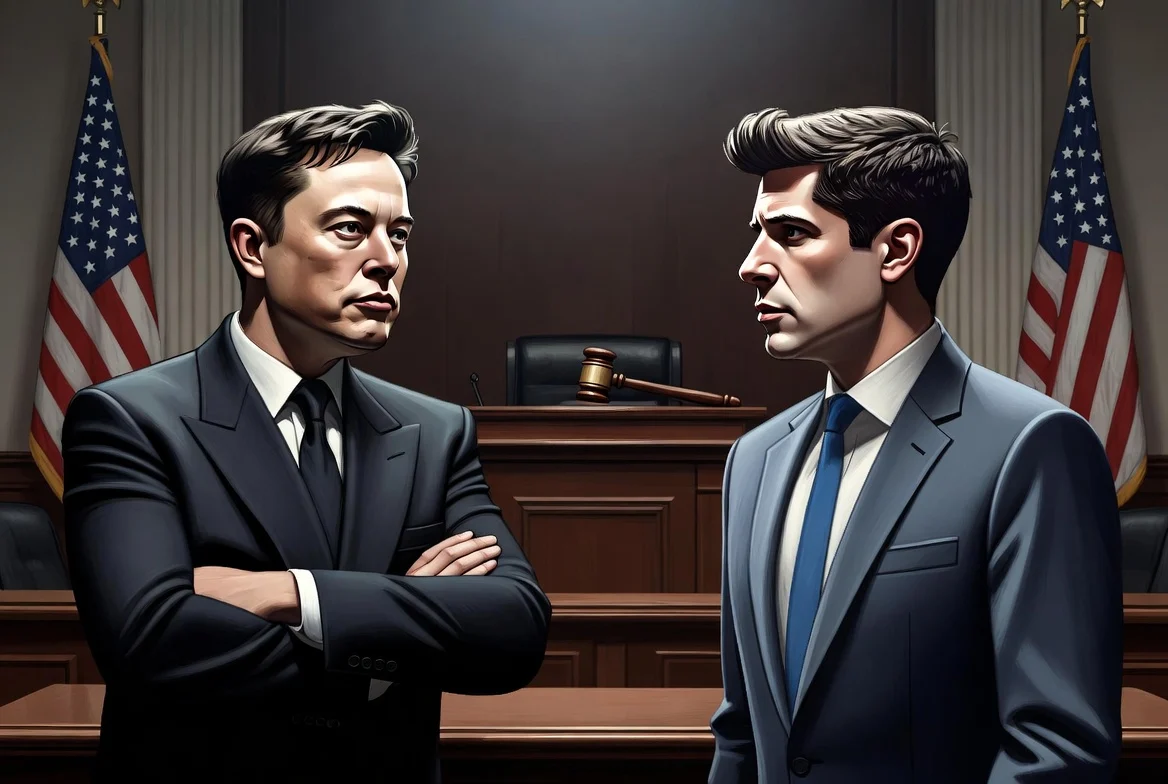
Elon Musk suffered a significant legal defeat Monday when a California jury sided with OpenAI and its co-founders Sam Altman and Greg Brockman. The jury determined that Musk’s legal challenge fell outside the permissible statute of limitations, effectively clearing the defendants of any wrongdoing.
The proceedings took place over three weeks at the US District Court for the Northern District of California in Oakland. Judge Yvonne Gonzalez Rogers formally accepted the jury’s decision.
Musk’s central complaint centered on OpenAI‘s structural transformation from a nonprofit entity to a for-profit corporation. He contended that Altman and Brockman improperly benefited from this shift, arguing his financial contributions were made with the explicit expectation that OpenAI would maintain its nonprofit status indefinitely.
The company was established in 2015 by Musk, Altman, and additional co-founders. Musk departed the organization in 2018, years ahead of its eventual conversion to a for-profit model.
Courtroom Drama and Legal Arguments
Throughout the proceedings, Musk’s legal counsel Steven Molo attempted to undermine Altman’s credibility. He highlighted Altman’s temporary dismissal from OpenAI’s board in 2023, when board members cited concerns about his transparency. That removal lasted only a few days before Altman returned to leadership.
“Sam Altman’s credibility is directly at issue in this case,” Molo told jurors. “If you cannot trust him, if you don’t believe him, they cannot win.”
OpenAI’s defense attorneys countered by presenting testimony from numerous witnesses who confirmed Musk never attached nonprofit stipulations to his financial contributions. They emphasized that the legal challenge was brought far beyond the acceptable time period.

Taking to X following the verdict, Musk declared his intent to appeal. “There is no question to anyone following the case in detail that Altman and Brockman did in fact enrich themselves by stealing a charity,” he wrote. “The only question is WHEN they did it.”
Carl Tobias, a law professor at the University of Richmond, told Barron’s the chances of a successful appeal are slim. “I think the case is pretty much over,” he said. “It’s all fact specific, so I don’t think there’s any legal question there.”
Financial Implications for OpenAI and Market Impact
The ruling represents a major victory for OpenAI and its financial supporters. According to Wedbush analyst Dan Ives, the decision eliminates approximately $134 billion in potential damages that had been hanging over the company.
Microsoft, having poured over $10 billion into OpenAI, stands to gain from the verdict. Microsoft stock climbed modestly to $423.33 on Monday. Other prominent OpenAI investors include Amazon, SoftBank, and Nvidia, with the AI company now commanding a valuation near $1 trillion.
In February, Amazon committed to a $50 billion multi-year partnership with OpenAI. The artificial intelligence company is positioning itself for a public offering and is considered among the most anticipated IPO candidates for 2026.
Tesla stock declined 3% Monday in the aftermath of the verdict.
Beyond its legal significance, the case offers a window into a high-profile business relationship gone sour. “When billionaires break up it can be expensive and nasty,” Tobias said.
Get 3 Free Stock Ebooks
Discover top-performing stocks in AI, Crypto, and Technology with expert analysis.
- Top 10 AI Stocks - Leading AI companies
- Top 10 Crypto Stocks - Blockchain leaders
- Top 10 Tech Stocks - Tech giants


