



Key Takeaways
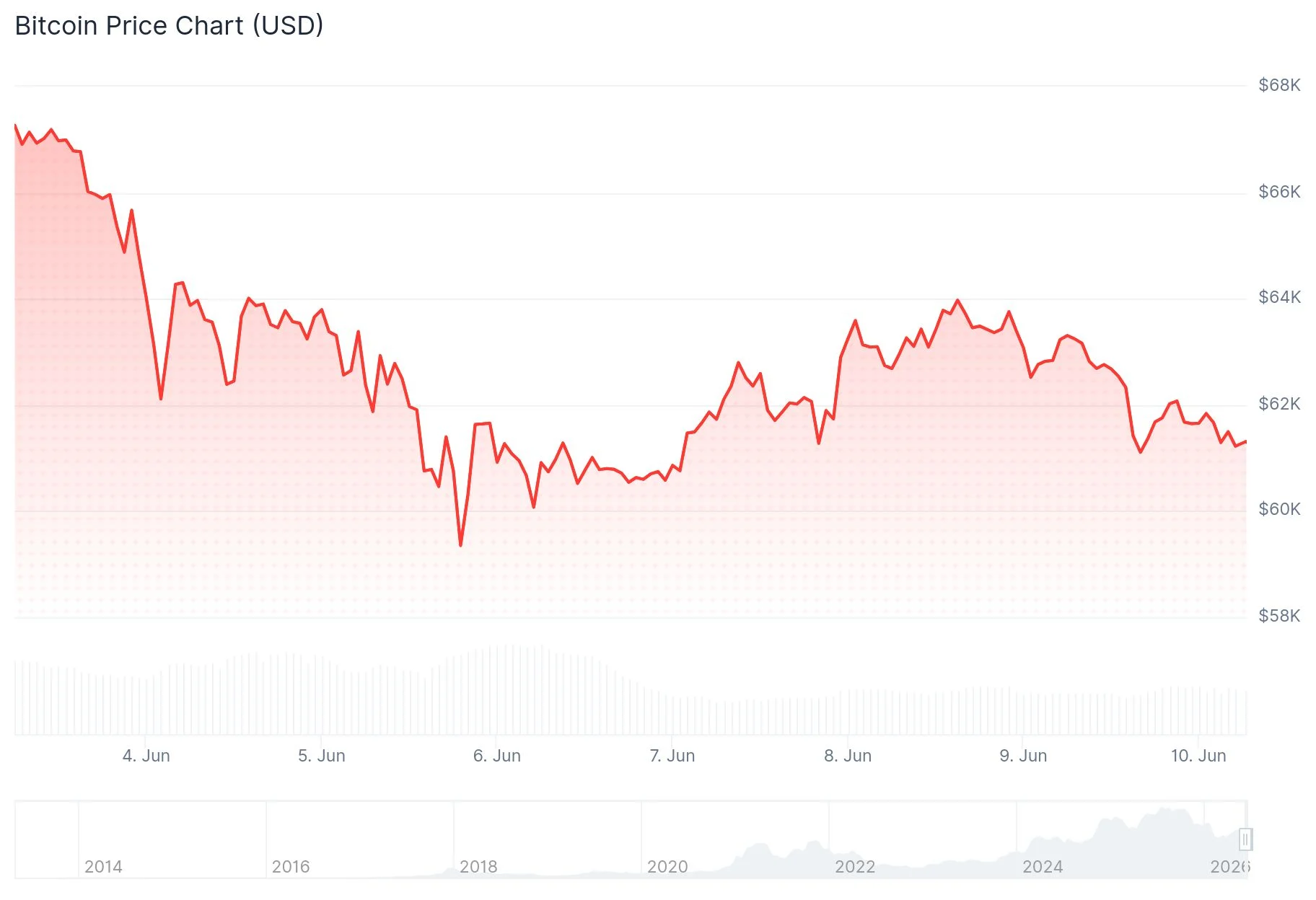
- Bitcoin (BTC) declined approximately 7% over the week, settling around $61,233, while gold retreated beneath the $4,200 per ounce threshold
- The latest cryptocurrency rally stemmed from short position liquidations exceeding $500 million rather than genuine demand
- Persistent outflows from US spot Bitcoin ETFs continue to signal institutional hesitation
- Military strikes against Iran by US forces triggered equity futures declines, with Nasdaq 100 futures falling 0.8%
- Market participants are focused on Wednesday’s Consumer Price Index data, where elevated readings could strengthen rate increase expectations
Digital currencies and precious metals experienced simultaneous declines on Wednesday as market participants adjusted positions based on anticipated interest rate trajectories. Elevated inflation metrics could reinforce the Federal Reserve’s restrictive monetary policy stance, diminishing the attractiveness of non-yielding assets.
Bitcoin exchanged hands at $61,233, representing a 3% daily decline and approaching a 7% weekly loss. Gold retreated 2% to trade under $4,200 per ounce. Both asset classes typically face headwinds when interest rate expectations rise.
Broad-Based Cryptocurrency Weakness
Ether declined 3.4% to reach $1,625. Solana experienced a 4.1% drop to $64.24. XRP shed 4.3% to trade at $1.12. Hyperliquid’s HYPE token led losses, plummeting 10.2% on the day and 21.3% across the week to $55.52.
The recent upward movement in Bitcoin lacked genuine buying interest. Liquidations of bearish positions exceeded $500 million, marking the highest level since April, creating temporary upward price pressure.
Actual spot market demand has remained absent. Continued withdrawals from US spot Bitcoin ETFs reflect ongoing institutional caution.

“Market participants have provided support following the downturn, but genuine spot demand has not materialized in significant volumes,” noted Diana Pires, chief business officer at sFOX.
Absent substantial demand to underpin valuations, price recoveries have proven unsustainable. Should selling intensify following the inflation release, Bitcoin could experience additional downside.
Equity Markets React to Middle East Military Action
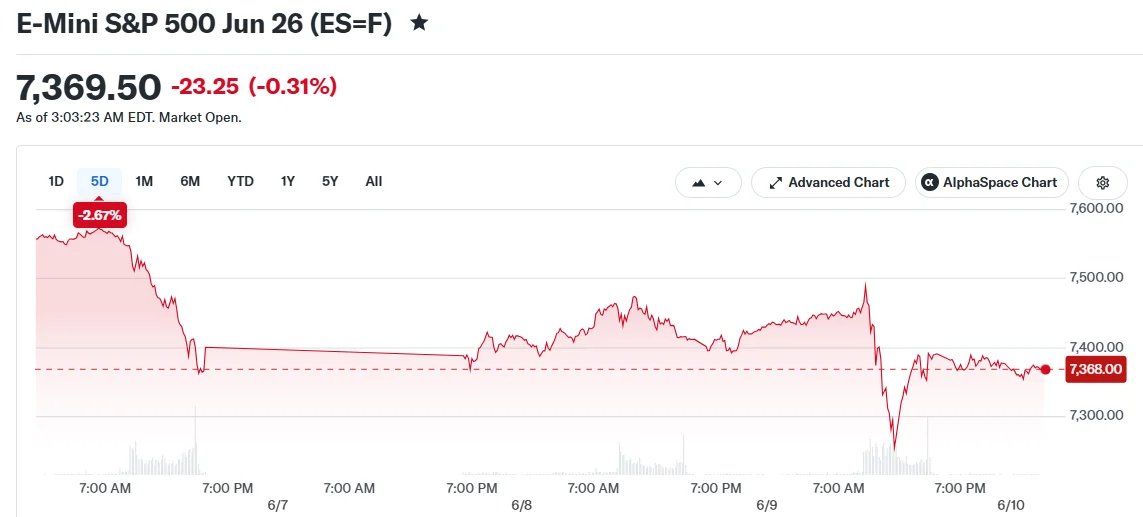
US equity index futures retreated after military officials confirmed defensive strikes targeting Iran. Dow and S&P 500 futures declined approximately 0.3%. Nasdaq 100 futures fell 0.4%.
Tensions between Washington and Tehran intensified following Monday’s downing of a US Apache helicopter near the Strait of Hormuz. President Trump acknowledged Iranian responsibility and committed to retaliation.
South Korea’s Kospi index plummeted 6.3%, contributing to a 2.5% decline in the MSCI Asia-Pacific benchmark. Brent crude maintained levels near $92 per barrel as Middle Eastern tensions supported oil prices. The 10-year Treasury yield advanced to 4.54%.
Equity markets finished Tuesday’s session with mixed results as investors reduced exposure to artificial intelligence-related securities. Growing concerns that the Iranian situation could fuel inflationary pressures intensified speculation about potential Federal Reserve tightening.
Wednesday’s May Consumer Price Index release represents the pivotal market event. Economists anticipate continued price growth. An above-consensus result would strengthen expectations for rate increases this year.
New Federal Reserve Chair Kevin Warsh has already communicated a restrictive policy preference. Stronger-than-anticipated inflation data could reinforce that hawkish positioning.
Oracle will release quarterly results following Wednesday’s market close. Market observers will scrutinize its cloud computing segment, which includes OpenAI among its clientele.
The SpaceX initial public offering is scheduled for Friday, anticipated to represent the largest market debut on record.
Should gold prices stabilize while Bitcoin continues declining, the narrative supporting Bitcoin as a macroeconomic hedge becomes increasingly questionable.
Get 3 Free Stock Ebooks
Discover top-performing stocks in AI, Crypto, and Technology with expert analysis.
- Top 10 AI Stocks - Leading AI companies
- Top 10 Crypto Stocks - Blockchain leaders
- Top 10 Tech Stocks - Tech giants


