



Key Takeaways
- ETH has reclaimed the $2,500 level but encounters significant resistance near $2,560
- BTC ETF products have absorbed close to $1 billion in April; Ethereum ETF inflows remain sporadic and underwhelming
- Network activity measured by daily active addresses has trended downward since early August, staying under 500K
- Approximately 116,000 ETH exited centralized exchanges within a two-day period, representing roughly $300 million in value
- Successfully clearing the $2,515–$2,560 zone could trigger a rally toward $2,750, followed by $3,400, and possibly $4,750
Ethereum has bounced back from its summer slump, yet the cryptocurrency continues to encounter difficulty piercing through critical price barriers even as Bitcoin climbs beyond $82,000. Currently, ETH is changing hands around $2,498, reflecting approximately 5% gains over recent trading sessions, with its market capitalization standing at $304.85 billion and daily trading volume reaching $10.68 billion.
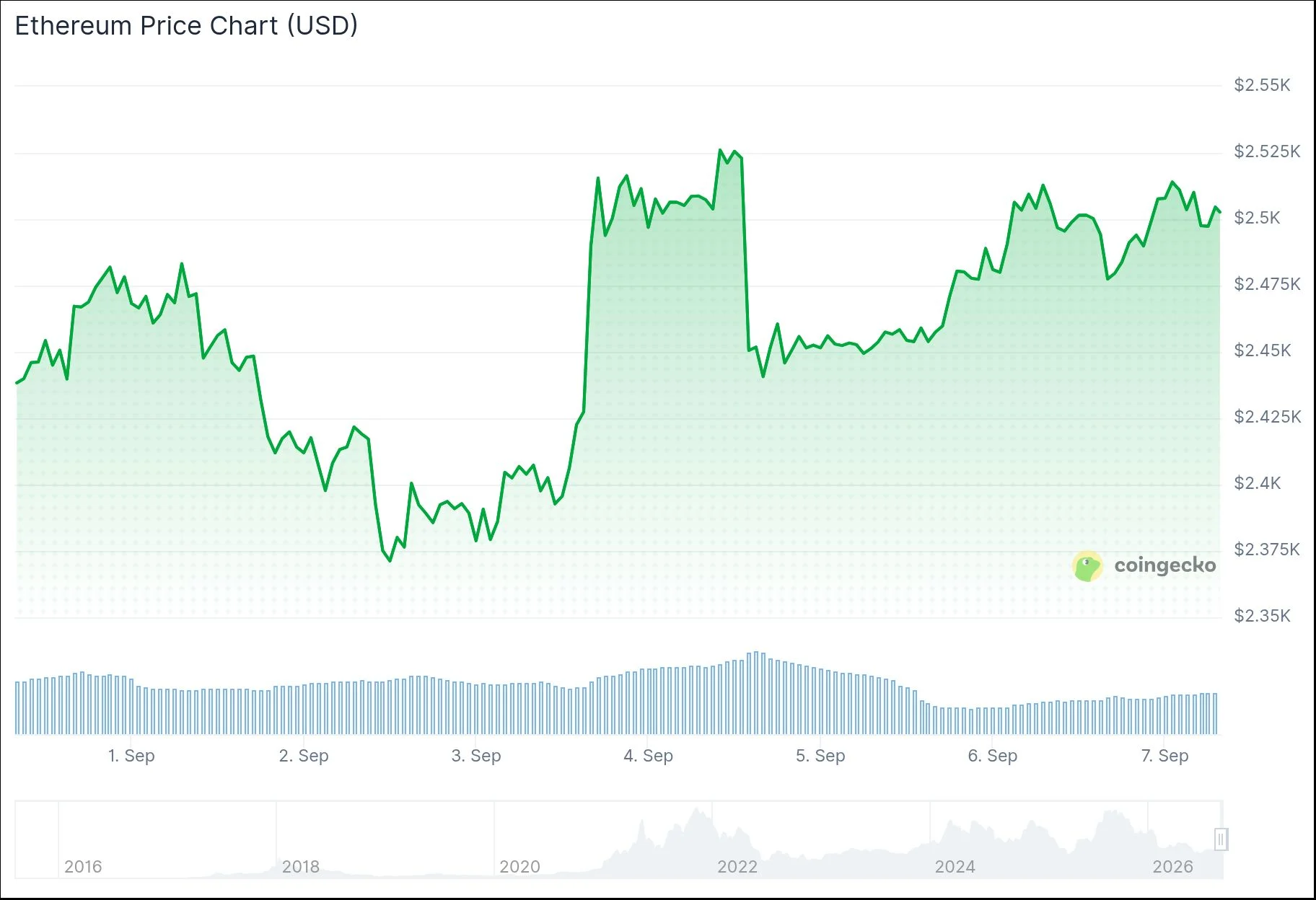
The performance divergence between Ethereum and Bitcoin has become increasingly pronounced. Bitcoin has captured almost $1 billion through spot ETF vehicles since April began, propelling its price back to $82,000. Meanwhile, Ethereum’s ETF channels have exhibited irregular patterns, with September’s peak daily inflow registering a modest $59.3K, which interrupted a 12-day run that had accumulated more than $1 billion in ETH investment products.
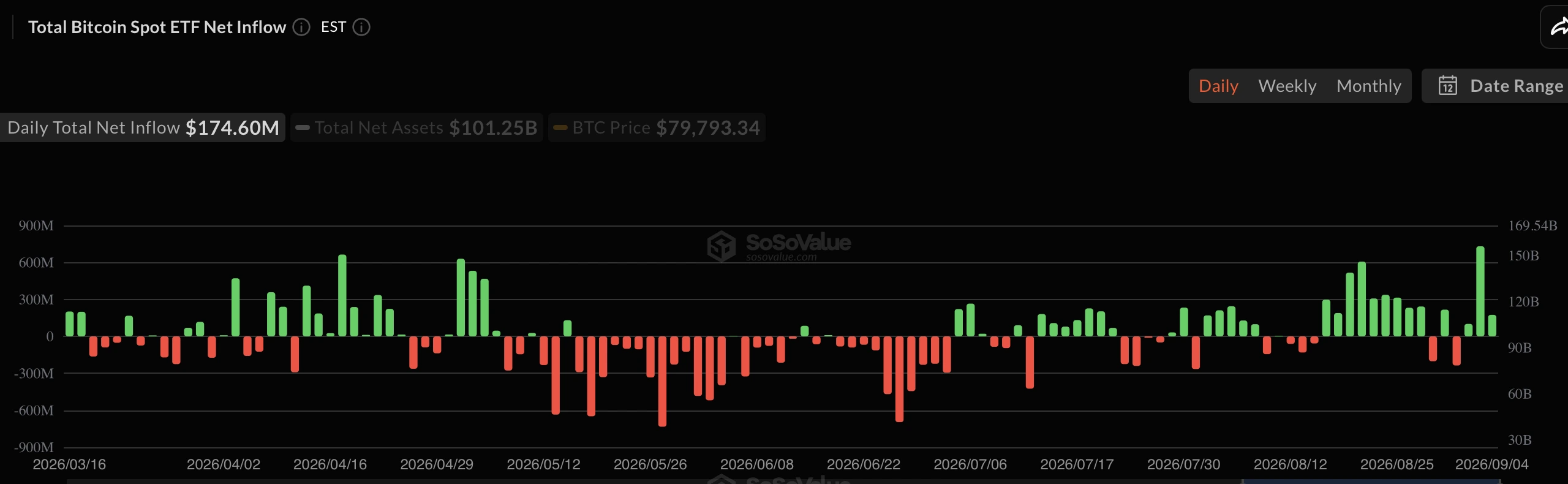
Bitcoin Dominates Institutional Capital Allocation
While institutional participants haven’t abandoned Ethereum entirely, current capital deployment patterns strongly favor Bitcoin. The exchange-traded fund statistics validate this trend. Although ETH products continue receiving some capital, the volume pales compared to the sustained buying pressure channeled into BTC vehicles.
Market analyst Ali Charts highlighted that more than 116,000 ETH tokens have been removed from centralized trading platforms within a 48-hour window, valued at approximately $300 million. According to his assessment, this contraction in exchange-held supply is establishing conditions for a potentially significant price movement in Ethereum.
Technical analyst Bitcoin Meraklisi observed that ETH has successfully recovered the $2,381 resistance threshold and is currently trading within a range bounded by $2,381 and $2,515. His analysis identifies $2,515 as the critical breakout point, projecting $2,750 as the initial upside objective, with subsequent targets at $3,400 and potentially $4,750 should bullish momentum accelerate.

Network Activity Fails to Match Price Recovery
Blockchain metrics reveal that network engagement has not synchronized with the price rebound. The count of daily active addresses has followed a downward trajectory since August 9 and has remained under the 500K threshold throughout this month. This metric also reflects a year-over-year decline exceeding 5% when compared to the corresponding period last year.
Transaction volume has surged 81.78% to reach $29.08 billion, based on Coinglass data. Open interest registered a modest 0.34% increase to $32.86 billion. The combination of elevated volume alongside relatively stable open interest indicates growing market participation without substantial expansion in leveraged trading positions.
Ethereum’s real-world asset ecosystem continues expanding. Stablecoins deployed on the network command a collective market capitalization of $163.5 billion. Tokenized investment funds represent $17.5 billion, while commodity-backed tokens contribute approximately $5 billion and tokenized equities add $770.1 million.
Large holder movements have intensified, with more than 1 million ETH transferred across 650 separate transactions in recent days. A single address deposited 70,000 ETH valued at $174 million to exchanges while retaining an additional 97,114 ETH in reserve.
The $2,560 price point represents the nearest obstacle. Ethereum’s weekly Relative Strength Index has climbed above its typical range, while the 20-day moving average positioned at $2,418.98 continues ascending, establishing dynamic support beneath current prices.
Get 3 Free Stock Ebooks
Discover top-performing stocks in AI, Crypto, and Technology with expert analysis.
- Top 10 AI Stocks - Leading AI companies
- Top 10 Crypto Stocks - Blockchain leaders
- Top 10 Tech Stocks - Tech giants


