


Key Highlights
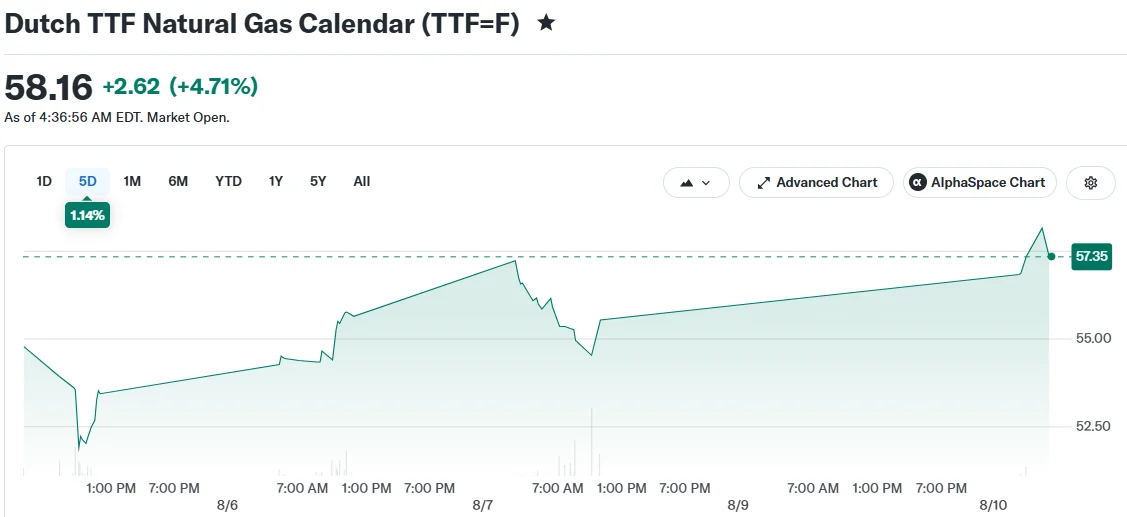
- Dutch natural gas futures climbed more than 2% Monday, gaining 2.9% to approximately €56.90/MWh
- Negotiations between Iran and Oman over Strait of Hormuz shipping routes remain incomplete
- Iran maintains the channel will only fully reopen after the U.S. satisfies certain additional demands
- European Union gas reserves stand at approximately 56%, below typical mid-August levels
- Intense competition with Asian markets for available LNG shipments continues to tighten supply
Natural gas markets across Europe registered solid gains Monday following renewed uncertainty about the timeline for resolving Strait of Hormuz transit restrictions. Dutch front-month contracts advanced 2.9% to settle near €56.90 per megawatt-hour, while British wholesale prices increased 2.6% to reach 139.50 pence per therm.
Monday’s rally followed mixed signals from Tehran regarding ongoing discussions with Oman about establishing alternative shipping corridors through the strategic waterway. Iranian officials indicated a potential agreement was within reach, but simultaneously introduced new preconditions that effectively delayed any comprehensive reopening. Tehran emphasized that unrestricted passage would require Washington to address additional Iranian concerns, while categorically rejecting any prospect of bilateral negotiations with U.S. officials.
This diplomatic uncertainty prevented the supply reassurance that European energy traders had been anticipating.
Critical LNG Routes Remain Constrained
The Strait of Hormuz serves as a crucial passage for liquefied natural gas exports originating in the Middle East. Ongoing disruptions continue to delay shipments from substantial producers including Qatar, creating additional strain on international supply chains precisely when European nations should be accelerating their seasonal storage accumulation.
European storage facilities currently hold around 56% of total capacity as the continent enters the latter half of August. This represents a meaningful deficit compared to historical benchmarks for this calendar period. Market observers note this shortfall increases vulnerability heading into the winter demand period.

Unusually hot conditions throughout southern European regions have compounded the challenge. Elevated temperatures have driven increased electricity consumption for cooling purposes, diverting natural gas toward immediate power generation rather than allowing it to be directed into strategic reserves.
Bidding Wars for Available LNG Intensify
European energy companies now find themselves in direct competition with Asian purchasers for whatever spot LNG cargoes become available on international markets. This rivalry is sustaining premium pricing levels and complicating efforts by European utilities to establish adequate storage cushions before cold weather arrives.
Market experts anticipate continued price sensitivity to any developments emerging from the trilateral Iran-Oman-U.S. diplomatic process. As long as the strait remains partially restricted and a comprehensive agreement eludes negotiators, supply-side uncertainty appears set to persist.
Iranian representatives clarified they haven’t completely abandoned the diplomatic track, though they characterized advancement as incremental. No specific timeframe was offered regarding when substantive conclusions might be reached.
The benchmark Dutch gas contract had declined throughout the previous week before Monday’s reversal. The recovery pushed prices back above the €56 per megawatt-hour threshold, a psychologically significant marker for market participants.
Currently, European energy pricing mechanisms reflect expectations that Hormuz-related complications will extend through at least the immediate weeks ahead.
Get 3 Free Stock Ebooks
Discover top-performing stocks in AI, Crypto, and Technology with expert analysis.
- Top 10 AI Stocks - Leading AI companies
- Top 10 Crypto Stocks - Blockchain leaders
- Top 10 Tech Stocks - Tech giants


