


Key Takeaways
- Dutch TTF benchmark natural gas contracts declined 0.7% to approximately 82.80 euros/MWh following Monday’s 2023 peak
- Gas reserves across Europe stand at merely 68% of total capacity, trailing the typical five-year average for this season
- Diplomatic efforts to reopen Strait of Hormuz shipping lanes remain stalled after Oman postponed critical negotiations
- Brent crude oil surged beyond $113 per barrel following pipeline attacks in Saudi Arabia affecting 4% of worldwide supply
- Federal Reserve launches its two-day policy meeting Tuesday, with traders estimating a 90% probability of another interest rate increase
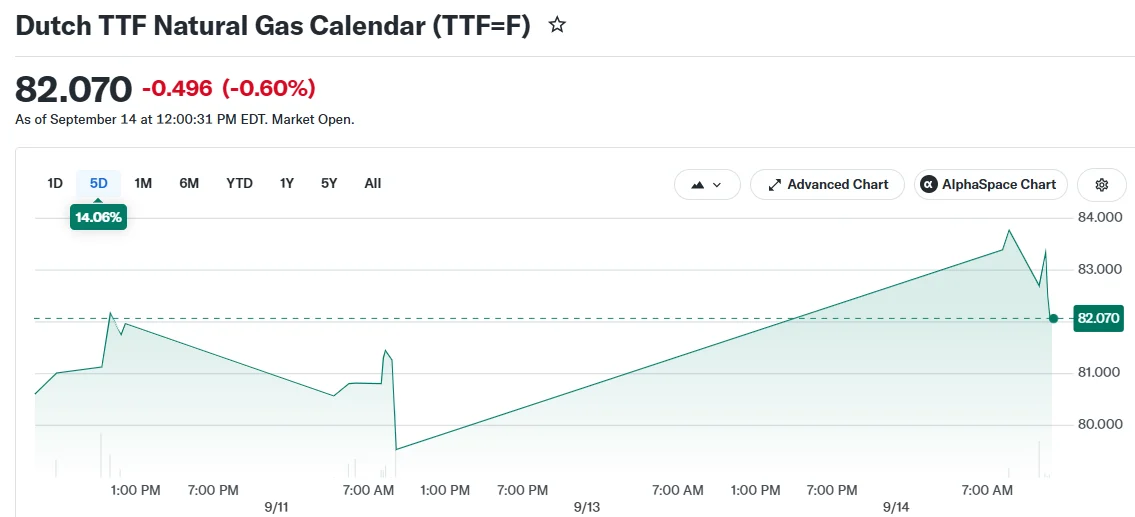
Europe’s gas prices experienced a modest retreat on Tuesday following a surge to their strongest levels since 2023 during the previous trading session. The Dutch TTF futures contract, which serves as the regional benchmark, decreased 0.7% to settle near 82.80 euros per megawatt-hour (MWh), slightly under Monday’s 83.40 euro summit.
Across the Channel, Britain’s NBP wholesale gas benchmark similarly declined 0.7% to reach 200.10 pence per therm. Despite the pullback, prices remain firmly anchored above the psychologically significant 200-pence threshold after climbing to multi-year peaks in recent trading days.
The modest decline reflected profit-taking activity following an extended period of heightened volatility. However, the fundamental pressures weighing on European gas markets remain firmly intact.
Depleted Storage Reserves Heighten Market Anxiety
Underground natural gas storage facilities throughout Europe currently hold approximately 68% of total capacity, based on data from Gas Infrastructure Europe. This figure falls notably short of the five-year seasonal norm for this period, when inventories typically approach full capacity in preparation for winter heating demand.
JERA’s Chief Executive Yukio Kani addressed these concerns on Monday, cautioning that Europe’s inadequate reserve levels create significant vulnerability for electricity networks should maritime disruptions persist or intensify competition for liquefied natural gas (LNG) shipments escalate.

Scheduled maintenance operations at Norwegian gas production facilities compound supply concerns, eliminating another crucial flow source into European distribution networks during a particularly sensitive period.
Strait of Hormuz Crisis Drives Oil Beyond $113
Brent crude advanced 1.2% on Tuesday, climbing above $113 per barrel. Saudi Arabian officials attributed attacks on the kingdom’s East-West pipeline infrastructure to Iran-supported groups, threatening to remove up to 4% of worldwide crude oil production.
Ongoing Houthi assaults targeting commercial vessels navigating Red Sea shipping corridors amplify these disruptions. Diplomatic discussions scheduled in Oman aimed at securing safe tanker transit through the Strait of Hormuz have been delayed indefinitely, leaving Qatari LNG exports through the Persian Gulf substantially constrained.
LNG carrier movements through the Strait have experienced a dramatic contraction. This development tightens worldwide supply availability and forces European importers into intensified competition with Asian purchasers for limited cargo volumes.
The European Central Bank implemented a quarter-percentage-point rate increase to 2.50% last Thursday. The U.S. Federal Reserve commenced its two-day policy deliberations Tuesday, with financial markets assigning a 90% probability to an additional 25-basis-point rate elevation.
Energy market participants anticipate central banking authorities will maintain elevated interest rates through 2027 as persistent energy cost inflation continues driving broader price increases.
Notwithstanding Tuesday’s limited price correction, market analysts emphasize that underlying conditions remain exceptionally tight. The convergence of insufficient storage capacity, compromised shipping routes, and ascending crude oil valuations suggests gas prices will struggle to decline substantially absent a definitive resolution to Hormuz transit difficulties or marked improvement in inventory positions.
Get 3 Free Stock Ebooks
Discover top-performing stocks in AI, Crypto, and Technology with expert analysis.
- Top 10 AI Stocks - Leading AI companies
- Top 10 Crypto Stocks - Blockchain leaders
- Top 10 Tech Stocks - Tech giants


