



TLDR
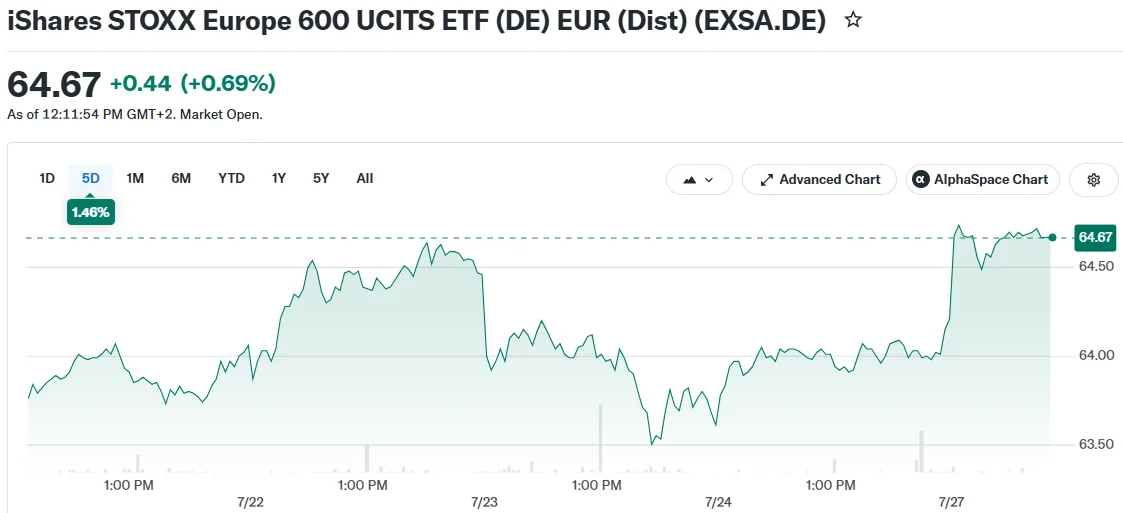
- The pan-European STOXX 600 surged close to 1% on Monday’s trading session
- Crude oil prices plummeted approximately 5–6% following U.S.-Iran military de-escalation
- Travel and leisure sectors climbed more than 2%; energy sector declined 2%
- Critical central bank meetings scheduled: Federal Reserve, Bank of England, and Bank of Japan
- Major technology earnings expected from Apple, Microsoft, Meta, Amazon, and Qualcomm
European equity markets experienced significant gains on Monday following a weekend agreement between the United States and Iran to suspend military operations. This development triggered a sharp decline in crude oil valuations and boosted investor confidence throughout international financial markets.
The benchmark STOXX 600 index climbed approximately 0.7–1%, reaching levels not seen since early July. German equities led the advance with the DAX surging 1.3%, while French, Italian, and Spanish markets posted gains near 0.9%. Britain’s FTSE 100 advanced 0.4%.
Brent crude contracts fell approximately 6% to trade around $90 per barrel. The decline followed weekend statements from Washington announcing a pause in bombing operations, with Tehran indicating it would reciprocate if American forces maintained their ceasefire.
The retreat in oil prices provided immediate market relief, easing concerns about inflationary pressures. Regions heavily dependent on energy imports, particularly Europe and Asia, had experienced mounting economic stress from elevated commodity costs.
Travel and leisure equities emerged as top performers, advancing 2.3%. Airlines including Lufthansa, IAG, and Ryanair each registered gains around 3% as declining fuel expenses enhanced profitability projections.

Conversely, energy sector stocks declined 2%, representing the weakest-performing segment of the STOXX 600.
Analysts at UBS cautioned that geopolitical risks persist. “The risk of further escalation remains high… A retest of oil price highs from earlier this year cannot be ruled out should military actions intensify,” their research note stated.
Central Bank Decisions and Technology Earnings Dominate Calendar
The coming days feature a concentrated schedule of monetary policy announcements. The U.S. Federal Reserve, Bank of England, and Bank of Japan will all release policy decisions.
Market consensus anticipates the Fed will maintain current interest rate levels. Nevertheless, futures markets indicate a 25 basis point increase probability by late 2026, with more than 60% odds assigned to a second hike, based on LSEG pricing data.
Fed Chair Kevin Warsh’s Wednesday press conference will attract significant attention for policy signals, particularly following recent commodity market turbulence.
The Bank of England announcement carries additional weight after UK consumer price inflation decelerated to 2.6%.
Corporate earnings season intensifies with Microsoft, Meta Platforms, Amazon, Apple, and Qualcomm scheduled to release quarterly results. Market participants will scrutinize management commentary regarding artificial intelligence infrastructure investments.
The STOXX 600 technology subindex climbed 2.4% Monday. SAP continued Friday’s momentum with a 5.5% advance.
European Corporate Results Take Center Stage
AstraZeneca shares advanced 1.3% after the pharmaceutical company exceeded second-quarter earnings projections and maintained its 2026 financial targets.
Vodafone climbed approximately 4% following an improved outlook announcement connected to its Safaricom transaction. Management indicated performance expectations at the top end of revised guidance parameters.
Pharos Energy soared roughly 25% after Serica disclosed acquisition plans for the exploration company. Pinewood shares jumped 33% following a takeover proposal from Ridgeview.
Losses included Zabka, which declined 10.5% after Japan’s Seven & i Holdings abandoned potential investment discussions with the Polish convenience retailer.
Upcoming economic releases include Eurozone GDP growth, inflation metrics, and consumer sentiment indicators later this week. Strong data could reinforce expectations for economic stabilization across the currency bloc.
Get 3 Free Stock Ebooks
Discover top-performing stocks in AI, Crypto, and Technology with expert analysis.
- Top 10 AI Stocks - Leading AI companies
- Top 10 Crypto Stocks - Blockchain leaders
- Top 10 Tech Stocks - Tech giants


