


Key Takeaways
- Among 13 automakers analyzed by Cox Automotive, GM and Ford experienced the sharpest US market share reductions in 2026.
- Through the first nine months, Ford’s vehicle deliveries are forecast to decline 8.8%, reducing its market share to 12.5%.
- General Motors is anticipated to see a 6.2% year-to-date sales decrease, with market share falling from 17.4% to 16.7%.
- For the first time ever, Hyundai and Kia’s combined third-quarter sales are expected to exceed Ford’s total.
- Tesla faces an 18.9% year-to-date sales decline, causing its market share to contract from 3.7% to 3.0%.
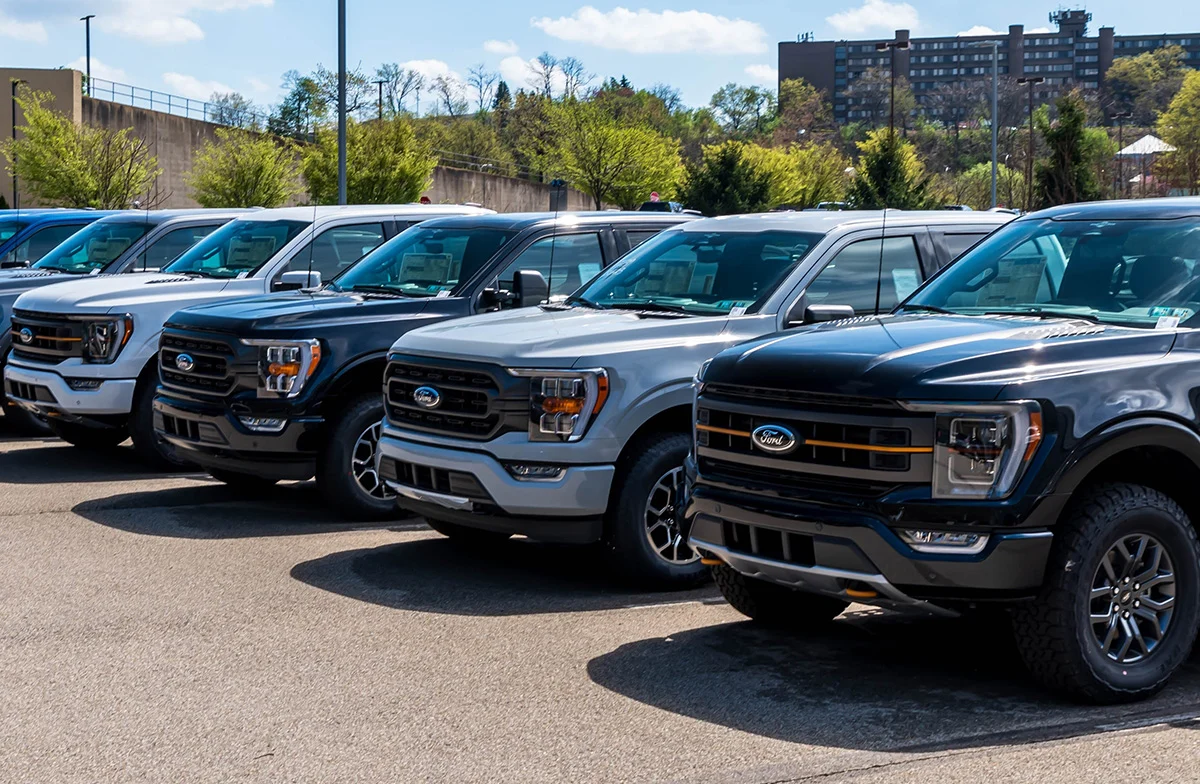
General Motors and Ford Motor Company are experiencing the most significant US market share erosion among all major automakers in 2026, based on fresh analysis from Cox Automotive published this week.
Cox’s analysis covered 13 major automotive manufacturers. The two Detroit stalwarts recorded the most dramatic percentage point losses within this group.
Through September 30, Ford is on track for an 8.8% contraction in vehicle deliveries. This slide translates to a market share of just 12.5%, representing a nearly one-point drop.
General Motors faces similar headwinds. Cox’s forecast shows GM heading toward a 6.2% year-to-date sales reduction through the end of the third quarter.

According to the automotive research firm, GM’s market presence will shrink to 16.7% by quarter’s end, compared with 17.4% during the same period last year.
Combined Detroit Automaker Share Reaches Historic Bottom
Among the traditional Detroit Big Three, Stellantis—which owns the Chrysler brand—represents an outlier. Cox anticipates Stellantis will actually capture additional market share during the first three quarters.
However, when combining the three legacy manufacturers, their collective share is tracking toward an unprecedented low of approximately 36%.
Charlie Chesbrough, an economist with Cox, noted that Asian automotive brands are positioned to control more than half of all new vehicle sales in the United States for a consecutive quarter. This performance nears historical peak levels for the segment.
Industry experts attribute GM and Ford‘s struggles partly to limited fuel-efficient offerings. Escalating gasoline prices linked to conflict with Iran have accelerated consumer preference for hybrid powertrains.
General Motors dealerships have reported instances where prospective buyers chose competing brands specifically because GM lacks hybrid options. Meanwhile, Ford eliminated its Escape compact crossover from the lineup, removing one of its most economical models.
Ford faced additional challenges from reduced pickup truck manufacturing. An earlier fire at a key aluminum parts supplier disrupted production capacity.
South Korean Brands Poised to Overtake Ford
The third quarter marks a milestone moment, with Hyundai and Kia’s aggregate sales forecast to eclipse Ford’s quarterly total. According to Cox, this represents the inaugural quarter where these two South Korean manufacturers have collectively outperformed Ford.
In response, Ford disputed the direct comparison. A company spokesperson emphasized that when examining year-to-date figures, Ford maintains a lead over the combined Hyundai-Kia pairing, with an even more substantial advantage in revenue terms.
Cox projects Toyota will achieve a modest 1.1% sales increase through three quarters. Honda is tracking toward stronger growth with an anticipated 5.6% uptick.
Tesla’s performance tells a distinctly different story. The electric vehicle manufacturer is headed toward an 18.9% year-over-year sales decline through September.
This downturn would compress Tesla’s market share to 3.0%, down from its previous 3.7% standing.
While individual manufacturers show mixed results, Cox revised its total US automotive market outlook upward. The research firm now forecasts 16.1 million units sold nationwide, an increase from its prior 15.8 million estimate.
Erin Keating, Cox’s executive analyst, observed that overall market conditions have remained relatively stable throughout 2026 despite considerable volatility among brands. She highlighted that Asian manufacturers offering hybrid vehicle lineups are capturing market share at an accelerating pace.
Official third-quarter sales data will be confirmed once all automakers submit their final reporting for the period concluding September 30, 2026.
Get 3 Free Stock Ebooks
Discover top-performing stocks in AI, Crypto, and Technology with expert analysis.
- Top 10 AI Stocks - Leading AI companies
- Top 10 Crypto Stocks - Blockchain leaders
- Top 10 Tech Stocks - Tech giants


