



Quick Summary
- Bullion is hovering between $4,282 and $4,332 per ounce following consecutive losses in September
- A 92% probability of a Federal Reserve rate increase is now priced into markets, marking the first hike since 2023
- US 10-year Treasury yields momentarily reached 5.04%, the highest level witnessed since 2007
- An ongoing shutdown of Saudi Arabia’s east-west oil pipeline continues to support elevated crude prices, amplifying inflation worries
- The precious metal has declined over 3% during September after reaching above $4,700 per ounce in August’s final days
Bullion markets showed signs of stabilization on Wednesday as traders awaited the Federal Reserve’s upcoming interest rate announcement. The yellow metal managed to find some support after experiencing declines over the previous two trading sessions.
Physical gold was changing hands in a range between $4,282 and $4,332 per ounce during Wednesday’s early market hours. Meanwhile, gold futures contracts climbed approximately 0.9%, reaching $4,372.92 per ounce.
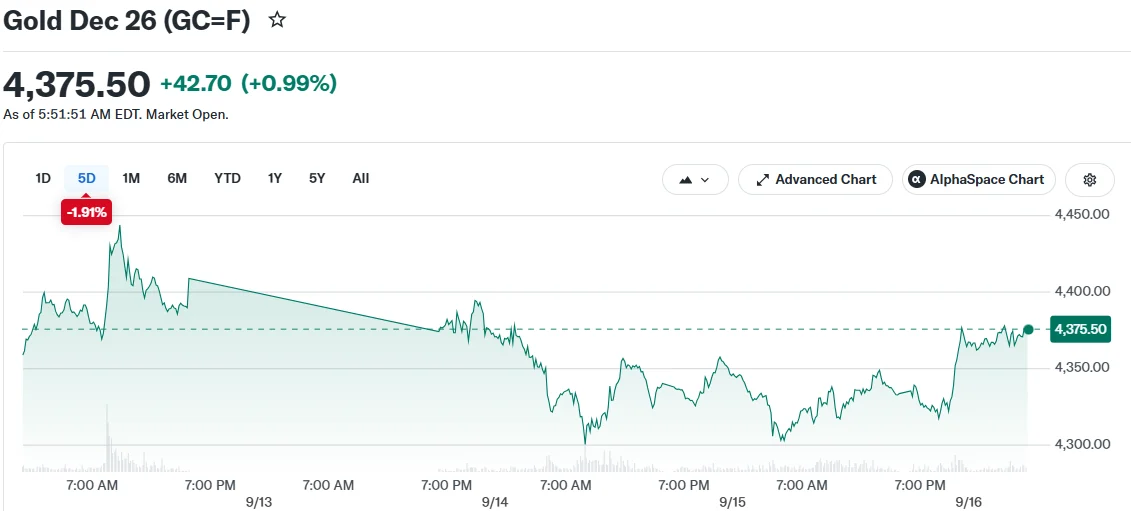
September has proven challenging for the precious metal, with prices dropping more than 3% month-to-date. This represents a significant pullback from the late August highs when gold traded beyond the $4,700 per ounce mark.
Treasury Yield Surge Weighs on Bullion
On Tuesday, the benchmark 10-year US Treasury yield momentarily climbed to 5.04%, marking its highest reading since 2007. This surge occurred against a backdrop of persistently elevated energy costs and mounting concerns over inflation.
Elevated bond yields create headwinds for gold since the precious metal generates no yield or interest payments. As fixed-income securities offer more attractive returns, capital typically flows away from non-yielding assets like bullion.

The strengthening US dollar compounds these challenges. International purchasers encounter increased costs when dollar valuations rise, potentially dampening appetite for dollar-denominated gold.
Current market pricing indicates a 92% likelihood that the Federal Reserve will implement a rate increase. Should this materialize, it would represent the central bank’s first rate hike since 2023.
Market participants will scrutinize both the policy decision and Fed Chair Kevin Warsh’s commentary regarding future monetary policy direction. Industry observers suggest a hawkish stance could bolster dollar strength and place additional downward pressure on gold valuations.
Neil Welsh, Head of Metals at Britannia Global Markets, noted that a balanced communication approach from Warsh might allow gold to find stability. Conversely, he cautioned that more aggressive rhetoric could trigger renewed dollar appreciation and increase pressure on assets that don’t generate income, such as gold.
Saudi Pipeline Crisis Amplifies Inflation Worries
Saudi Arabia’s critical east-west oil pipeline continues to remain offline following attacks that occurred last week. This infrastructure had previously transported millions of barrels daily, providing an alternative route that bypassed the Strait of Hormuz.
Saudi Aramco has already postponed shipments to certain European clients. The state oil company has yet to provide a timeline for restoring pipeline operations.
Crude oil markets had experienced two consecutive days of gains before consolidating after US inventory data revealed a larger-than-anticipated stockpile increase. Despite this pause, prices remain well-supported due to ongoing supply disruption concerns.
These elevated energy prices are contributing to wider inflation pressures. This dynamic, in turn, is driving bond yields higher and maintaining downward pressure on precious metals.
Silver prices remained relatively flat at $63.67 per ounce. Platinum declined 0.2% while palladium posted a modest 0.1% gain.
Gold market participants have largely adopted a cautious stance. Many analysts maintain confidence that bullion can stage a recovery once the interest rate trajectory becomes more transparent and the metal can resume its traditional function as a portfolio diversification tool.
The Federal Reserve’s policy decision is scheduled for release later on Wednesday.
Get 3 Free Stock Ebooks
Discover top-performing stocks in AI, Crypto, and Technology with expert analysis.
- Top 10 AI Stocks - Leading AI companies
- Top 10 Crypto Stocks - Blockchain leaders
- Top 10 Tech Stocks - Tech giants


