



TLDR
- Bullion climbed 0.7% to reach $4,570.60 per ounce Monday before retreating
- Trading showed extreme volatility with prices touching March 30 lows
- Treasury yields declined following recent turmoil across fixed income markets
- Strikes on UAE nuclear sites and Saudi targets undermined ceasefire stability
- Presidential China trip yielded no progress on Iran diplomatic resolution
Bullion markets experienced significant volatility Monday as traders monitored stabilizing government debt markets alongside escalating Middle Eastern geopolitical risks.
Spot gold advanced 0.7% to $4,570.60 per ounce during morning trading. However, the precious metal also touched its weakest level since March 30 earlier in the session, underscoring the erratic nature of recent market activity.
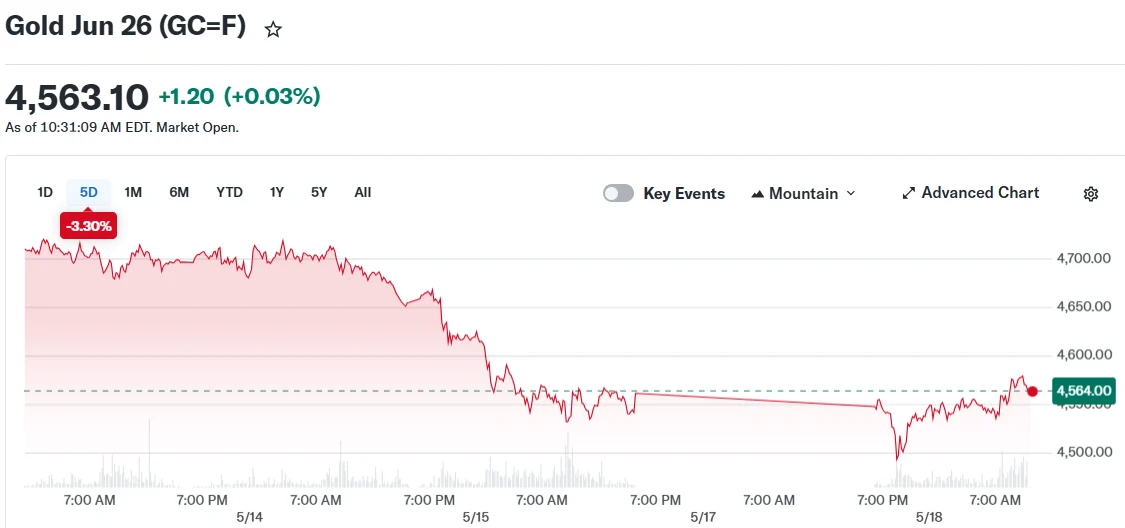
Gold futures declined 0.3% to $4,574.20 per ounce at certain points throughout the trading day.
These fluctuations occurred as Treasury yields retreated following a turbulent period in sovereign debt markets. The recent selloff had created anxiety among market participants in preceding sessions.
Oil prices also moved lower. Reports from Iranian state media indicated Washington proposed temporary sanctions relief on Iranian crude exports pending completion of comprehensive peace negotiations between the two nations.

Iran War Keeps Investors on Edge
Gold has surprisingly declined from its late February peak when the Iran conflict initially erupted. While this may appear counterintuitive given the continuing hostilities, the explanation is straightforward.
Market participants have gravitated toward the U.S. dollar as their preferred safe-haven instrument. The greenback has benefited from expectations that America’s economy, functioning as a substantial energy producer, might weather an energy supply disruption better than other nations.
A robust dollar elevates gold costs for international purchasers, potentially dampening overall demand.
Inflationary pressures have also undermined gold’s appeal. Should the conflict drive consumer prices upward, monetary authorities might tighten policy. Elevated borrowing costs can diminish the attractiveness of non-interest-bearing holdings like precious metals.
Drone Attacks and Failed China Summit Add Uncertainty
During the weekend, an unmanned aerial assault sparked a blaze at a nuclear installation in the United Arab Emirates. Saudi authorities also reported successfully intercepting three additional drones.
These incidents raised renewed questions about the tenuous ceasefire arrangement between Washington and Tehran.
President Donald Trump announced via social media that “the clock is ticking” for Iran to conclude a peace agreement. He indicated military operations could recommence absent a diplomatic settlement.
Certain market observers had anticipated Trump’s China trip last week might facilitate progress in Iran peace negotiations. Beijing represents one of Tehran’s largest crude oil customers, providing it considerable influence in discussions.
However, the summit failed to generate any concrete commitments from Chinese leadership.
David Morrison, Senior Market Analyst at Trade Nation, noted the weekend developments revived worries that had temporarily subsided during Trump’s Asian visit.
“It became painfully apparent that the Chinese trip was a non-event, while Iran appears in no mood to accede to the U.S. peace plan,” Morrison said.
With the ceasefire facing renewed challenges and diplomatic channels showing little promise, bullion prices appear positioned for continued instability in coming sessions.
Get 3 Free Stock Ebooks
Discover top-performing stocks in AI, Crypto, and Technology with expert analysis.
- Top 10 AI Stocks - Leading AI companies
- Top 10 Crypto Stocks - Blockchain leaders
- Top 10 Tech Stocks - Tech giants


