



Key Highlights
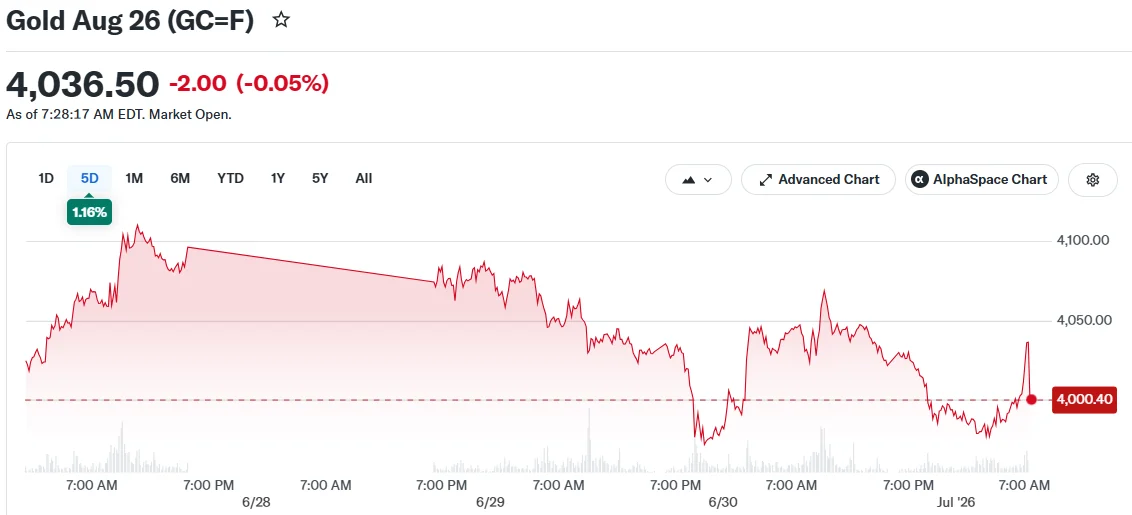
- The precious metal slipped beneath $4,000 per ounce, recording its steepest monthly decline in over 15 years
- Prices have plummeted approximately 30% from the January high of $5,589
- Capital has shifted from precious metals into technology and semiconductor equities, with chip stocks surging over 100% year-to-date
- Federal Reserve rate hike expectations are damaging demand for assets that generate no yield
- Bitcoin simultaneously declined below $60,000, representing a drop exceeding 53% from its October record
The yellow metal faces mounting headwinds from several fronts. Persistent inflation concerns, an increasingly hawkish Federal Reserve stance, and an extraordinary surge in technology equities have collectively driven the precious metal deep into bear territory.
Spot prices for the metal touched approximately $3,994 per ounce during Wednesday trading, breaching the psychologically significant $4,000 threshold for just the second occasion since November. Futures contracts similarly weakened, hovering around $4,008.
Sharpest Quarterly Retreat in More Than Ten Years
Gold tumbled approximately 14% during the second quarter, representing its poorest quarterly showing since 2013. June witnessed an 11.7% decline, the most severe single-month contraction since 2008.
The downturn intensified following the Federal Reserve’s June policy meeting, during which multiple officials indicated backing for at least one rate increase in 2026. This marked a dramatic pivot from beginning-of-year projections when financial markets had anticipated monetary easing.
Newly appointed Fed Chair Kevin Warsh maintained this hawkish posture at his inaugural policy session, stressing the central bank’s commitment to returning inflation to its 2% objective. Warsh is scheduled to participate in a European Central Bank forum in Sintra, Portugal later Wednesday, with market participants closely monitoring his remarks.

Elevated interest rates undermine [[LINK_START_2]]gold[[LINK_END_2]]’s attractiveness by increasing the opportunity cost associated with holding assets that provide no income stream. The appreciating dollar, supported by rate expectations and perceptions that the United States remains relatively shielded from energy disruptions tied to the Iran conflict, has intensified downward pressure.
Worldwide gold ETF assets have contracted roughly 1.5% since year-end. The World Gold Council observed that May flows decelerated “to a trickle,” as investors redirected capital toward technology equities to maintain portfolio performance relative to benchmarks.
Technology Sector Boom Diverts Investment Capital
The PHLX semiconductor index has skyrocketed more than 100% since January, posting its strongest quarterly performance on record with an approximately 88% surge during the three months through June. Such extraordinary returns have siphoned billions from precious metal allocations.
Other precious commodities also faced pressure. Spot silver retreated 0.5% to $58.29 per ounce, while platinum registered modest gains, advancing to $1,556.49.
[[LINK_START_3]]Bitcoin[[LINK_END_3]] mirrored the precious metal’s weakness, dropping beneath $60,000. The cryptocurrency has declined more than 53% from its record high of $126,198 established in October, including a 13% second-quarter loss and a 32% year-to-date decline through 2026.Not all market observers maintain a pessimistic stance on the metal’s intermediate-term trajectory. Central banking institutions accumulated 244 tons during the opening quarter, while China has continuously purchased [[LINK_START_2]]gold[[LINK_END_2]] for nineteen consecutive months. Approximately 84% of central banks polled by the World Gold Council anticipate expanding their holdings throughout the next five years.
ING strategist Ewa Manthey projects the metal will average $4,300 during the third quarter, climbing toward roughly $4,600 in the fourth. UBS analysts characterize the bull market as “on pause, rather than over,” suggesting the $4,000 level will attract strategic long-term accumulation.
Additional employment data arrives Wednesday, with comprehensive U.S. labor market statistics for June scheduled for Thursday release.
Get 3 Free Stock Ebooks
Discover top-performing stocks in AI, Crypto, and Technology with expert analysis.
- Top 10 AI Stocks - Leading AI companies
- Top 10 Crypto Stocks - Blockchain leaders
- Top 10 Tech Stocks - Tech giants


