



Key Takeaways
- Precious metal prices declined approximately 2% following robust August employment figures revealing 162,000 new positions versus expectations of just 53,000
- Jobless rate remained unchanged at 4.1%, demonstrating continued strength in the employment sector
- Federal Reserve Governor Christopher Waller indicated potential support for maintaining current interest rates contingent on favorable inflation trends
- Trading desks now assign approximately even odds to a September rate increase, retreating from the 70% probability seen earlier in the trading week
- The precious metal confronts technical obstacles approaching its 200-day moving average positioned near $4,526
Gold experienced significant downward pressure Friday following the release of employment statistics that substantially exceeded analyst projections, reigniting debate regarding the Federal Reserve’s upcoming policy decision in September.
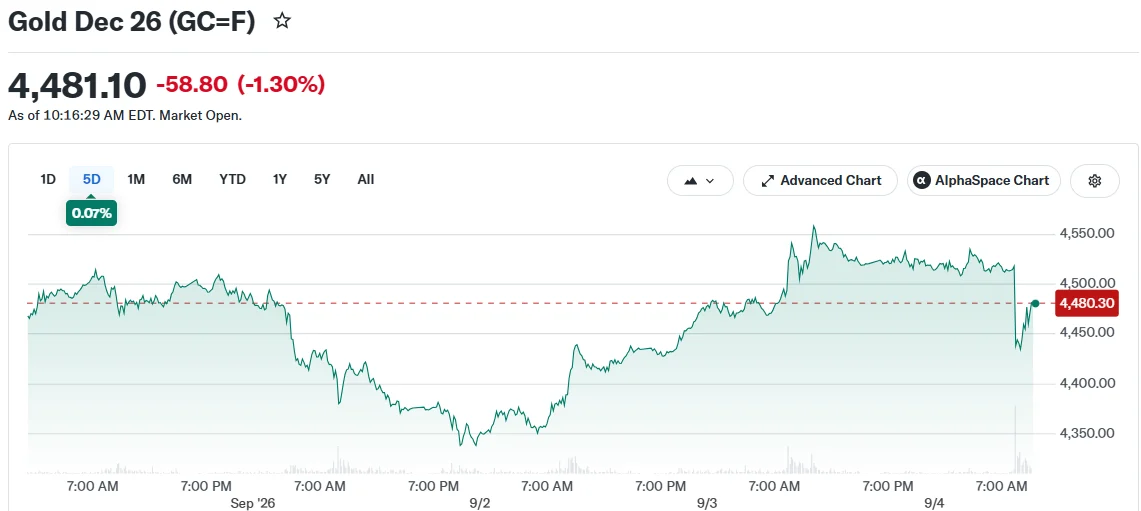
August payroll figures revealed the addition of 162,000 positions across the American economy. Market forecasters had anticipated approximately 53,000 new jobs. The jobless rate remained stable at 4.1%. These figures represented a substantial recovery from July’s revised reading, which indicated a contraction of 23,000 positions.
Spot gold prices retreated approximately 2% to settle at $4,391.61 per ounce. December futures contracts declined 0.6% to reach $4,514.19. Additional precious metals also experienced selling pressure, with silver declining 1.5% and platinum falling 0.6%.
The greenback gauge climbed 0.2% to 99.03 in the aftermath of the employment release. Dollar strength typically pressures gold valuations by increasing purchase costs for international buyers transacting in alternative currencies.
Central Bank Commentary and Policy Expectations
Federal Reserve Governor Christopher Waller announced Thursday his potential backing for unchanged interest rates during the September 15-16 policy gathering, provided forthcoming inflation metrics validate that pricing pressures continue moderating.

Waller stopped short of completely dismissing a rate adjustment. He emphasized that August’s inflation measurements would substantially shape his vote and acknowledged that renewed price acceleration might still warrant tightening monetary conditions.
Financial markets swiftly adjusted expectations. The likelihood of a September rate increase declined to approximately 50%, retreating from roughly 70% probability recorded earlier in the week, based on CME FedWatch tool calculations.
Declining borrowing costs generally provide tailwinds for precious metals since gold generates no yield, enhancing its relative attractiveness when competing asset returns diminish.
The yellow metal had previously staged a nearly 2% recovery Thursday, ending a three-day decline. Friday’s employment statistics curtailed that momentum.
Future Direction for Precious Metals
Next week’s August consumer price index release has emerged as the critical variable influencing the Federal Reserve’s ultimate policy choice. Market observers suggest inflation data may carry greater weight than employment figures in shaping policymaker decisions regarding rate adjustments or maintenance.
Earnings growth within Friday’s employment report remained moderately restrained, providing modest support for gold and preventing deeper losses.
IG’s senior market analyst Tony Sycamore observed that recent precious metal gains coincided with diminishing pressure from energy markets and government bond yields. He suggested the latest Middle Eastern tensions may have crested, alleviating inflation anxieties connected to elevated petroleum prices.
Gold continues trading above the $3,942 trough established during late June. Sycamore indicated this threshold reinforces the interpretation that gold has established a medium-term foundation.
Technical headwinds currently emerge near the 200-day moving average positioned around $4,526. Successfully penetrating this barrier would enhance near-term prospects. Inability to maintain elevation above this threshold could trigger renewed selling.
The forthcoming critical catalyst for gold arrives with next week’s inflation statistics.
Get 3 Free Stock Ebooks
Discover top-performing stocks in AI, Crypto, and Technology with expert analysis.
- Top 10 AI Stocks - Leading AI companies
- Top 10 Crypto Stocks - Blockchain leaders
- Top 10 Tech Stocks - Tech giants


