


TLDR
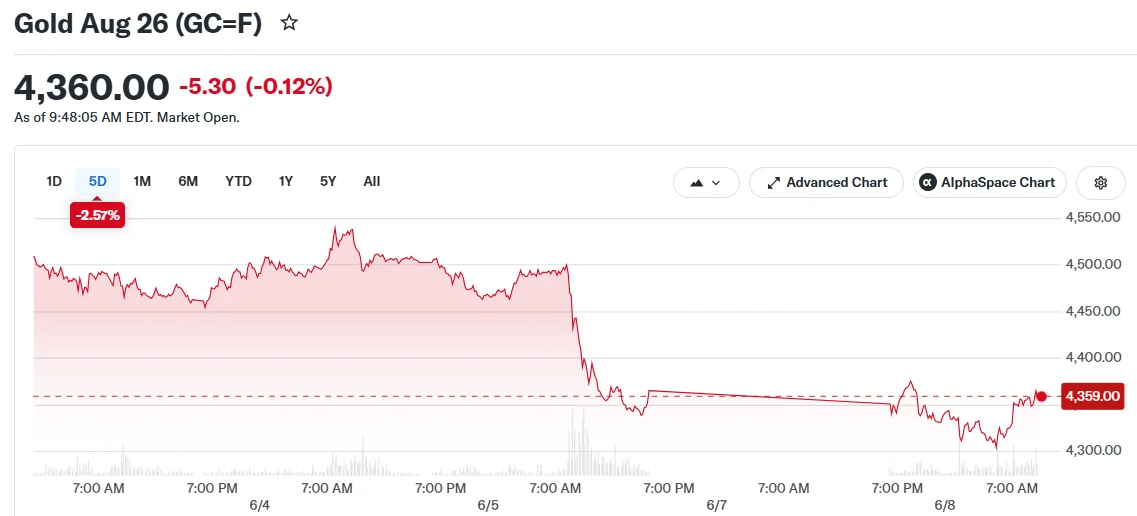
- Gold climbed 0.3% to approximately $4,343 per ounce on Monday following an 11-week low
- Iranian authorities declared cessation of military strikes against Israel, temporarily reducing geopolitical risk
- Crude oil markets retreated on the ceasefire news, alleviating immediate inflation concerns
- Robust U.S. employment data from Friday increased expectations for Federal Reserve tightening, pressuring gold
- China’s central bank purchased 10 tons of gold in May, marking its largest monthly acquisition since 2024
Gold markets staged a modest recovery on Monday following Iran’s announcement that it had suspended military strikes against Israel, providing temporary relief to investors concerned about escalating Middle East tensions.
Spot gold advanced 0.3% to reach $4,343.70 per ounce during mid-morning trading in New York. The precious metal had previously declined as much as 1.4% earlier in the session, reaching its weakest level since March 23.
The turnaround occurred after Iran’s central military command issued a statement through the semi-official Fars news agency confirming the cessation of hostilities. Nevertheless, Iranian officials cautioned that any additional Israeli aggression would provoke “much harsher and more crushing actions.”
Regional Tensions Create Market Uncertainty
The current escalation originated with an Israeli military strike in Beirut. Tehran retaliated with its own offensive operations, prompting Israeli counterstrikes that targeted locations in central and western Iranian territory.
This represented the first direct military engagement between the two nations since a tentative ceasefire was established in April.

The military exchange constituted the most serious deterioration of regional security since the truce agreement. Gold prices had declined nearly 5% over the previous week amid these developments.
Oil prices had surged on the escalating tensions before moderating following the ceasefire announcement. The conflict has interfered with energy shipments through the Strait of Hormuz for four consecutive months, elevating crude prices and amplifying inflation anxieties.
Yemen’s Iranian-aligned Houthi forces intensified concerns on Monday by declaring a blockade of Israeli vessels in the Red Sea.
Employment Numbers and Monetary Policy Expectations Impact Gold
Gold faced additional downward pressure from Friday’s robust U.S. employment report. The American economy generated 172,000 new jobs in May, surpassing analyst projections, while the unemployment rate remained stable at 4.3%.
The employment figures prompted market participants to increase bets on a Federal Reserve interest rate increase at the December policy meeting. ING analysts noted in their research commentary that a December rate hike is now “fully priced” into market expectations.
Rising interest rates typically create headwinds for gold, as the metal generates no income yield. Both U.S. Treasury yields and the dollar strengthened following the employment release.
The U.S. dollar index retreated modestly on Monday after reaching a two-month peak on Friday. Dollar weakness can provide support for gold prices by reducing costs for international purchasers.
Market participants are now focused on upcoming U.S. consumer and producer inflation data scheduled for release later this week to gauge price pressure trends.
Chinese Central Bank Maintains Gold Accumulation
A significant positive factor for gold remains persistent purchasing from China. The People’s Bank of China increased its reserves by approximately 10 tons in May, representing the largest monthly addition since 2024.
This extends Beijing’s consecutive monthly gold acquisition pattern to 19 months.
StoneX analyst Rhona O’Connell noted that critical issues stemming from the Middle East conflict remain “unresolved,” and that the firm retains a “downward bias” while monitoring for opportunistic buying at lower price levels.
Silver gained 0.5% to reach $68.19 per ounce on Monday, after suffering nearly a 10% decline during the previous week.
Get 3 Free Stock Ebooks
Discover top-performing stocks in AI, Crypto, and Technology with expert analysis.
- Top 10 AI Stocks - Leading AI companies
- Top 10 Crypto Stocks - Blockchain leaders
- Top 10 Tech Stocks - Tech giants


